One year into his return to the White House, President Donald Trump has used tariffs, military operations and immigration crackdowns to drive an expansive vision of U.S. power that is generating strong resistance abroad and sharpening political divides at home.
Since returning to office on 20 January 2025, Trump has made tax hikes the central tool of his foreign and economic policy. Broad duties were imposed under emergency authority as part of a new “reciprocal tariff” system that sharply raised U.S. rates across most imported goods. The Supreme Court is now reviewing whether the president overstepped his legal powers, with a ruling expected later this year. Officials have said that, if the court limits those emergency powers, the administration would reissue tariffs under older trade statutes.
China remains under the extensive tariff regime first built during Trump’s initial term, with additional duties introduced last year on industrial and technology products. India has become one of the hardest-hit partners: a 25% levy was applied broadly, and an additional 25% penalty was layered on after New Delhi continued large-scale oil purchases from Russia, creating a combined duty of about 50% across many Indian export categories.
Other countries have been drawn into targeted actions. Mexico and Canada have faced new duties despite ongoing renegotiations, and tariffs have been placed on selected sectors in Türkiye and Vietnam as part of a wider push to force supply-chain shifts. The administration has also advanced sector-specific tariffs on high-end semiconductors and chip components to capture revenue tied to foreign use of U.S. technology.
Europe has become the most politically charged front in Trump’s tariff strategy. On Saturday (17 January) he announced a 10% tax on imports from Denmark, Norway, Sweden, France, Germany, the U.K., the Netherlands and Finland starting 1 February, rising to 25% on 1 June unless Denmark agrees to negotiate over Greenland. European capitals condemned the move and began preparing retaliatory measures, warning that the escalation could trigger a serious transatlantic trade clash.
Greenland sits at the core of the standoff. Trump has revived his proposal to buy the island, calling U.S. control a strategic necessity. Reports of potential payments to residents prompted protests in Nuuk and Copenhagen under the slogan “Greenland is not for sale.” Greenland’s government has rejected any transfer, and European leaders, including UK Prime Minister, Keir Starmer, have warned against linking territorial issues to tariff pressure. The International Monetary Fund (IMF) has cautioned that the dispute risks widening global trade tensions.
Ukraine
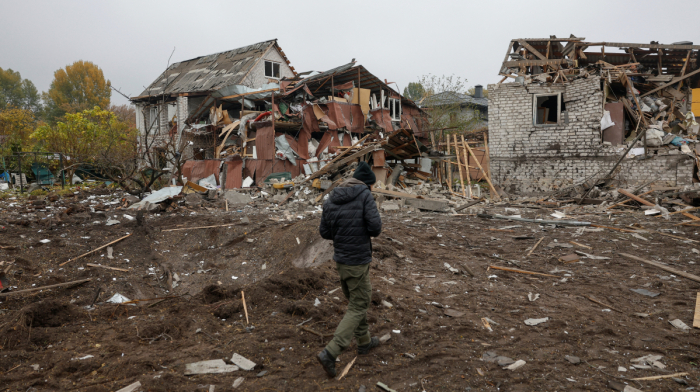
Trump entered office pledging to end the Russia-Ukraine conflict on his first day, but the fighting continues and no agreed framework for peace has emerged. An Oval Office meeting in February 2025 between Trump and Ukrainian President Volodymyr Zelenskyy ended without agreement. The leaders clashed over ceasefire terms, future U.S. security guarantees and a proposed U.S.-Ukraine minerals deal, with talks stalling after Trump pressed Kyiv to accept concessions that Ukraine said it could not make. The meeting was further strained when Zelenskyy was criticised for arriving in his wartime military attire rather than a suit.
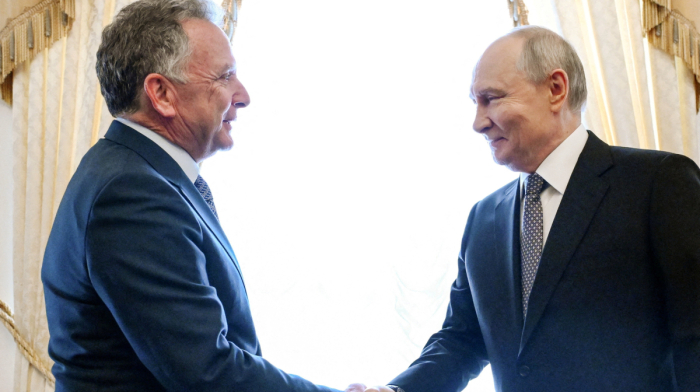
In August 2025, Trump met Russian President Vladimir Putin at Joint Base Elmendorf-Richardson in Alaska. The discussions, centred on ceasefire options and control of occupied areas, produced no agreement. Follow-up contacts involving U.S. envoys and Russian and Ukrainian officials made limited progress on security arrangements but ultimately did not resolve the core territorial dispute.
Trump has since argued that Zelenskyy, not Putin, is holding up a peace deal, a position echoed by the Kremlin, but dismissed by Kyiv and European governments. U.S. support for Ukraine has continued but in smaller, more conditional tranches, with Washington placing greater emphasis on securing a ceasefire than defining a long-term settlement.
Gaza
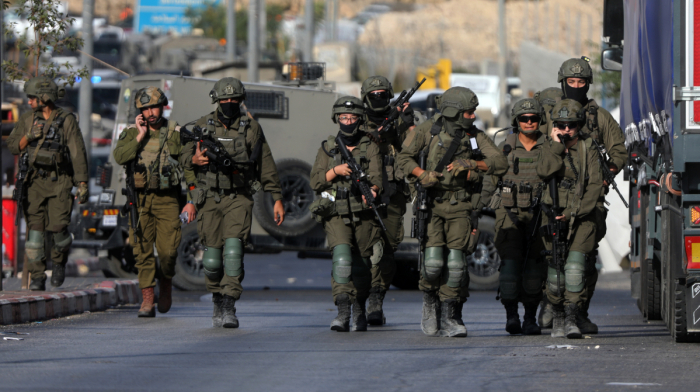
Trump’s first year brought a major shift in U.S. policy on Gaza as Washington worked to stabilise a fragile ceasefire and shape post-conflict governance. In September 2025 the administration unveiled a 20-point plan covering a ceasefire, hostage exchanges, phased Israeli withdrawals and a transitional Palestinian technocratic administration.
In October 2025, Trump attended a summit in Sharm el-Sheikh with Egypt’s President Abdel Fattah el-Sisi and more than 20 leaders to endorse the U.S.-brokered ceasefire. The plan also shaped the 80th United Nations General Assembly, where the Palestinian delegation could not attend key meetings due to transition-related restrictions.
Washington then proposed the "Board of Peace", a multinational body for Gaza’s security, border management and reconstruction. Invitations were sent to about 60 countries, with a draft charter requiring a $1 billion contribution for membership beyond three years. Trump has invited Putin and President of Belarus, Alexander Lukashenko, to join. Countries confirming invitations include India, Pakistan, Türkiye, Egypt, Canada, Argentina, Paraguay, Albania, Jordan, Greece and Cyprus, with Kazakhstan already accepting. France has declined the invitation.
Beneath the council sits the Gaza Executive Board, responsible for coordination and implementation. Members include Steve Witkoff, Jared Kushner, Hakan Fidan, Ali Al-Thawadi, Hassan Rashad, Tony Blair, Marc Rowan, Reem Al-Hashimy, Nickolay Mladenov, Yakir Gabay and UN coordinator Sigrid Kaag.
The second phase of the plan centres on a Palestinian transitional committee tasked with managing civilian services, while regional talks in Cairo continue on humanitarian access, border arrangements and demilitarisation. Reactions remain mixed, with some governments preparing to join the board and others warning it could sideline existing UN mechanisms.
Venezuela
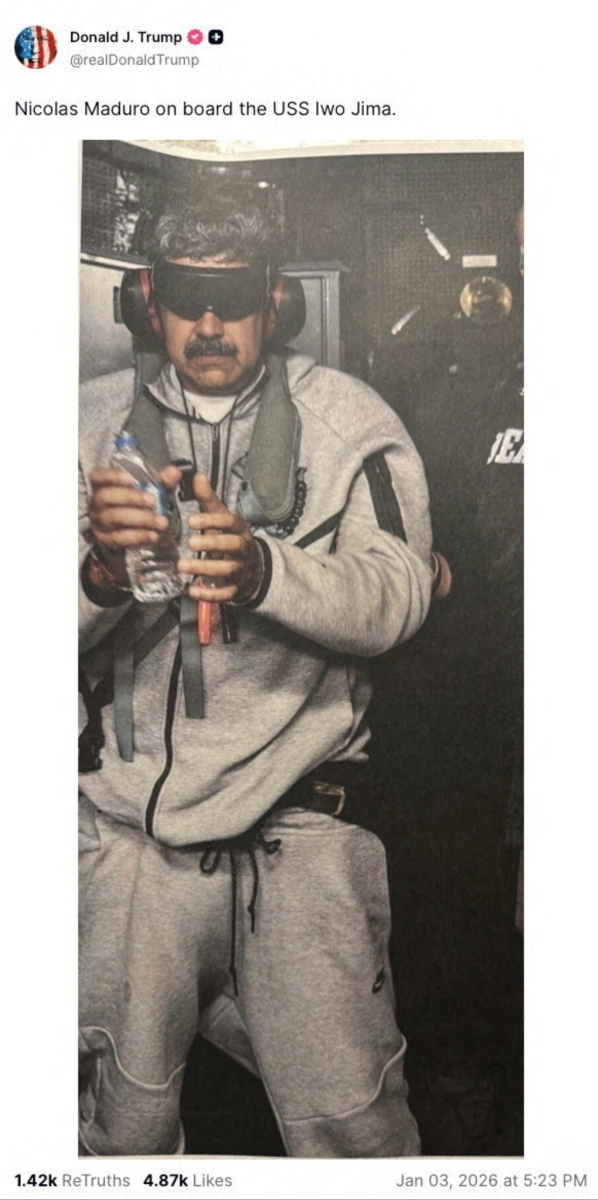
Then-President of Venezuela, Nicolás Maduro, and his wife, Cilia Flores, were captured by U.S. forces during a large-scale raid in Caracas 3 January and flown to the United States to face long-standing narcotics-related charges, which they deny.
The assault caused heavy losses on the ground. Venezuela’s defence ministry reported 47 soldiers killed, while Cuba said 32 Cuban personnel stationed in the country also died. The scale of the operation prompted immediate debate among legal experts and foreign governments over whether it met international-law standards.
Trump said Washington would oversee Venezuela’s transition “until such time as we can do a safe, proper and judicious transition,” and did not rule out further strikes. He also posted a digitally-altered image on his social media account, depicting himself as the “Acting President of Venezuela,” styled as a mock Wikipedia page.
Following Maduro’s removal, Venezuela’s Supreme Tribunal of Justice recognised Delcy Rodríguez as interim president. She initially denounced the U.S. action but later signalled readiness to engage with Washington on political and economic management. The United States simultaneously tightened sanctions enforcement, seizing Venezuela-linked oil tankers to restrict financial flows to Maduro’s remaining networks.
International reaction was sharply divided. Brazil, Chile, Colombia, Mexico, Spain and Uruguay condemned the raid as a violation of international law and called for an emergency Organization of American States (OAS) meeting. China and Russia denounced the strike and demanded Maduro’s release, while the UN Security Council convened a session to review the operation’s legality. European governments urged restraint, and countries including Argentina and the U.K. called for de-escalation and a negotiated transition.
Iran
Trump’s first year in office saw a sharp escalation with Iran. In June 2025 the United States joined Israeli strikes on major Iranian nuclear facilities, hitting sites at Natanz, Fordow and Isfahan. Iran retaliated with missile attacks on U.S.-aligned positions in the Gulf before a ceasefire was reached. The conflict lasted 12 days. Intelligence assessments indicated the strikes caused only limited delays to Iran’s nuclear programme.
The administration also attempted a diplomatic track through indirect nuclear talks in Oman, but the discussions produced no agreement. Trump warned that Iran would be “in great danger” if it refused to negotiate.
By late 2025 Iran was gripped by nationwide protests over inflation and political grievances. Security forces imposed internet shutdowns and carried out mass arrests amid significant casualties. Tehran accused the United States and Israel of encouraging the unrest.
Trump increased pressure on Tehran, threatening action if protesters were killed and keeping “all options on the table,” while later signalling restraint after assurances that executions had paused. The United States also explored economic pressure on countries maintaining trade with Iran.
The crisis drew international reaction. Russia criticised U.S. strike threats as interference, and European governments called for restraint. Diplomatic efforts have since focused on preventing a renewed cycle of attacks, as tensions remain unresolved.
Pursuit of the Nobel Peace Prize
President Trump has repeatedly said he believes he merits the Nobel Peace Prize, citing what he describes as U.S.-led efforts to resolve or de-escalate seven international conflicts during his second term in office. Trump has made these remarks in public speeches and interviews, often arguing that his diplomatic record has not been recognised by the Nobel Committee.
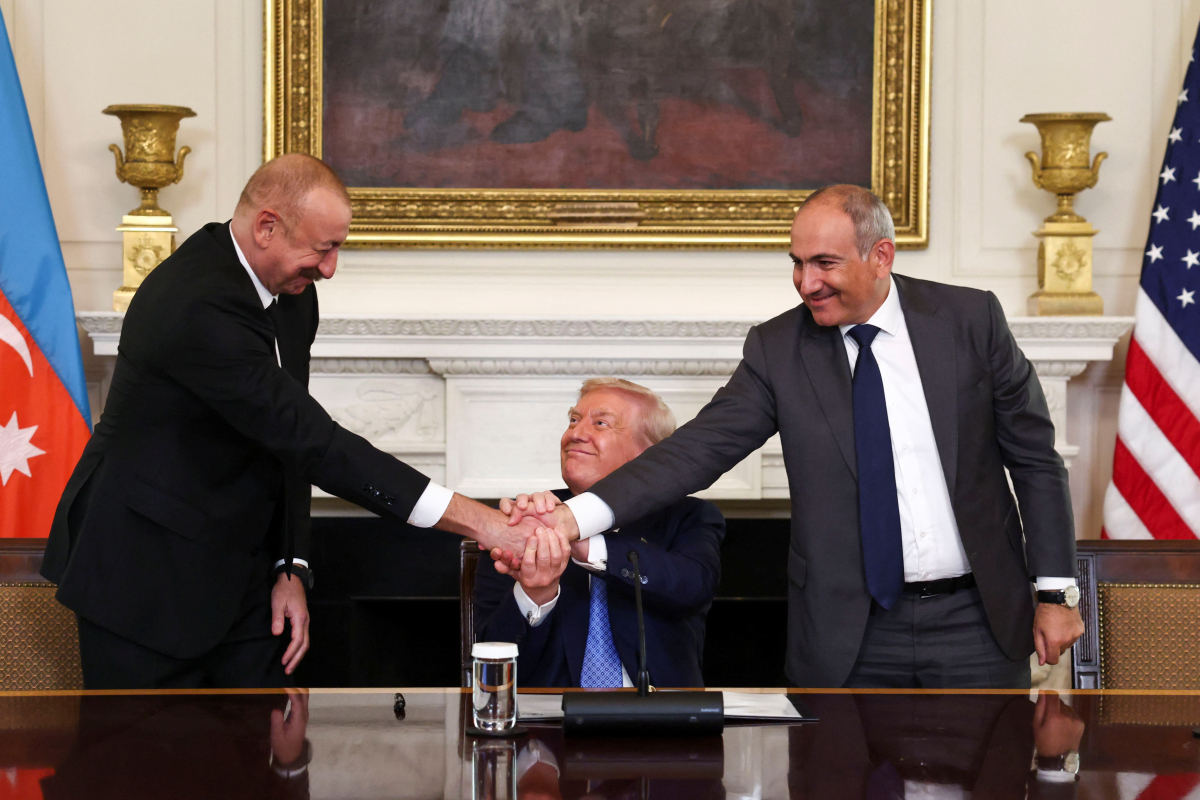
Trump has listed disputes involving Azerbaijan and Armenia, the Democratic Republic of Congo and Rwanda, India and Pakistan, Israel and Gaza-Iran, Serbia and Kosovo, Egypt and Ethiopia, and Thailand and Cambodia as examples of conflicts he says were addressed through mediation, pressure or U.S. involvement. Analysts note that several of these situations involved ceasefires or diplomatic steps rather than formal peace treaties, and some remain unresolved.
The Nobel Peace Prize for 2025 was awarded to Venezuelan opposition leader Maria Corina Machado, with the Nobel Committee citing her role in promoting democratic change in Venezuela. Trump did not receive the award and continued to express dissatisfaction with the decision.
In January 2026, Machado presented Trump with her Nobel Peace Prize medal during a meeting in Washington, describing it as a personal gesture of appreciation. Nobel officials later clarified that while Nobel medals may be gifted by laureates, the prize itself remains formally attributed to the original recipient.
Domestic transformation and consolidation of power
Trump returned to office promising to overhaul the federal bureaucracy, reshape immigration enforcement, reset economic policy and challenge institutions he said restricted presidential authority. Much of that agenda was set in motion during his first year. On day one, he reversed major Biden-era directives, froze new regulations and instructed federal agencies to reorient programmes toward his priorities. Structural changes reduced long-standing civil service protections and expanded White House control over personnel and operations. Budget shifts redirected resources toward defence, border operations and domestic energy, reflecting the administration’s broader governing emphasis.
Immigration raids and federal enforcement
Immigration pledges were delivered through a national emergency declaration at the border, tighter asylum rules, expanded nationwide expedited removal and renewed penalties for sanctuary jurisdictions. The Immigration and Customs Enforcement (ICE) launched large interior enforcement operations with multi-state raids, higher detention targets and expanded street-level deployments.
A major operation in Minnesota drew national scrutiny after an (ICE) agent fatally shot an unarmed woman during a traffic encounter, and another person was wounded in a separate enforcement incident both in January of this year. A federal judge later imposed limits on agents’ crowd-control tactics as protests grew. The intensified crackdown coincided with several deaths in ICE custody as detention populations rose.
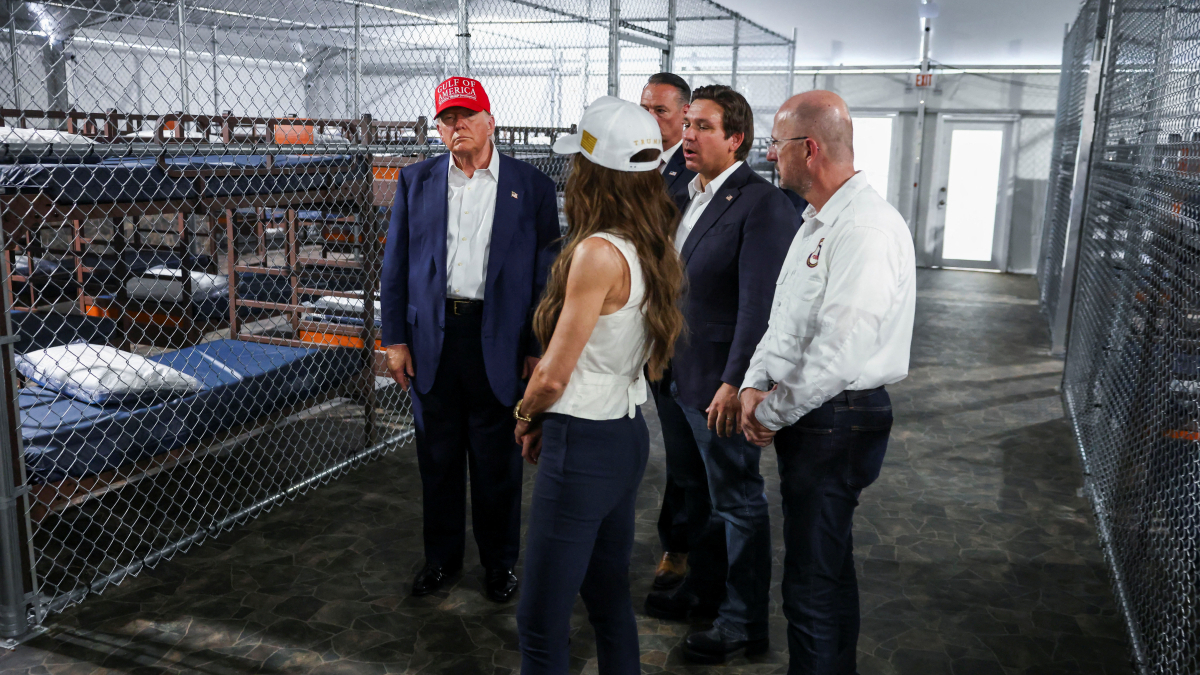
The administration also expanded migrant detention capacity, including the South Florida Detention Facility, informally known as “Alligator Alcatraz” for its remote, heavily secured location.
Border wall expansion resumed through redirected funding, and new removal benchmarks were ordered across enforcement agencies, marking the most extensive immigration crackdown in years.
Reshaping federal bureaucracy
Trump’s first year brought an aggressive overhaul of the federal workforce and administrative structure. He reinstated Schedule F on his first day, reclassifying thousands of policy-influencing civil servants and making them easier to dismiss. Agencies were ordered to return employees to full-time in-office work, freeze hiring and prepare for substantial staff reductions. A deferred-resignation programme and early retirements accelerated departures, and by April 2025 about 260,000 federal workers had left through firings, retirements and voluntary exits. A Supreme Court decision later cleared the way for wider layoffs and restructuring plans.
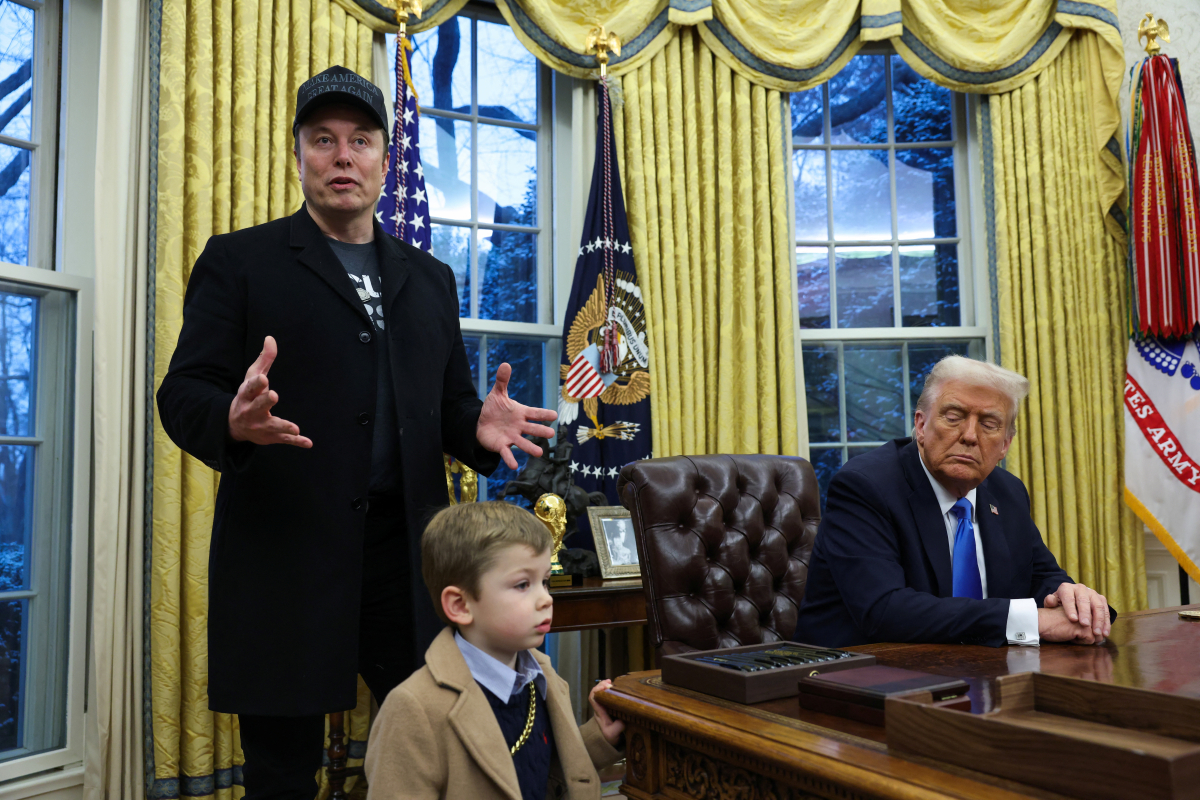
The administration’s restructuring drive included the Department of Government Efficiency (DOGE), directed by Trump and Elon Musk, which instructed agencies to identify positions for elimination and propose consolidations across departments. Union opposition and litigation followed, and court rulings in California and Maryland ordered the reinstatement of thousands of probationary employees dismissed without proper procedure.
The White House also removed several inspectors general, reshaping oversight across cabinet agencies. Departments were instructed to streamline management layers, merge programmes and align implementation with White House directives, consolidating authority within the executive branch and marking one of the most far-reaching attempts in decades to restructure the civil service.
Economic agenda and regulatory shifts
Trump’s economic agenda centred on deregulation, redirected federal spending and an expansive tariff regime that quickly affected domestic prices. A regulatory freeze halted new environmental, labour and financial rules, and agencies were ordered to accelerate permitting for energy and industrial projects.
Tariffs on metals, machinery, electronics, vehicles and consumer goods pushed import prices higher, with studies estimating household costs rising by about $2,400 a year and import prices up roughly 4%.
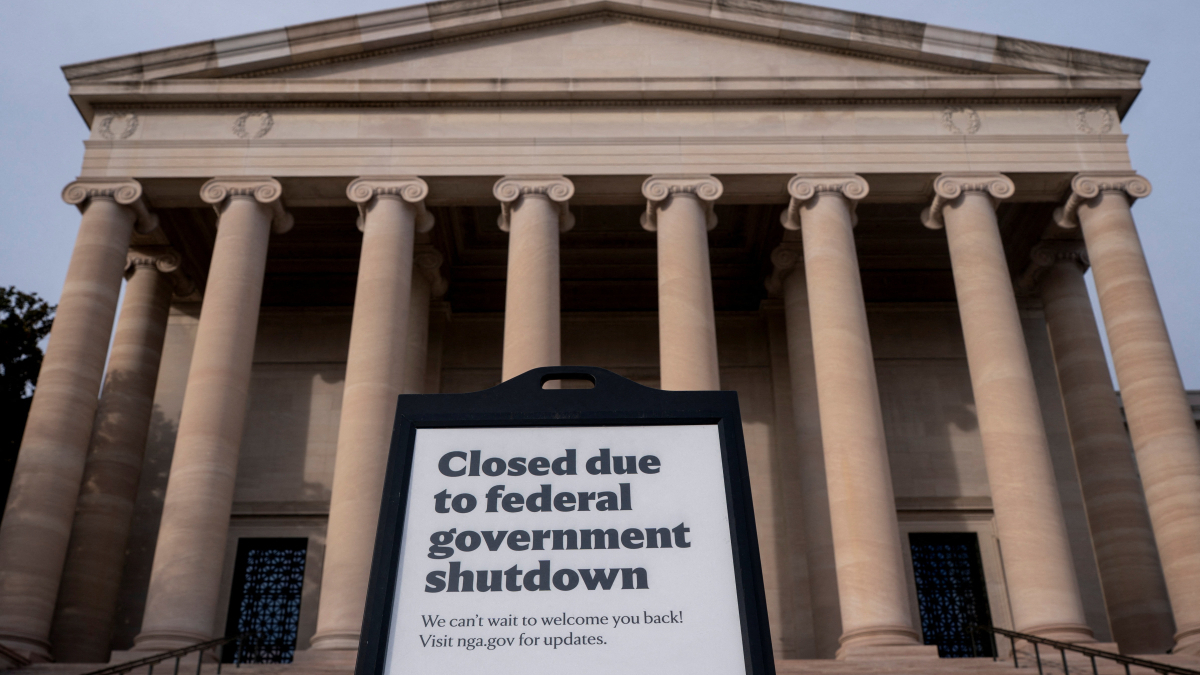
A 43-day government shutdown, the longest on record, followed a funding standoff partly over extending enhanced Affordable Care Act premium subsidies. Around 900,000 federal workers were furloughed, two million worked without pay and key regulatory functions were suspended. Food assistance for 42 million people faced disruption, and analysts estimated the shutdown’s economic cost at up to $14 billion before a pared-back funding bill passed without the disputed healthcare provisions.
Confrontation with the Federal Reserve
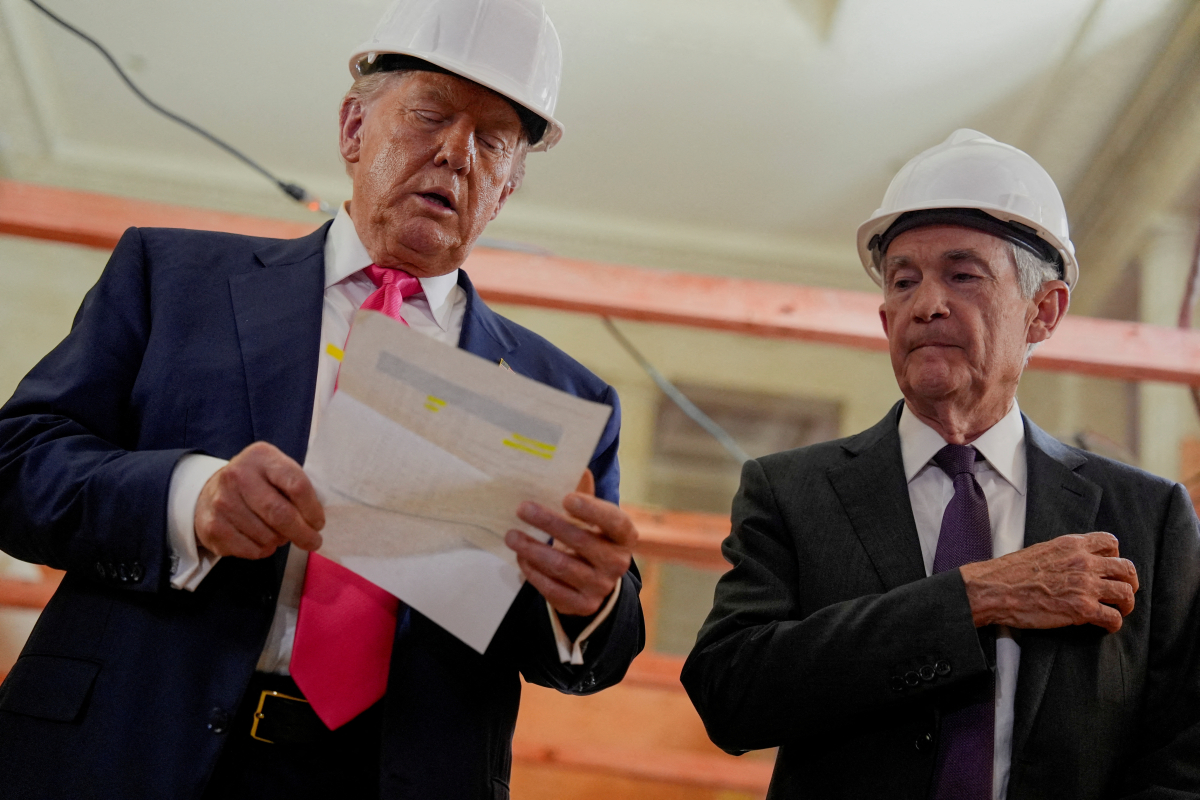
Trump’s first year brought sustained pressure on the Federal Reserve and its leadership. He repeatedly criticised Chair Jerome Powell for keeping interest rates unchanged despite White House demands for cuts, including a May 2025 meeting in which Trump told Powell he was making a “mistake” on rates. The Fed held policy steady at 4.25%–4.50%.
The confrontation escalated when the administration threatened a criminal investigation into Powell over his congressional testimony about Federal Reserve headquarters renovations. Powell said the move was an attempt to influence monetary policy, and global central bankers defended the Fed’s independence.
Trump also signalled forthcoming changes at the central bank, saying he would announce a nominee to succeed Powell early in 2026 while pursuing broader adjustments to the Fed’s leadership structure.
Cultural and education directives
Trump’s first year brought a broad rollback of diversity, equity and inclusion programmes. An executive order directed agencies and federal contractors to dismantle Diversity, Equity and Inclusion (DEI) policies, and recipients of federal funding were warned that continuing such programmes could jeopardise support.
Universities were pressed to revise hiring, admissions and compliance practices, and several reached agreements with the administration to resolve civil rights investigations tied to diversity disputes. Federal departments removed race and gender-based criteria from grant programmes, and major companies scaled back internal DEI initiatives. Courts have paused some elements of the directive, but enforcement efforts continue.
The administration also reshaped public broadcasting. After federal support for PBS and NPR was cut by executive order in 2025, Congress passed a rescissions act eliminating more than $1 billion in funding for the Corporation for Public Broadcasting. CPB was formally dissolved in January 2026, ending the primary federal funding channel for public media. PBS and NPR remained operational, but local stations faced immediate financial strain, uncertainty and restructuring as they adjusted to the loss of federal support.
Public opinion and political standing
Public sentiment during Trump’s first year remained sharply divided. A Reuters/Ipsos poll in January 2026 placed his approval at 41%, with 58% disapproving, broadly consistent with mid-2025 surveys that showed approval hovering around 39–41% amid concerns over the economy and immigration. Only about one-third of Americans approved of his handling of the cost of living, and polls found approval on the economy at 39%. Immigration ratings sat in the low 40s.
Foreign-policy actions produced similarly mixed reactions. A Reuters/Ipsos poll concluded January 5, 2026 found 33% approval and 34% disapproval of the U.S. strike on Venezuela. A Reuters/Ipsos poll conducted January 12–14, 2026 showed only 17% supported Trump’s push to acquire Greenland, with 47% opposed. Off-year elections in 2025 saw Democratic candidates outperform expectations, offering an early indication of voter unease with elements of Trump’s agenda, as his second year in office approached.















What is your opinion on this topic?
Leave the first comment