Rubio: U.S. will take action to mitigate oil price spike for Americans
The U.S. will take action to mitigate rising energy prices due to a spike in the price of oil caused by the Iran conflict, Secretary of State Rubio said on Monday.
The Middle East crisis intensifies after the deadly attack on the compound of the Supreme Leader of Iran Ali Khamenei on Saturday that killed him, other family members and senior figures. Iran has launched retaliatory strikes on U.S. targets in the region.
The U.S.-Iran crisis has entered its third day, with further strikes reported across the Middle East and the death toll rising. Oil prices have surged to levels last seen during the Covid-19 pandemic, raising fears of economic disruption and higher prices worldwide.
Türkiye and Iran have suspended day-trip passenger crossings at their shared border, Türkiye's trade minister said Monday, as a U.S.-Israeli military campaign against Iran entered its third day.
China’s Foreign Minister Wang Yi has held talks with his Russian counterpart Sergei Lavrov following recent military strikes carried out by the United States and Israel on targets in Iran, as tensions in the Middle East continue to rise.
Global air travel remained in turmoil on Monday after U.S. and Israeli strikes on Iran and retaliatory strikes in the Gulf region prompted widespread airspace closures across the Middle East, disrupting one of the world’s most important aviation corridors.
Uzbekistan has expressed deep concern over the rapid escalation of tensions in the Middle East, urging restraint and diplomatic resolution as the conflict begins to affect civilian aviation and regional security.
The Kremlin is utilising the recent United States and Israeli military strikes on Iran to validate its ongoing war in Ukraine. Russian officials are pointing to the escalation in the Middle East as evidence that Western nations do not adhere to international rules.
Saudi Arabia’s state oil giant Saudi Aramco closed its Ras Tanura refinery on Monday following an Iranian drone strike, an industry source told Reuters as Tehran retaliated across the Gulf after a U.S.-Israeli attack on Iranian targets over the weekend.
Kazakhstan and Serbia have agreed to deepen their strategic partnership following talks in Astana between Presidents Kassym-Jomart Tokayev and Aleksandar Vučić, signalling a shift from political dialogue towards more practical cooperation.
European Union stands with its member states in the face of any threat, EU Commission President Ursula von der Leyen said in response to the drone strike that hit Britain's Royal Air Force base of Akrotiri in southern Cyprus overnight.
China expressed serious concern over the escalating conflict in Iran, confirming that one Chinese national was killed in Tehran. Beijing called for an immediate halt to military operations and a return to diplomatic talks, while other Asian countries have also voiced their positions on the crisis.
Iran’s Islamic Republic is backed by decades of institutional strength and the Islamic Revolutionary Guard Corps (IRGC) has proved to be resilient. Middle East expert Kevan Gafaïti from Sciences Po Paris explains why Iran's institutions are, therefore, unlikely to crumble under renewed strikes.
Start your day informed with AnewZ Morning Brief. Here are the top news stories for the 27th of February, covering the latest developments you need to know.
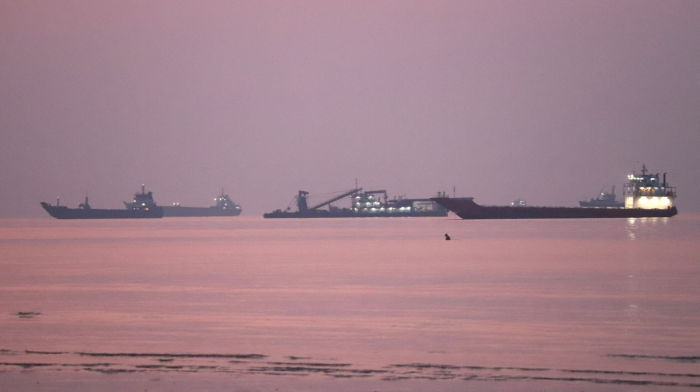
Several marine insurers said they are cancelling war risk cover for ships due to the conflict in Iran and the Gulf. Insurers including Gard, Skuld, NorthStandard, the London P&I Club and the American Club said their cancellations will take effect from 5 March.
Türkiye raised its security level for Turkish-flagged vessels in the Strait of Hormuz to Level 3 on Sunday (2 March). The development follows Iranian restrictions on shipping after U.S. and Israeli strikes and confirmation of Supreme Leader Ali Khamenei’s death.
The United States and Israel have carried out large-scale strikes on Iranian leadership and military targets, with Iranian state media confirming that Supreme Leader Ayatollah Ali Khamenei was killed.
Ayatollah Alireza Arafi has moved into a pivotal constitutional role following the death of Supreme Leader Ayatollah Ali Khamenei, becoming the clerical member of Iran’s temporary leadership council under Article 111 of the Constitution of the Islamic Republic of Iran.
Protests broke out in Pakistan and Iraq on Sunday after Iranian state media confirmed that Supreme Leader Ayatollah Ali Khamenei had been killed in joint U.S.–Israeli strikes. At least nine people were reported dead in clashes near the U.S. consulate in Karachi.
A number of senior Iranian figures have reportedly been killed in Saturday’s joint U.S.–Israeli airstrikes on Iran, according to Iranian state media, Israeli military statements and international reporting. Some of the details remain unverified. .
The death of Iran’s Supreme Leader Ayatollah Ali Khamenei has triggered one of the most significant political processes in the Islamic Republic: the selection of a new Supreme Leader.
Following the U.S.-Israel strikes, Iran has called for an urgent meeting of the United Nations Security Council to be held on Monday (2 March), and vowed strong retaliation to the attacks. Touraj Shiralilou sent this update from Tehran.
Tensions between the U.S. and Iran are escalating, with Washington ordering a significant military build-up in the region and multiple countries evacuating diplomatic staff amid fears of further instability.
Speaking during a closed-door deposition in New York on Thursday (February), former U.S. Secretary of State Hillary Clinton said she did not “recall” ever meeting the late sex offender Jeffrey Epstein and had “no knowledge of his crimes”.
You can download the AnewZ application from Play Store and the App Store.