Georgia’s Kobakhidze explains why he will not call Russia an ‘enemy’
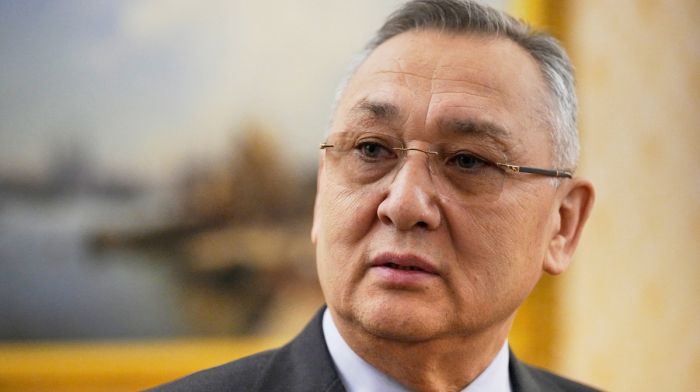
As Russian officials praise Georgia’s “pragmatic” approach towards Moscow, Prime Minister Irakli Kobakhidze has explained why he will not describe Russia as an “enemy”.
Iran will host senior officials from the five Caspian Sea littoral states at a conference in Tehran on 23 September, aimed at strengthening regional cooperation and addressing environmental challenges facing the sea.
Afghanistan and Turkmenistan signed a gas-purchase memorandum for the TAPI pipeline in Herat on Monday, as the two sides pushed for agreement on pricing and faster progress on the regional energy project.
Kazakhstan has begun building the Beineu-Saksaulsk highway, a new Middle Corridor link expected to shorten freight journeys between China and Europe by around 1,000 kilometres and reduce delivery times by up to three days.
Russia has welcomed what it describes as a shift in Georgia’s approach to the August 2008 war, praising statements that place responsibility for the conflict on former President Mikheil Saakashvili and his government.
Uzbekistan has secured preferential tariffs for fertiliser and petroleum product shipments through Kazakhstan’s Kuryk port to Georgian ports, as Uzbek cargo volumes across the Caspian continue to rise.
Police in eastern India used tear gas, batons and water cannon on Monday to disperse thousands of young protesters marching on the Jharkhand state legislature over alleged irregularities in civil service examinations.
Rising temperatures are threatening Georgia’s farms, energy supply and banking sector, with experts warning that the country has a narrow window to prepare before the economic costs grow significantly.
Iran is moving closer to ratifying a long-delayed agreement governing the Caspian Sea, as Tehran seeks closer ties with neighbouring states amid growing security concerns and economic pressure.
Kyrgyzstan is facing fuel supply challenges after shipments of petroleum products from Russia and Belarus fell sharply in July, pushing prices higher and forcing the country to look for alternative suppliers.
Pakistan is seeking to strengthen its energy security through a proposed Gulf oil storage scheme, $5 billion in refinery upgrades and renewed offshore exploration with Türkiye as global supply disruptions expose its reliance on imports.
Iran is moving closer to ratifying a long-delayed agreement governing the Caspian Sea, as Tehran seeks closer ties with neighbouring states amid growing security concerns and economic pressure.
Uzbekistan has secured preferential tariffs for fertiliser and petroleum product shipments through Kazakhstan’s Kuryk port to Georgian ports, as Uzbek cargo volumes across the Caspian continue to rise.
One hundred years after the First World War and more than eighty years after the devastation of the Second World War gave rise to the United Nations, humanity once again finds itself living in an age of permanent crisis.
For months, efforts to secure the Red Sea have focused on what is happening in the water. Naval deployments have increased, governments have expanded maritime cooperation and shipping companies have adapted to persistent security threats.
Flights arriving at Catania airport in eastern Sicily were suspended after volcanic ash from a new eruption of Mount Etna drifted into the airspace around the airport, disrupting operations at one of Italy’s busiest aviation hubs.
Greenland has issued a “strong warning” to a U.S. oil company linked to President Donald Trump after drilling equipment was brought ashore without the required government approvals, according to British media.
Iran said it was nearing a final pact with Oman defining new shipping lanes between them through the Strait of Hormuz but repeated that the U.S. must meet other conditions.
Pakistan is seeking to strengthen its energy security through a proposed Gulf oil storage scheme, $5 billion in refinery upgrades and renewed offshore exploration with Türkiye as global supply disruptions expose its reliance on imports.
Syria and Russia have signed a memorandum of understanding on the future of Russian bases at Tartous and Hmeimim after 18 months of negotiations, the Syrian foreign ministry said on Sunday.
Kyrgyzstan is facing fuel supply challenges after shipments of petroleum products from Russia and Belarus fell sharply in July, pushing prices higher and forcing the country to look for alternative suppliers.
The United Nations Food and Agriculture Organization (FAO) has warned that soaring fertiliser prices could threaten Afghanistan’s 2027 wheat harvest despite favourable growing conditions, appealing for $38.3 million to support farmers before planting.
Kazakhstan has released an Amur tiger into the wild for the first time in more than 70 years, marking the beginning of a long-term effort to restore the species to its historic range in Central Asia.
Azerbaijan’s President Ilham Aliyev and Armenia’s Prime Minister Nikol Pashinyan remarked upon progress made towards normalising relations between Baku and Yerevan in a phone call on the first anniversary of the Washington peace summit.
Tourists may soon be able to view Kazakhstan’s tourist sites by drone. Officials are planning to trial flights of between five and 30 minutes over landmarks in the country, its Ministry of Transport said.
Kyrgyzstan has introduced mandatory permits for climbers attempting Victory Peak, imposing stricter safety and experience requirements following a series of fatal accidents on one of the world’s most dangerous mountains.
Tashkent has begun work to open the Islam Karimov Memorial Complex to the public as part of plans for a 700-hectare green corridor linking major parks and public spaces across the Uzbek capital.
Tajikistan tripled fuel imports from neighbouring Central Asian countries in July after deliveries from Russia declined sharply, underscoring how disruptions to Russian exports are prompting governments across the region to seek alternative suppliers.
A year ago, in the State Dining Room of the White House, Armenian Prime Minister Nikol Pashinyan and Azerbaijani President Ilham Aliyev shook hands over a peace framework that for about three decades, many thought was impossible.
Azerbaijan’s State Oil Fund (SOFAZ) has made its first investment in Latin America, acquiring an indirect stake in Peru’s largest independent electricity producer, Inkia Energy, as part of its strategy to diversify its global investment portfolio.