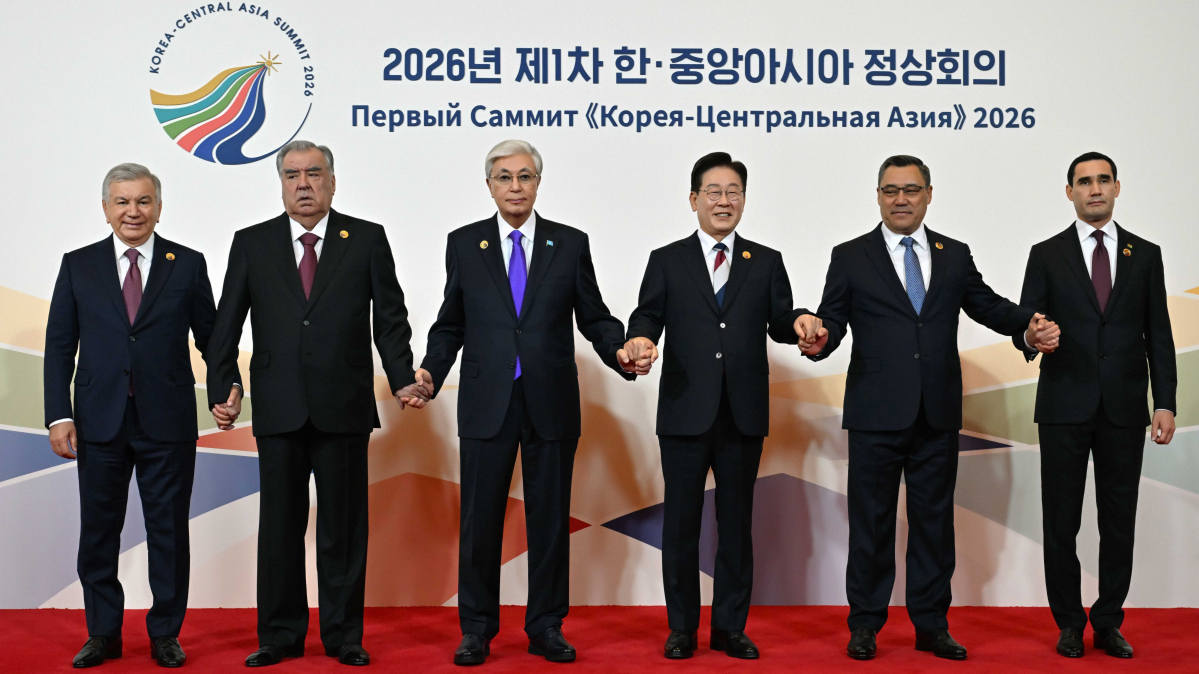
Central Asia and South Korea are targeting annual trade of $20 billion by 2030, almost double last year’s record of more than $10 billion, following a proposal at their first leaders’ summit in Seoul.
Critical minerals at the heart of cooperation
The target reflects a push to turn closer political ties into deeper economic cooperation. More than 70 agreements and memorandums of understanding were signed during three days of talks covering energy, mining, infrastructure, technology and investment.
South Korea is seeking to diversify its energy and critical mineral supplies, while Central Asian countries want greaterinvestment, access to new technologies and stronger links to global markets.
Critical minerals are at the heart of those ambitions amid shifts in global supply chains. Central Asia has significant reserves of resources used in electric vehicles, batteries and electronics, including lithium and uranium.
Cooperation is expected to go beyond raw material exports, with South Korea proposing partnerships across the value chain, from exploration and extraction to processing and manufacturing. Uzbekistan, seeking to attract investment and develop higher-value production, has proposed a joint industrial and technology park and a Regional Investment Alliance for Critical Minerals.
Kazakhstan emerges as a key partner
Kazakhstan offers an indication of how that model could develop. According to President Kassym-Jomart Tokayev, the country has deposits of all 10 minerals classified by South Korea as strategic.
The two sides have agreed to establish a joint research centre for rare and rare-earth metals in Almaty, with the participation of the Korea Institute for Advancement of Technology. Kazakhstan, which produces around 100 million tonnes of oil annually, has also said it is ready to resume energy supplies to South Korea.
Kazakhstan already accounts for around half of South Korea’s trade with Central Asia. South Korean investment in the country exceeds $12 billion, and more than 1,000 companies with South Korean capital operate there. Commercial agreements worth around $19 billion were also signed during Tokayev’s state visit.
Transport links key to expanding trade
Reaching the proposed trade target will also depend on stronger transport links. Kazakhstan has proposed an integrated logistics chain connecting South Korea with Europe through Central Asia and aims to increase total transit freight through its territory to 100 million tonnes.
The Trans-Caspian International Transport Route, known as the Middle Corridor, is central to the plan. Freight volumes have increased fivefold over the past six years, while capacity is eventually expected to reach 20 million tonnes.
Tokayev proposed connecting the Middle Corridor with the TRIPP transport initiative. South Korea already uses multimodal routes to Central Asia through the Kazakhstan-China logistics terminal at the Chinese port of Lianyungang.
Connecting the routes could create a transport chain stretching from South Korea through Central Asia to Europe, alongside closer cooperation between Busan and Kazakhstan’s ports on the Caspian Sea.
Technology and climate cooperation broaden agenda
The wider agenda extends beyond trade and minerals to technology, investment and climate resilience.
Uzbek President Shavkat Mirziyoyev, who proposed the $20 billion trade target, identified digital security, climate projects and preparing young people for a technology-driven economy among his priorities.
Kyrgyz President Sadyr Japarov proposed a common Investment Council, a joint investment fund and technology platforms for artificial intelligence. Tajik President Emomali Rahmon called for cooperation on freshwater shortages, melting glaciers and climate change, as well as more resilient supply chains.
Seoul Declaration sets framework for future ties
The summit concluded with the Seoul Declaration, which sets out a medium- and long-term framework for cooperation.
It was the first time the regional dialogue, launched in 2007 and upgraded to foreign minister level in 2020, had reached heads-of-state level.
The leaders agreed to meet every two years, with the next summit due to take place in Astana in 2028.











What is your opinion on this topic?
Leave the first comment