Myanmar's security forces committed genocide against Rohingya Muslims during a brutal military crackdown in 2017 that killed thousands and involved widespread sexual violence, the United Nations' top court ruled on 19 November.
Yuji Iwasawa, president of the International Court of Justice (ICJ), said Myanmar's security forces killed 10,000 Rohingya during operations in the country's western Rakhine State and destroyed evidence of the atrocities.
“The Republic of the Union of Myanmar has committed genocide against the Rohingya group in Northern Rakhine State, ” Iwasawa said.
“The court finds that Myanmar's security forces killed thousands of Rohingya civilians, perpetrated widespread acts of sexual violence as well as acts of extreme violence against children and attacked fleeing Rohingya,” Iwasawa said in a statement read out in The Hague.
The landmark ruling came seven years after Gambia filed the case in 2019, marking only the fourth time since the Holocaust that an international court has found the legal threshold for genocide had been met. It was also the first time the ICJ had held a state responsible for genocide.
Judges found that Myanmar had acted with the “intention to destroy” a substantial part of its Rohingya Muslim population in 2017.

The Rohingya are a predominantly Muslim minority who have faced decades of persecution, discrimination and restrictions on their rights in Myanmar. Historically concentrated in Rakhine State, many now live as refugees outside the country.
Myanmar launched military crackdown in 2017
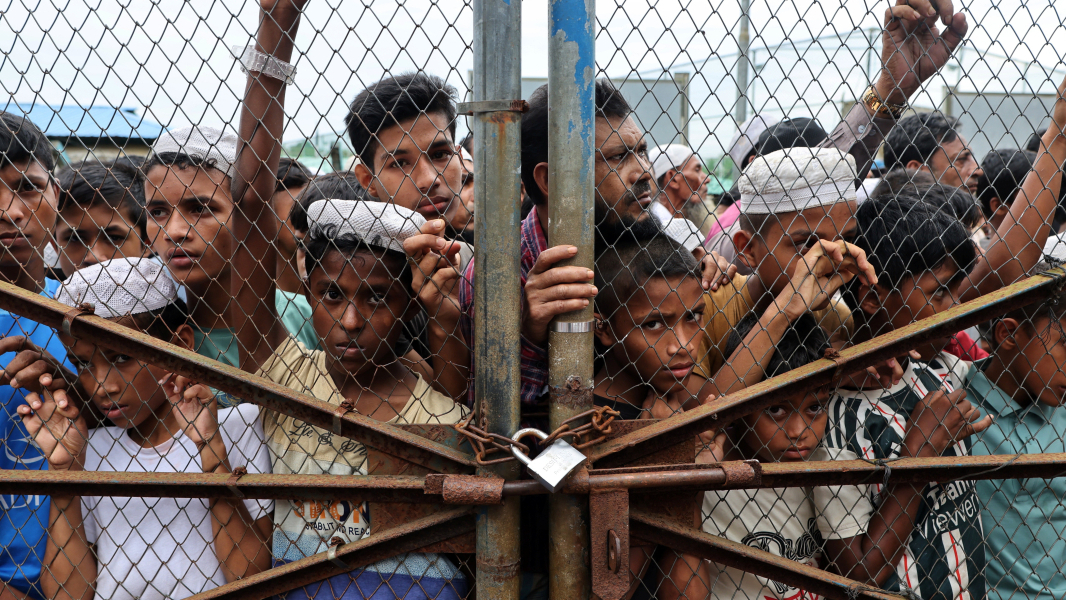
Myanmar's military launched a sweeping crackdown in Rakhine State in 2017, forcing more than 730,000 Rohingya to flee across the border into Bangladesh.
Many sought refuge in sprawling camps around Cox's Bazar in southeastern Bangladesh, joining thousands who had escaped earlier waves of violence.
Survivors described mass killings, widespread rape and villages being set ablaze during the offensive. A UN fact-finding mission later concluded that the military campaign included acts of genocide.
Myanmar's military authorities have consistently denied committing genocide, maintaining that the operations were a legitimate response to attacks by armed Rohingya militants.
Gambia brought the case before the ICJ in 2019 under the 1948 Genocide Convention, which requires states to prevent and punish genocide. It argued that Myanmar bore responsibility for atrocities committed against the Rohingya.
Myanmar burnt bodies to destroy evidence
The court also found that Myanmar had obstructed investigations and prosecutions by destroying evidence, including burning bodies, and denying UN investigators access.
The ruling is particularly significant because genocide is notoriously difficult to establish in international courts. Prosecutors must prove specific intent to destroy, in whole or in part, a national, ethnic, racial or religious group.
Since the Holocaust, international courts have recognised genocide in only a handful of cases, including the 1994 genocide in Rwanda, the 1995 Srebrenica massacre in Bosnia and atrocities committed by Cambodia's Khmer Rouge regime in the late 1970s.
Gambia has also sought reparations for the Rohingya and guarantees that refugees can return to Myanmar safely.
What is the International Court of Justice?
Based in The Hague, the ICJ is the UN's principal judicial body. It settles legal disputes between states and rules on alleged violations of international treaties.
Its judgments are legally binding, although the court has limited powers to enforce them.
The ICJ is separate from the International Criminal Court (ICC), which prosecutes individuals accused of war crimes, crimes against humanity and genocide.
Read more about Myanmar:










What is your opinion on this topic?
Leave the first comment