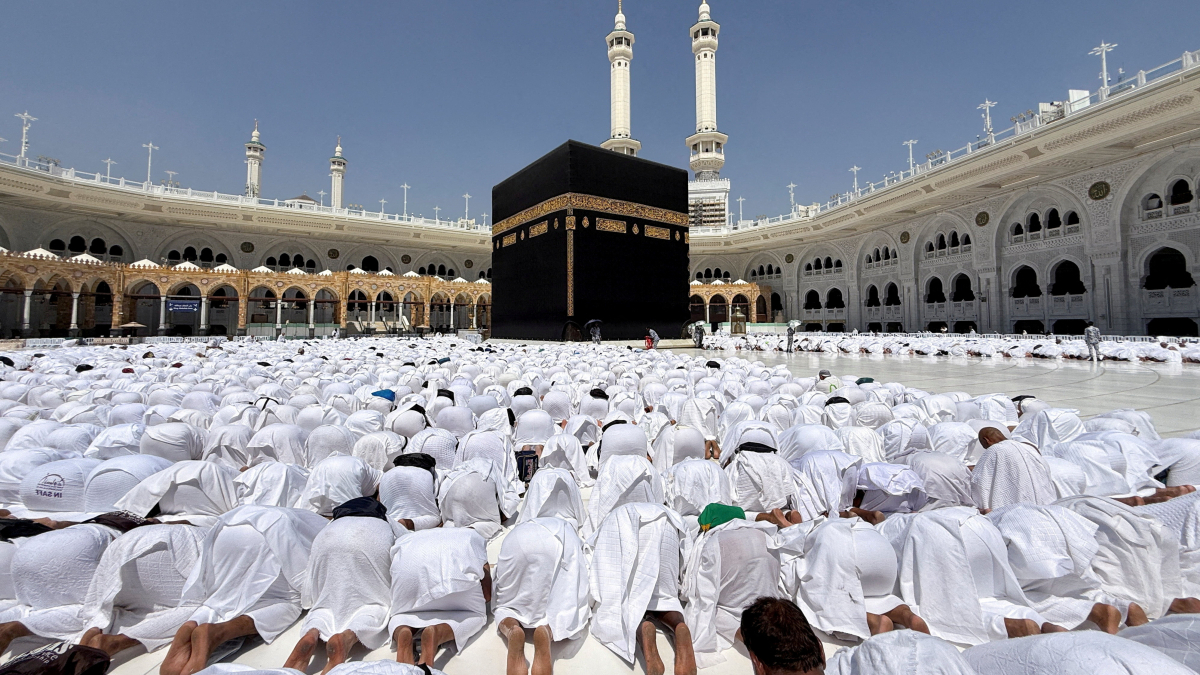
Islam is on course to become the world's largest religion by 2035, overtaking Christianity for the first time in centuries, according to new projections by the Pew Research Center.
The Washington-based research organisation estimates that the number of Muslims worldwide will reach 2.57 billion by 2035, slightly exceeding the projected 2.52 billion Christians.
The shift is largely driven by differences in birth rates, with Muslim populations growing faster than those of other major religious groups.
Birth rates drive demographic change
According to the study, Muslim women had an average of 3.1 children between 2020 and 2025, compared with 2.5 among Christian women.
Across all other religious groups combined, the average stood at 1.6 children per woman, below the 2.1 needed to maintain a population without migration.
Pew expects the trend to continue over the coming decades. By 2070, the global Muslim population could reach 3.6 billion, compared with around 3 billion Christians.
Muslims would then account for approximately 37 per cent of the world's population, up from 26 per cent in 2020. Christianity's share is projected to remain relatively stable at around 29 per cent.
Religious switching also plays a role
Birth rates are not the only factor shaping the religious landscape. People changing their religious beliefs will also influence future population figures.
Pew projects that both Christianity and Islam will lose followers through religious switching between 2020 and 2070. However, the expected losses are significantly different.
Christianity could lose around 105 million people through switching, while Islam is projected to lose approximately 8 million.
Other religions face a changing outlook
The projections suggest that Hinduism will continue growing in absolute numbers, although its share of the global population could edge down to 13.6 per cent by 2070.
Judaism is expected to follow a similar pattern, while Buddhism could experience a decline in both population size and global share.
Meanwhile, people identifying as atheist, agnostic or having no religious affiliation are projected to account for 17 per cent of humanity by 2070, down from 24 per cent in 2020.
The findings point to a major shift in the world's religious balance, shaped by fertility, age structures and changing beliefs. However, the figures are projections based on existing demographic trends, rather than predictions of how individuals will choose to practise their faith in the future.
Read more:
















What is your opinion on this topic?
Leave the first comment