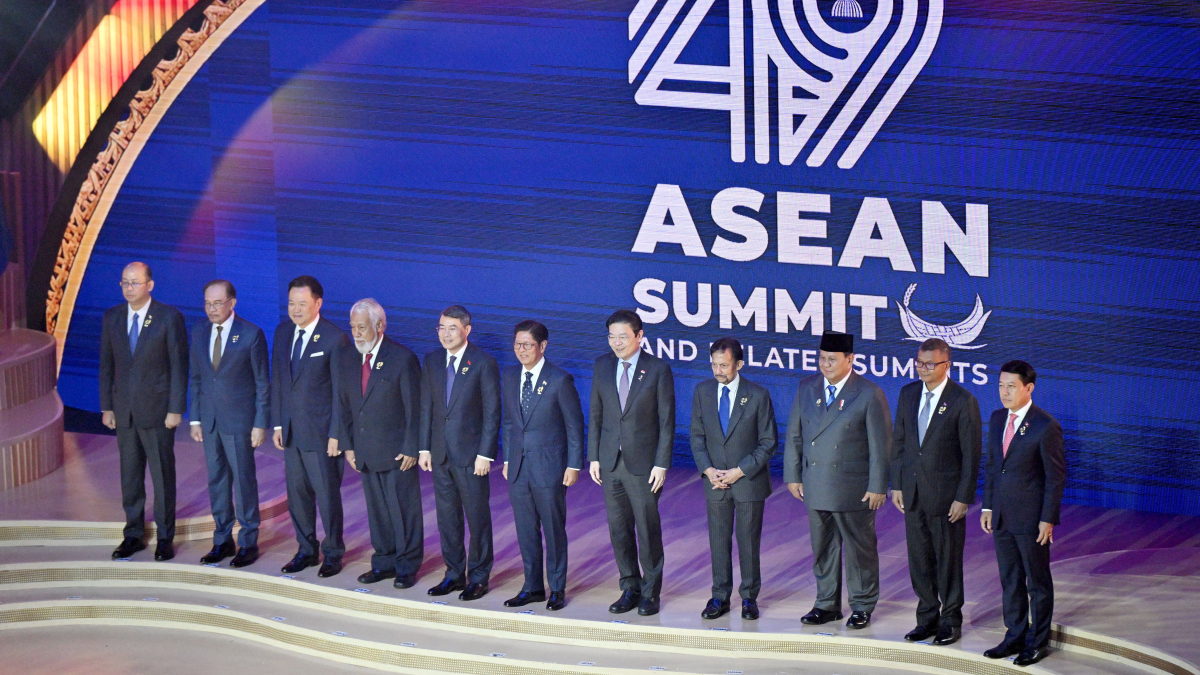
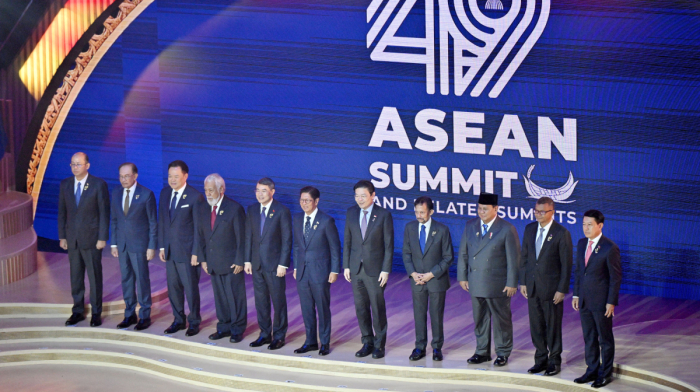
Southeast Asian leaders opened the 49th ASEAN Summit in Manila Sunday, with Myanmar's crisis, security and economic uncertainty dominating talks. Philippine President Ferdinand Marcos Jr. called for continued engagement with Myanmar and urged a stronger response to conflict and energy disruptions.
Marcos said ASEAN members had agreed to maintain 'constructive and principled engagement' with Myanmar under the bloc's Five-Point Consensus, a peace framework adopted after the country's 2021 military coup.
The summit, running from 15 to 17 November, brings together regional leaders and international partners, including representatives from Canada and Brazil. Discussions are also expected to address tensions in the South China Sea and the economic consequences of the Middle East conflict.
Myanmar's future divides ASEAN
Myanmar remains one of ASEAN's most difficult diplomatic challenges, five years after its military seized power and triggered a prolonged civil conflict.
The Five-Point Consensus calls for an immediate end to violence, dialogue among all parties, humanitarian assistance and mediation through an ASEAN special envoy.
However, progress has been limited, and disagreements remain over whether Myanmar's military-backed leadership should be allowed to return to high-level ASEAN meetings.
Speaking on Saturday, Philippine Foreign Affairs Secretary and ASEAN special envoy Theresa Lazaro rejected suggestions that the bloc was softening its position.
'There is no easing (of the approach to Myanmar). There is still the Five-Point Consensus,' Lazaro told reporters.
Thailand and several other ASEAN members have increased engagement with Myanmar, while proposals to reconsider restrictions on its political representatives remain under discussion.
Marcos acknowledged the humanitarian consequences of the conflict during Sunday's leaders' retreat.
'Myanmar is not merely an issue on ASEAN's agenda. Myanmar is part of our ASEAN family,' he said.
He urged leaders to pursue a peaceful, inclusive and Myanmar-led political process, with greater attention to displaced families and communities requiring humanitarian assistance.
Marcos calls for stronger economic and energy cooperation
Opening the summit's plenary session, Marcos said more than 100 proposed outcome documents had emerged from months of negotiations among ASEAN members and their partners.
He called for stronger cooperation on economic resilience, security and regional development under ASEAN's long-term vision for 2045.
'We should therefore continue to deepen our partnerships on the basis of mutual benefit,' Marcos said.
Energy security also featured prominently in his remarks, with the Philippine president warning that disruptions to fuel and electricity supplies directly affect households and businesses.
He called for stronger regional energy connections, more diverse energy sources and faster renewable energy development.
Marcos identified the proposed ASEAN power grid as an important foundation for improving regional energy security.
South China Sea tensions remain in focus
The summit comes amid continuing tensions between the Philippines and China over disputed waters in the South China Sea.
Manila has expanded military cooperation with international partners, including the U.S., Japan and Australia, while accusing Chinese vessels of aggressive actions in contested areas.
Beijing maintains that its maritime activities are lawful and has criticised joint military exercises involving the Philippines and its allies.
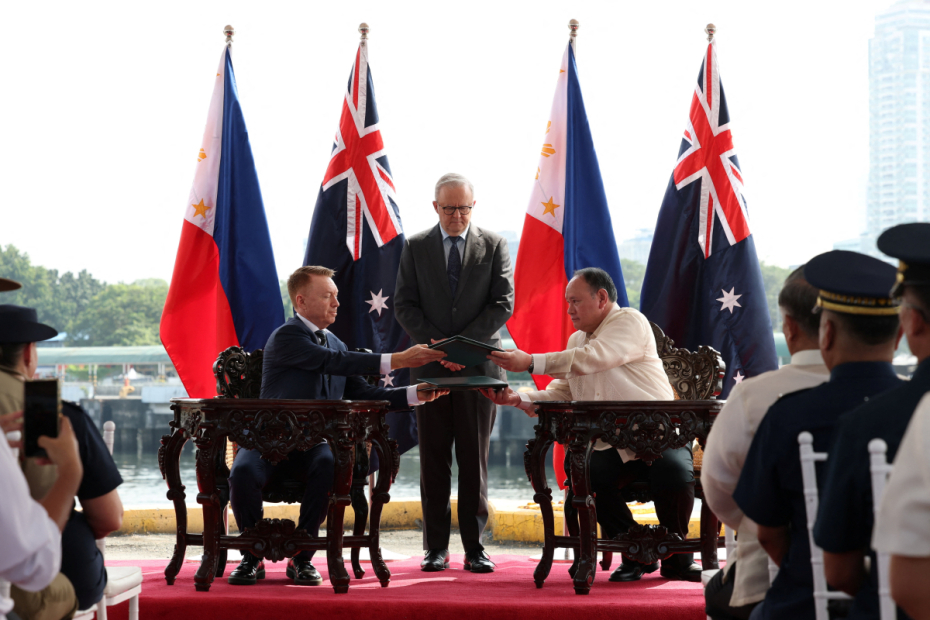
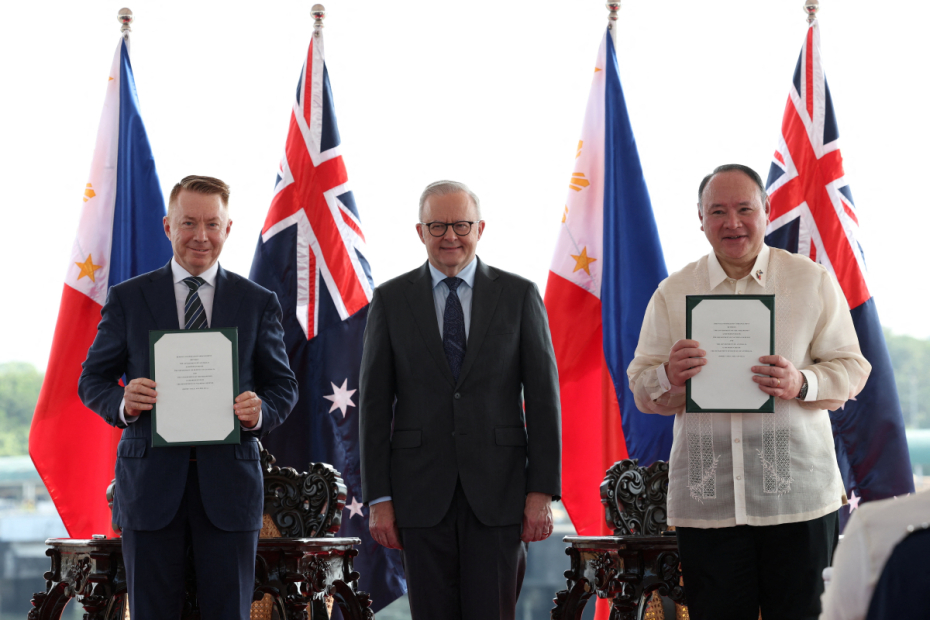
On Sunday, the Philippines and Australia signed a defence cooperation arrangement designed to simplify joint military activities and strengthen maritime security.
Australian Prime Minister Anthony Albanese witnessed the signing in Manila and announced additional investment in maritime surveillance, drone technology and defence training.
Protesters and police clash near summit venue
Hundreds of protesters and police clashed in Manila on Sunday while attempting to march towards the ASEAN summit venue.
Demonstrators from the New Patriotic Alliance opposed U.S. President Donald Trump's expected visit and criticised the ongoing Middle East conflict, which they blamed for rising prices and economic hardship in the Philippines.
Police blocked protesters from approaching the venue, with footage showing officers pushing back demonstrators.
Protest leader Teddy Casino also criticised Marcos for welcoming foreign leaders while, he argued, neglecting domestic concerns.
'To Donald Trump our message is: you are not welcome here,' Casino said.
What is ASEAN and why does it matter?
The Association of Southeast Asian Nations (ASEAN) is a regional organisation established in 1967 to promote economic cooperation, political dialogue and regional stability.
Its members include the Philippines, Indonesia, Malaysia, Singapore, Thailand, Vietnam, Brunei, Cambodia, Laos, Myanmar and Timor-Leste.
ASEAN plays a central role in regional diplomacy by bringing Southeast Asian governments together with major international powers, including China, the U.S., Japan and Australia.
Its importance extends beyond diplomacy. Southeast Asia is a major centre for global manufacturing, trade and shipping, making regional stability significant for international supply chains and energy markets.
The Manila summit offers ASEAN leaders an opportunity to coordinate responses to regional challenges, although major decisions depend heavily on consensus among members.













What is your opinion on this topic?
Leave the first comment