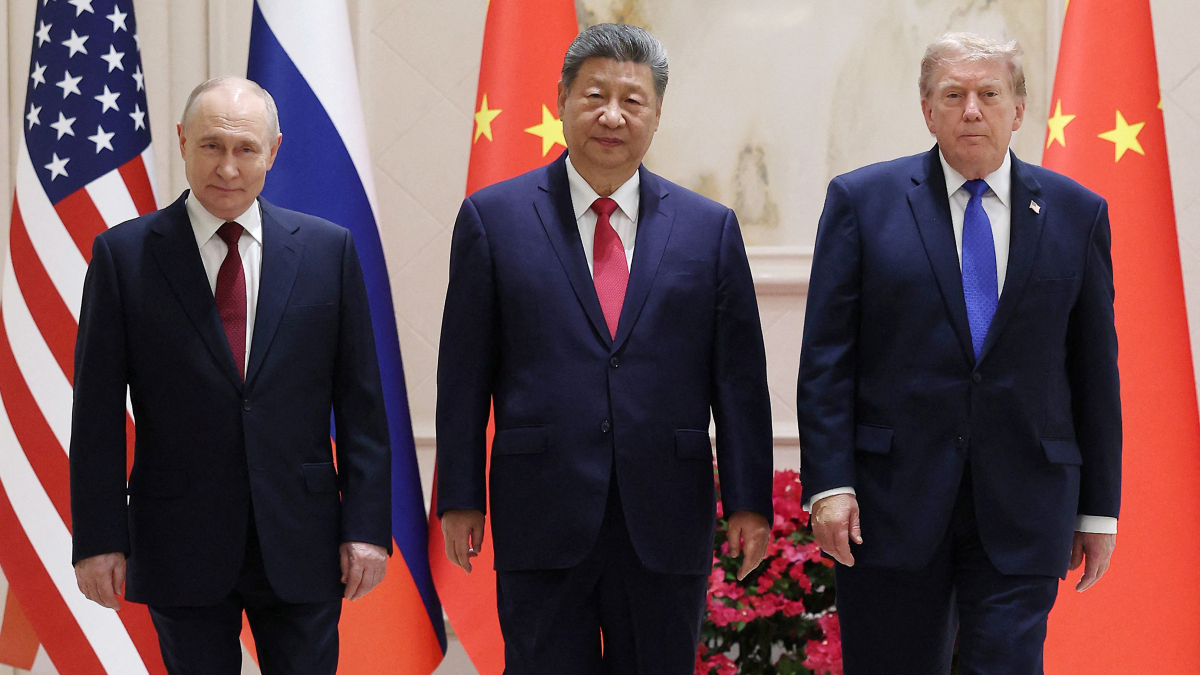
U.S. President Donald Trump, China's Xi Jinping and Russia's Vladimir Putin have issued a joint “declaration of peace” following historic talks in southern China, but stopped short of committing to nuclear arms reductions or addressing the war in Ukraine in their joint statement.
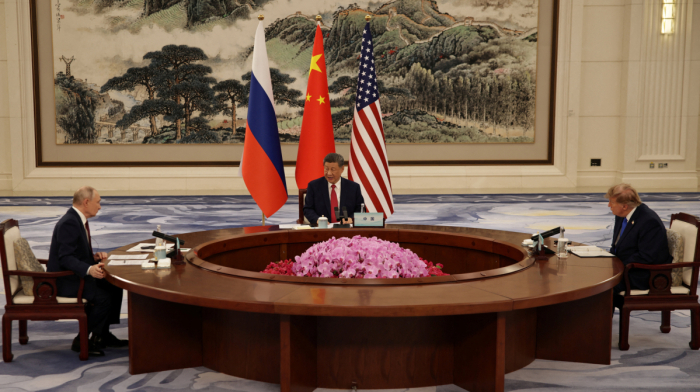
The 90-minute meeting in Shenzhen on Thursday marked the first trilateral talks between the leaders of three of the world's biggest nuclear powers.
Held on the sidelines of the Asia-Pacific Economic Cooperation (APEC) summit, the talks took place at Kylin Villa, nestled among wooded hills beside a lake. All three leaders described the meeting as historic. Putin reportedly proposed the trilateral format.
What the declaration says
The three leaders “reaffirmed that a nuclear war cannot be won and must never be fought”.
They pledged to “conduct a dialogue on reducing nuclear risks and preventing proliferation of nuclear weapons”, but set no timetable or specific targets for reducing their nuclear arsenals.
The declaration also outlined three other commitments:
- Increase global production and supplies of petroleum and fuel products.
- Reform the United Nations to strengthen its response to global challenges.
- Uphold immunity protections for state officials before international courts.
On the issue of legal immunity, the declaration said the leaders “agreed that the International Criminal Court and other similar institutions must not abuse their jurisdiction”.
Opening remarks set the tone
Speaking before journalists were asked to leave the meeting, Trump told his counterparts: “We are really making history. No peace was ever forged by declining opportunities for engagement.”
He said the three presidents shared a “special responsibility” to maintain productive dialogue despite their differences.
“Too often past leaders have avoided talking to nations with whom they had disagreements,” he said. “We feel the opposite.”
Trump had pushed for nuclear arms control to take centre stage at the summit, despite China's previous objections.
He also stressed the importance of working together to “combat the threat of nuclear proliferation in other countries around the world”, describing such cooperation as “vital”.
“That’s what we’re doing in Iran. We’re not going to let Iran have a nuclear weapon.”
Turning to Ukraine, Trump said he had already held a “long discussion” with Putin about the conflict. He said the Russian president wanted the war to end and expressed hope that “the other side” shared that goal.
Xi urges cooperation as Putin highlights shared interests
Xi said, “Positive interaction among major powers is not a matter of choice, but a mandatory requirement”.
He added: “History tells us that when major powers live in harmony, the world is at peace. When major powers clash, the world falls into turmoil.”
Putin, meanwhile, pointed to what he described as “numerous shared interests in the settlement of regional conflicts, including obviously the conflict in Ukraine”.
He added that food and energy security were also on the agenda.
Putin hails ‘important chapter’
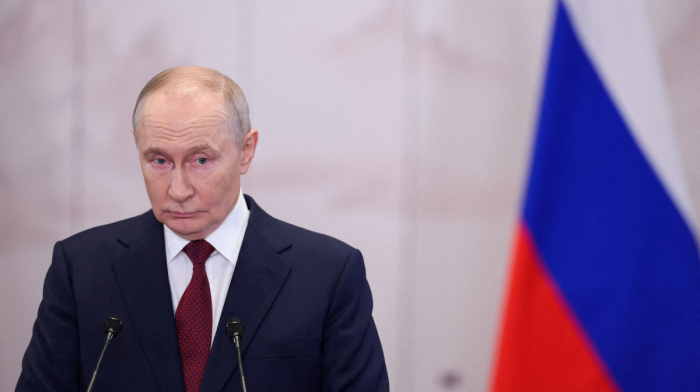
Speaking at a news conference after the summit, Putin called the meeting “an important chapter in the history of diplomacy”.
He argued that Ukraine and Europe were not yet prepared to make the compromises needed to end the war. He also said Russia had invited EU representatives to Moscow to gain a better understanding of Europe's position.
Addressing comparisons with the 1945 Yalta Conference, which brought together the leaders of the Soviet Union, Britain and the U.S. towards the end of the Second World War, Putin rejected suggestions that the historic meeting had divided the world into spheres of influence.
“Nobody divided up the world at Yalta. It simply codified the realities that had emerged after WW2,” he said. “And when it comes to today’s conflicts, the realities on the ground will have to be accepted.”
According to Chinese state broadcaster CCTV, Xi described the meeting as “positive, constructive, and highly productive”.
CCTV also reported that Xi had recalled “the history of fighting side-by-side during WW2”.
Kyiv: ‘Not the Yalta of Putin’s dreams’
Ukraine's Foreign Minister Andriy Sybiha dismissed comparisons between the Shenzhen summit and the 1945 Yalta Conference, writing on X that the meeting had not become the “Yalta of Putin’s dreams”.
“Meanwhile, Russia has practically lost its bridge to the real Yalta in occupied Ukrainian Crimea,” he wrote. “Time for him to wake up, get real, and end the war he can never win.”
The summit concluded just hours before Ukrainian officials and leaders of Kyiv's key European allies were due to meet Trump's envoys, Steve Witkoff and Jared Kushner, in Berlin.
G20 in Florida could bring them together again
Despite the declaration, unresolved tensions between the three powers could come back into focus at the upcoming Group of 20 (G20) summit, which Trump is due to host at his Florida golf resort.
The U.S. president is expected to meet Xi again, while Putin has left open the possibility of attending.
Putin said he would consider taking part after discussing the matter with Trump, although he would also need to assess the situation in Russia.
His attendance, however, could provoke a backlash from Washington's European allies.
Read more:








What is your opinion on this topic?
Leave the first comment