Iran has ruled out resuming international inspections of its nuclear facilities until threats of further U.S. and Israeli attacks are permanently lifted, citing security concerns following strikes in 2025 and 2026.
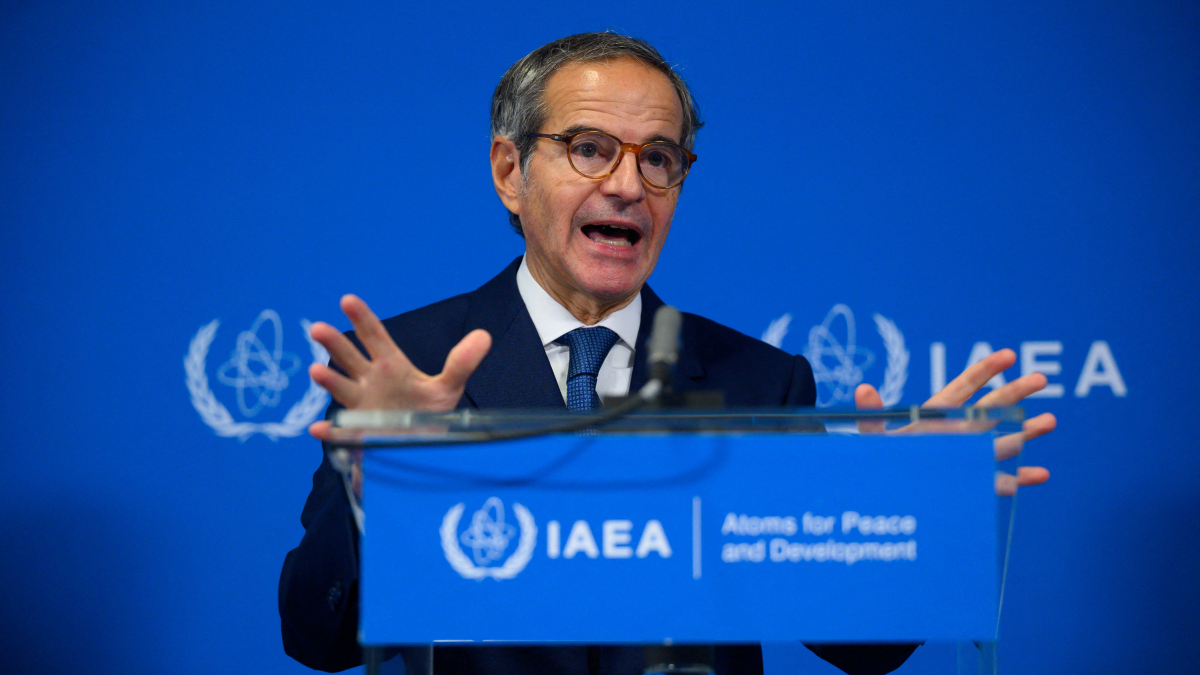
Iran’s Permanent Mission to International Organisations in Vienna said the International Atomic Energy Agency (IAEA) cannot resume its safeguards inspections until the threat of further military strikes on Iran’s nuclear facilities has been permanently removed.
In an explanatory note responding to a report submitted on Wednesday by IAEA Director General Rafael Grossi to the agency’s Board of Governors, the mission said the unprecedented situation stemmed from U.S. and Israeli attacks on Iranian nuclear facilities under UN safeguards, compounded by continuing threats of further strikes.
Grossi said the agency could not verify the quantity or location of Iran’s enriched uranium stockpile. Tehran said last week that inspectors had visited only the Bushehr nuclear power plant.
Responding to the report, the mission stressed that “security concerns and objective obstacles resulting from attacks in 2025 and 2026 have restricted Iran’s ability to carry out certain safeguards activities under normal conditions”.
However, it signalled a willingness to consider renewed cooperation once verification activities could be conducted safely and effectively.
Iran criticises nuclear watchdog's response
Earlier, Foreign Ministry spokesman Esmaeil Baghaei said Tehran’s cooperation with the UN nuclear watchdog would not improve under current conditions.
Speaking at a weekly news briefing, Baghaei argued that although the IAEA had acknowledged the disruption caused by U.S. and Israeli strikes, it had failed to identify the attacks as the main obstacle to its work.
“The report wrongly calls the Agency’s lack of information and access a serious proliferation and compliance concern requiring utmost urgency. Yet it brushes aside the attacks that created this lack, an approach that is neither objective nor professional,” said Reza Najafi, Iran’s ambassador and permanent representative to the IAEA.
Tehran warns of tighter restrictions on inspectors
Najafi also warned that Tehran would reassess the conditions under which international inspectors could access its nuclear facilities.
“We will definitively reconsider the quality of access and the conditions applicable in each individual case. This is one of the inevitable consequences of the attacks,” he added in a statement to the IAEA Board of Governors on Wednesday.
Iran has barred IAEA inspectors under legislation passed by parliament and has accused Grossi of “double standards” over his failure to condemn the strikes on nuclear sites subject to UN safeguards.
“We will surely not allow ourselves to be ‘strongly condemned’ by the Director General for merely exercising our right under the CSA’s Article 9 regarding the designation of inspectors,” Najafi said, referring to Iran’s Comprehensive Safeguards Agreement with the agency.
Read more:









What is your opinion on this topic?
Leave the first comment