Russian President Vladimir Putin has vowed retaliation for Ukrainian strikes on the Crimean Bridge, ruling out talks on a possible deal to halt attacks on energy and maritime infrastructure.
The warning marks a hardening of Moscow’s position following the strikes on the bridge linking Russia to Crimea, which Moscow annexed in 2014.
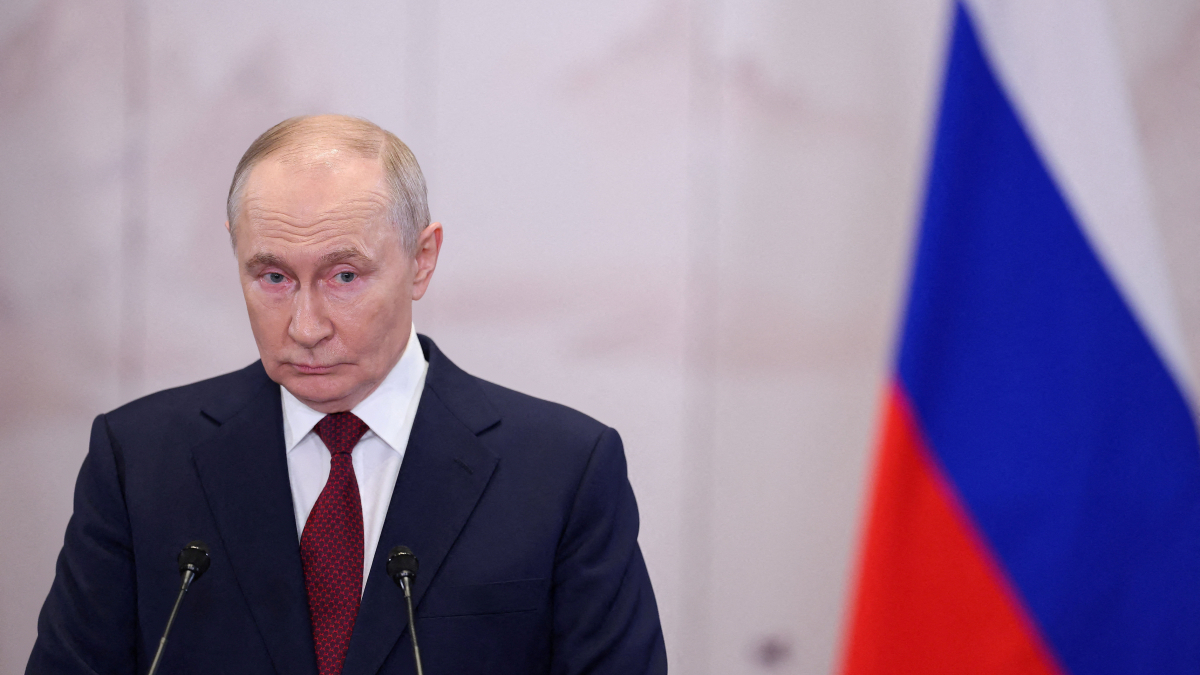
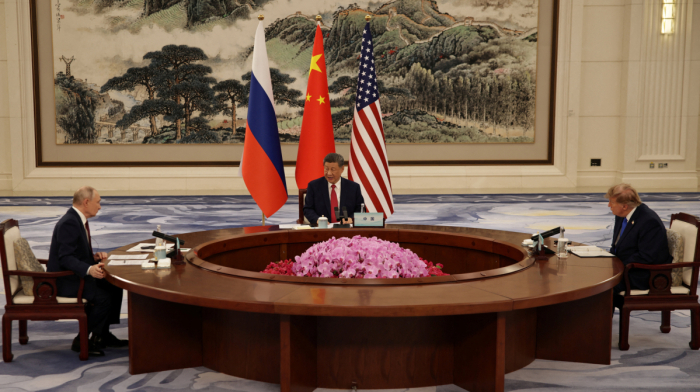
Speaking at a news conference in Shenzhen, China, on Thursday, following talks with the leaders of China and the U.S., Putin said Russia’s response would be “far more painful than what the Kyiv regime did to the bridge.”
“But after the strikes on the Crimean Bridge, we will not negotiate,” he said. “We will respond to these strikes, and I want everyone to know that.”
Putin rules out negotiations
Putin, who appeared visibly angry, said he had previously instructed members of Russia’s Security Council to consider a possible agreement to halt attacks on maritime and energy infrastructure. However, he said the bridge strikes had ruled out that option.
He dismissed Ukraine’s argument that the bridge was used for military purposes, saying he had personally ordered that no military equipment or ammunition be transported across it. He also denied that it had been used to carry oil or petroleum products.
“It is an exclusively civilian facility,” he said.
Asked about Russia’s response, Putin added: “And there will be retaliation.”
Russia vows to secure alternative land route
Putin said the damaged bridge would be repaired, although the road section had suffered extensive damage. He believed the railway section had already been restored.
He also acknowledged that modern precision-guided weapons made such attacks relatively straightforward, saying they were “not particularly difficult” to carry out.
Putin said Moscow had long maintained that Crimea needed an alternative land route to Russia because of Kyiv’s repeated threats to destroy the bridge. He said that connection had now been established “through the Zaporizhzhia and Kherson regions.”
Following the attack, Russia would reinforce its presence in the two Ukrainian regions and take further steps to secure the route, he said.
“This should be clear to everyone.”
Bridge repairs could take more than a year
Deputy Prime Minister Marat Khusnullin told state television that officials would need about a week to assess the damage and establish a repair timetable.
“We may be able to get certain sections up and running in a month or two,” he said, according to Russian state news agency TASS.
Meanwhile, seven vessels, including tugboats and a dredger, were positioned near the worst-hit section of the bridge on Thursday, according to vessel-tracking website VesselFinder.
Inger Kroon, a structural engineering specialist at Danish consultancy COWI, warned that replacing the approximately 227-metre road span and its arch could be a complex and lengthy operation.
“You have to produce a new arch span, a large steel structure. You can’t just have an ordinary truss span 227 metres and carry a lot of traffic,” she said.
Kroon estimated that repairs could take well over a year, partly because the replacement span would have to be constructed north of the bridge, as it could not be moved beneath the existing railway structure.
A temporary road span supported by additional columns could offer a faster solution, she said, but warned that the supports could obstruct vessels passing beneath the bridge.
Read more:









What is your opinion on this topic?
Leave the first comment