Georgia's move to comply with U.S. sanctions on Iranian airlines has sparked a diplomatic exchange with Tehran, as Tbilisi faces growing scrutiny in Washington over its ties with Iran, Russia and China.
Georgia moves to comply with sanctions
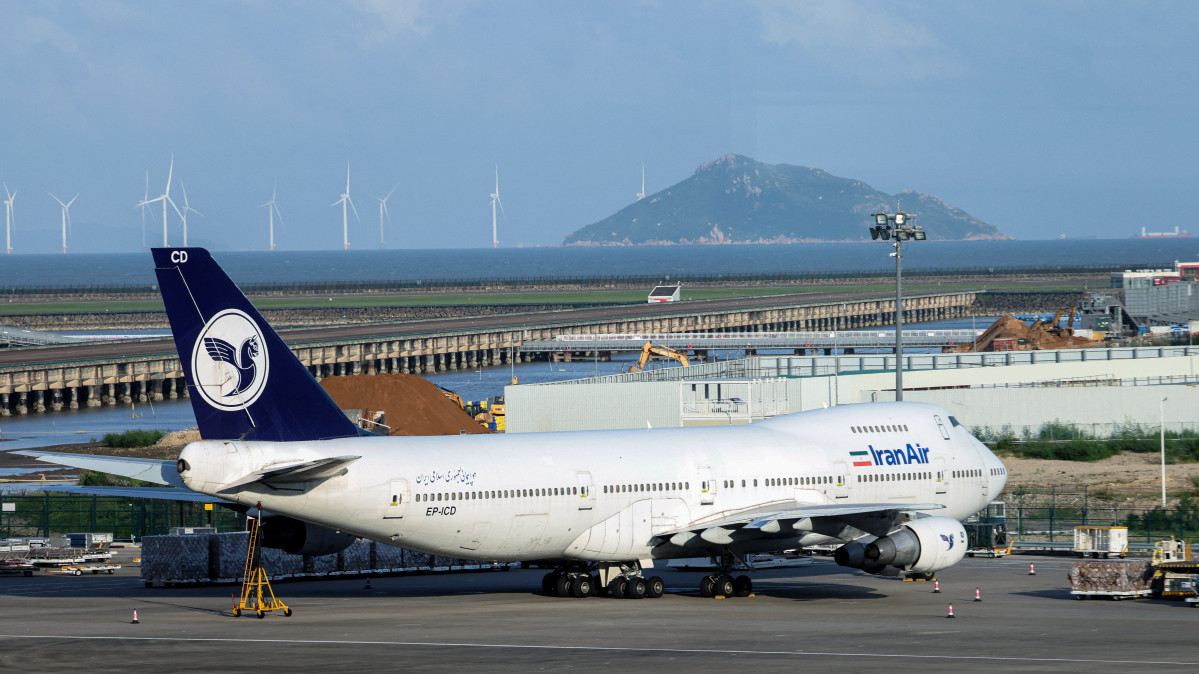
The U.S. imposed sanctions on 27 Iranian airlines on 8 September, including several that operate flights between Iran and Georgia. Georgia's Civil Aviation Agency responded by saying it would comply with the restrictions, in line with its approach to previous Western sanctions.
The decision drew a response from Seyed Ali Mojani, Iran's ambassador to Georgia, who said that while Iran “respects” Georgia's right to make that choice, Tehran was free to make its own decisions in response.
Mojani said Iranian tour operators had already approached the embassy seeking clarity over the future of tourist travel to Georgia. He noted that Georgia has become a major destination for Iranian holidaymakers, particularly its Black Sea coast, but suggested travellers could turn to other destinations if flights became more difficult.
Georgian Prime Minister Irakli Kobakhidze also responded, saying publicly that such disagreements should not be conducted through statements. He said any message Georgia had for the Iranian ambassador would be delivered directly rather than through a public exchange.
On the substance of the dispute, however, Kobakhidze stood firm. He said Georgia complies with international sanctions regimes when they are in force and does not allow them to be circumvented.
While the dispute over the airlines remains relatively contained, it comes against a much broader backdrop of growing pressure on Tbilisi.
Washington increases scrutiny of Georgia
Relations between Tbilisi and its traditional Western partners have deteriorated over the past two years, drawing increasing attention in the U.S. Congress.
One of the clearest signs of that concern is the bipartisan MEGOBARI Act, legislation aimed at countering the influence of the Chinese Communist Party, the Iranian government and the Russian Federation in Georgia.
The bill passed the U.S. House of Representatives by an overwhelming majority, with lawmakers involved in the legislation describing the scale of bipartisan support as significant.
The legislation portrays Georgia's current government as increasingly hostile towards independent civil society and its traditional Euro-Atlantic partners while developing closer relations with Russia, China and other authoritarian states.
Among its proposed measures is the suspension of the U.S.-Georgia Strategic Partnership Commission until Tbilisi demonstrates that it is genuinely representing the democratic wishes of its citizens and pursuing membership of the EU and NATO.
Further legislation has added to the pressure. In June, the U.S. House passed a separate measure requiring the administration to produce a detailed report on Russian and Chinese intelligence activity in Georgia.
The move came as China and Georgia announced that they were elevating their relationship to a comprehensive strategic partnership. One of the bill's sponsors argued that Georgia's ruling party did not represent ordinary Georgians and said restoring a strong relationship with Washington would require the release of political prisoners, free elections and an end to Chinese, Russian and Iranian influence.
Against that backdrop, Georgia's decision to comply with U.S. sanctions on Iranian airlines carries significance beyond the aviation sector.
It comes as Tbilisi seeks to demonstrate to an increasingly sceptical U.S. Congress that it continues to observe the international sanctions regimes to which it is committed.
Kulevi controversy adds to pressure
The issue takes on greater significance when viewed alongside a separate sanctions controversy surrounding Kulevi, the Black Sea port that has faced scrutiny this year.
Kulevi is home to an oil terminal owned by Azerbaijan's state energy company SOCAR, as well as a recently built refinery. Investigators and watchdog groups have raised repeated questions about activities involving both facilities.
The tanker Kayseri sailed from the Russian port of Novorossiysk before unloading more than 100,000 tonnes of Russian crude at Kulevi. Just three weeks after the delivery, the Kayseri was itself placed under EU sanctions as part of measures targeting Russia's suspected shadow fleet.
The EU later came close to sanctioning Kulevi directly as part of its 20th sanctions package, amid allegations that the port was being used to transport Russian-origin crude on vessels employing irregular and high-risk shipping practices.
Georgia ultimately avoided the designation after its government and the port operator committed to preventing sanctioned vessels from using the facility. Analysts have also suggested that Azerbaijan's relations with Washington and Brussels played a role in the outcome.
Energy researchers have since argued that the Kulevi refinery exploited a loophole by importing crude exclusively from Russia before exporting refined products to EU and U.S. markets. They say the practice breaches EU rules prohibiting imports of Russian-derived oil products after January 2026.
Georgian officials, including Kobakhidze, have repeatedly denied wrongdoing and insist the terminal is not being used to circumvent Western sanctions.
Why compliance matters for Georgia
Taken together, the two issues help explain the wider significance of Georgia's decision on Iranian airlines.
After months of scrutiny over Kulevi, and with the U.S. Congress pursuing legislation focused on Tbilisi's relations with Moscow, Beijing and Tehran, Georgia has a strong incentive to demonstrate clear compliance when faced with a more straightforward sanctions issue.
Enforcing restrictions affecting sanctioned Iranian carriers gives Tbilisi a concrete example with which to argue that, whatever questions remain over Kulevi, it is not seeking to circumvent sanctions elsewhere.
Mojani, meanwhile, presented Iran's response as one of independence rather than confrontation, suggesting Iranian tourists and traders could simply choose other Black Sea destinations if Georgia became more difficult to reach.
Whether that happens on a significant scale remains unclear, particularly given how established Georgia has become as a destination for Iranian visitors in recent years.
For now, the restrictions on Iranian airlines represent only one part of a much larger challenge for Georgia. Tbilisi is facing growing pressure from a U.S. Congress that increasingly views the country as moving closer to Moscow, Beijing and Tehran, while the Georgian government insists it continues to respect international sanctions.
Read more:
















What is your opinion on this topic?
Leave the first comment