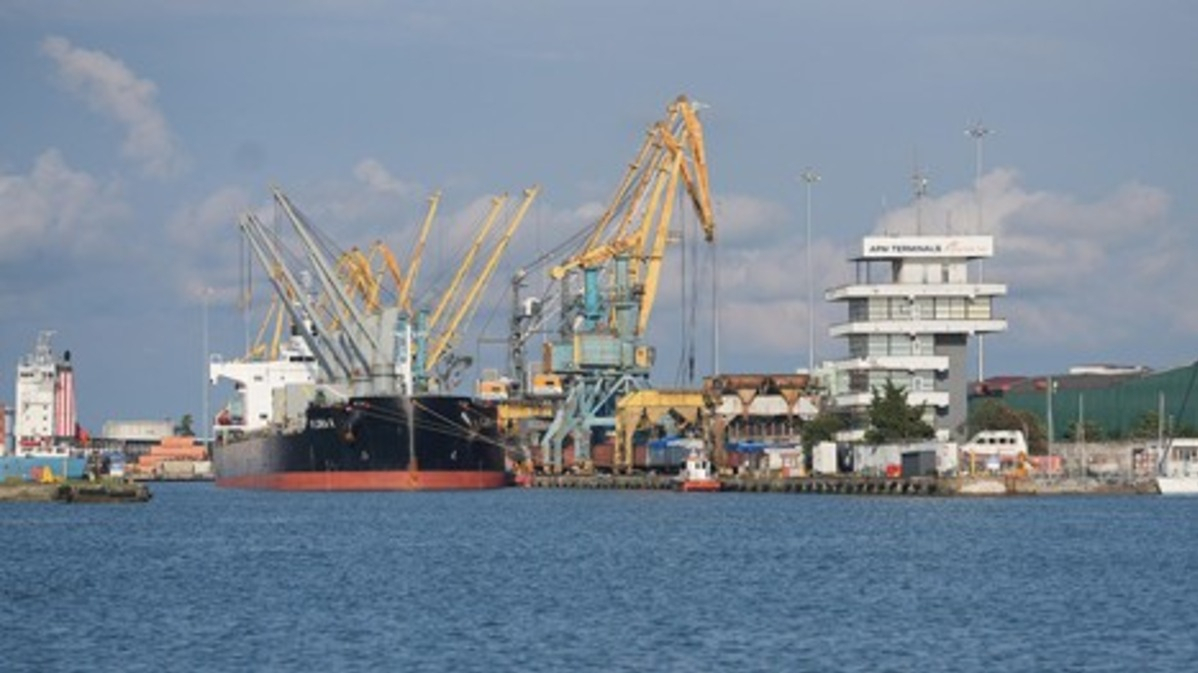
Georgia has confirmed it will retain sole ownership of the long-delayed Anaklia deep-sea port under a "Landlord" model, while inviting international partners to invest in and operate terminals as interest grows from China, Central Asia and Azerbaijan.
What's actually changing
After years of false starts, political scandal and geopolitical rivalry, Georgia has finally set out how it plans to develop the Anaklia deep-sea port. The key message is straightforward: no shares are being sold and the state alone will own the port.
Economy Minister Mariam Kvrivishvili used a briefing this week to dismiss what she described as "speculation", declaring: "This is a Georgian port and this will be a Georgian port."
Under the newly confirmed "Landlord" model, which Kvrivishvili described as one of the world's most widely used port ownership structures, the Georgian state will retain ownership of the core maritime and port infrastructure while inviting multiple international partners to invest in and operate the terminals.
The approach marks a significant departure from the original plan, which relied on a single foreign operator. Instead, Tbilisi intends to bring together several countries and companies to compete and cooperate, arguing that this will attract more cargo and improve the port's overall efficiency.
A port with a complicated past
Anaklia has long been surrounded by controversy. In 2016, a Georgian-American consortium involving TBC Holding and Conti International won the original tender. However, the project collapsed in 2020 after corruption charges were brought against figures linked to the Georgian side and U.S. investors withdrew.
The government eventually awarded the project to a Chinese-Singaporean consortium in 2024, a decision that prompted concern in Washington and Brussels, given Anaklia's longstanding symbolic importance as a potential Western foothold on the Black Sea rather than one aligned with China or Russia.
Against that backdrop, Kvrivishvili's emphasis on state ownership carries particular significance. Whoever ultimately manages the terminals, she made clear, will not own a stake in the port itself.
Middle Corridor momentum
The minister also highlighted growing interest from China, Central Asian countries and Azerbaijan, all key players along the Middle Corridor, the trade route linking Europe and Asia while bypassing Russia.
She cited strong growth figures to underline the project's importance. Cargo throughput at Georgian ports rose by 21% in the first four months of 2026 compared with the same period a year earlier, while overall cargo volumes have increased by 46% over the past four years.
To support this growth, the government has committed $7 billion to transport infrastructure by 2032, including the new port, railway upgrades and expressway construction.
Construction already under way
Kvrivishvili insisted Anaklia is no longer simply a proposal. Dredging and breakwater works are already under way, she said, inviting sceptics to visit the site for themselves.
An updated master plan is being finalised, first-phase cargo forecasts are being revised upwards to reflect rising demand, and the first vessel is expected to call at Anaklia in 2029.
Whether that timetable is met remains to be seen. Anaklia has a history of delays. For now, however, Georgia's message is clear: the port will remain under Georgian ownership, and the long-delayed project is finally gathering momentum.
















What is your opinion on this topic?
Leave the first comment