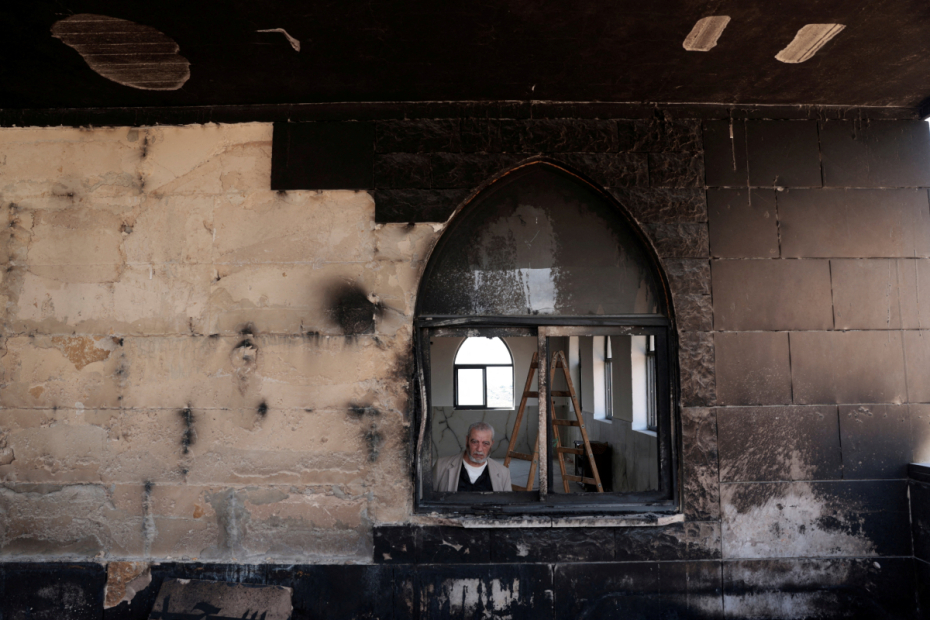
Israeli settlers attacked Palestinian villages in the West Bank early on Sunday, setting fire to two mosques and scrawling graffiti on buildings, Palestinian officials said.
The attacks followed a deadly incident on Friday in which four Palestinians and two Israeli soldiers were killed near the Palestinian village of Tal, southwest of Nablus.
During the incident, villagers came out of their homes to confront the settlers and a stand-off ensued, with video appearing to show one of the Palestinians grabbing a settler's weapon.
Palestinian local authorities say the settlers provoked the violence. The Israeli military said shots were fired by both sides.
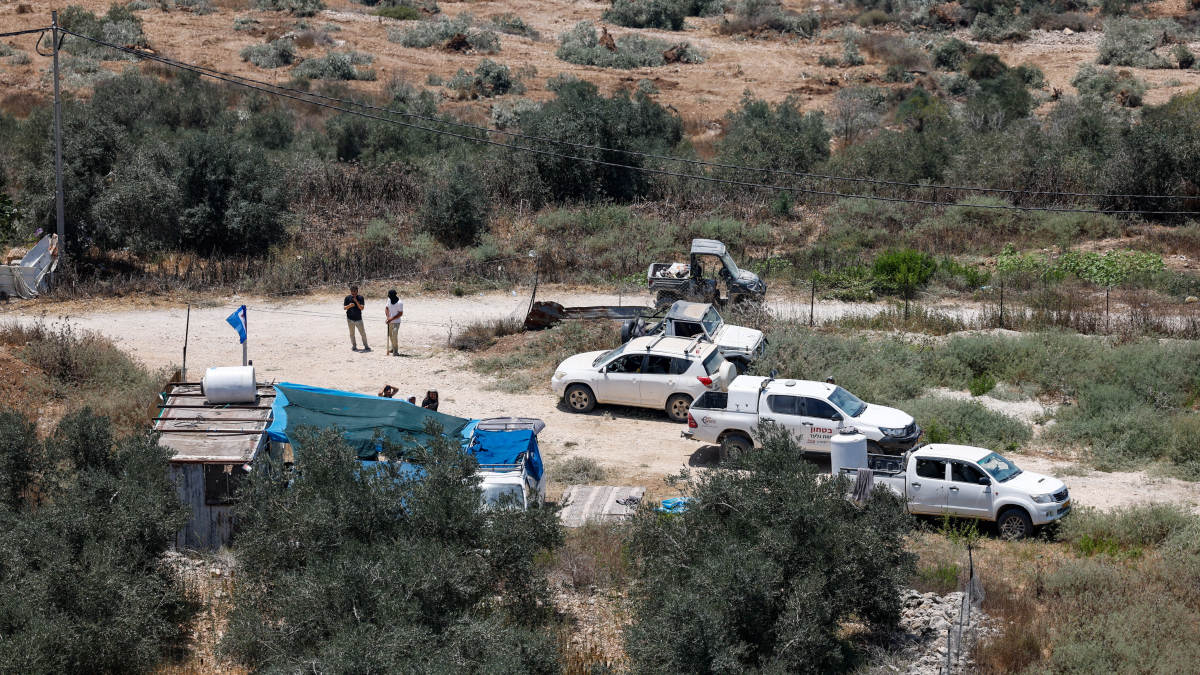
Israeli Prime Minister Benjamin Netanyahu ordered a major security operation against what he described as terrorism against Israeli civilians, reinforcing units in the West Bank and cancelling leave.
In an apparent reaction to the deaths of the Israelis, settlers carried out a series of attacks on Palestinian villages in different areas of the West Bank in the early hours of the morning, Palestinian officials said.
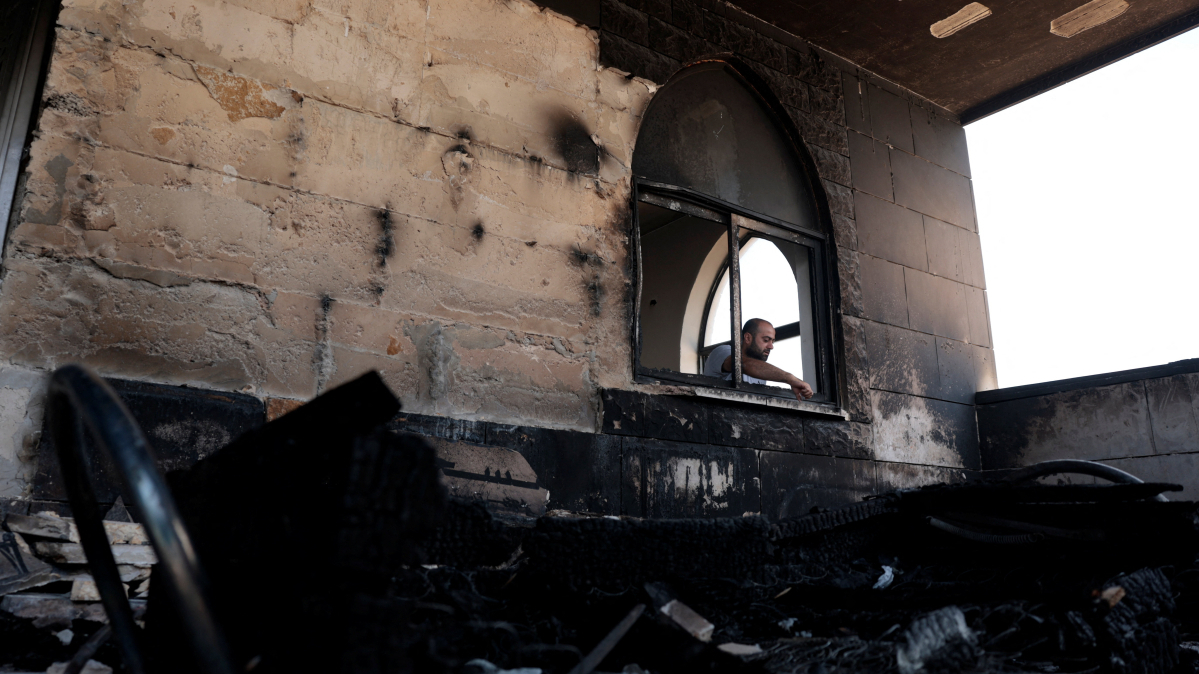
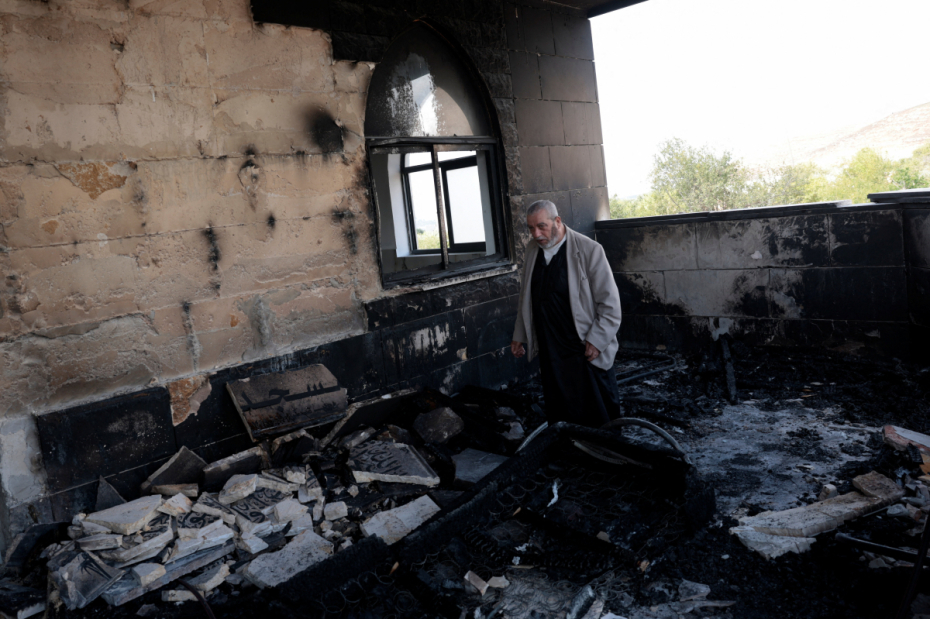
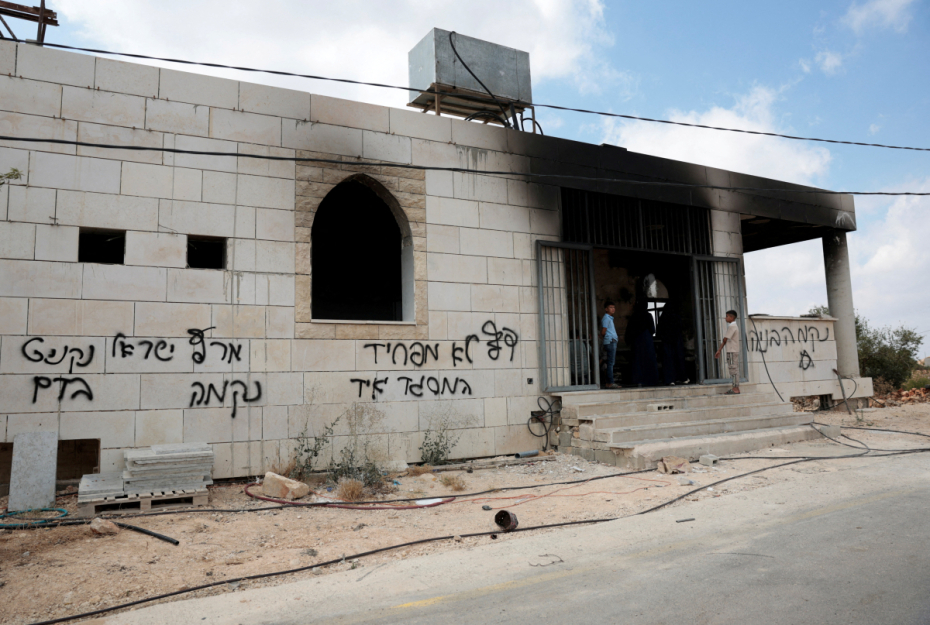
Abdel Azim Wadi, head of the village council in Qusra, southeast of Nablus, said settlers had torched a newly completed mosque in his village early on Sunday.
"The mosque was in its final stage and was ready to receive worshippers. It had already been furnished with couches. They set it on fire and spray-painted Hebrew slogans on its walls," he said.
Israeli settlements widely considered illegal
The Palestinian Authority, which has responsibility for the section of the West Bank where Friday's shootings took place, said the incident was part of a generalised assault on Palestinians.
"Israeli state-backed settler terrorism is intensifying into systematic pogroms across the occupied West Bank," the Palestinian Prime Minister's office said in a statement on the social media platform X.
The Israeli military said troops sent to Qusra, which sits near several large Israeli settlements, had found graffiti and signs of arson and were searching for suspects. It said police officers would be sent to collect evidence.
"The security forces strongly condemn incidents of this kind, including harm to religious sites, and will continue to act decisively to maintain security and public order in the area," the military said.
In separate incidents, Palestinian officials said settlers had also tried to burn a mosque near Kour, southeast of the city of Tulkarm, and attacked Palestinian workers at a stone-cutting facility in the town of Kafr Malik, near Ramallah.
Farid Jiyousi, a member of the Kour village council, said three settlers had tried to set the mosque ablaze at dawn but worshippers had put out the fire before it reached the main area of the mosque.
"This is the first attack our village has experienced," he said, adding that the attackers had also sprayed graffiti in Hebrew on the mosque walls.
As part of a security clampdown across the West Bank over the weekend, Israeli forces arrested around 60 Palestinians from Saturday night, according to the Palestinian Prisoners Club, which tracks Palestinians in Israeli custody.
On Sunday, Pope Leo said he was following the worsening violence with deep concern and called for negotiations to reach "a just political solution". He also called for a rejection of actions "that violate the respect and status quo of the holy sites of every religious faith".













What is your opinion on this topic?
Leave the first comment