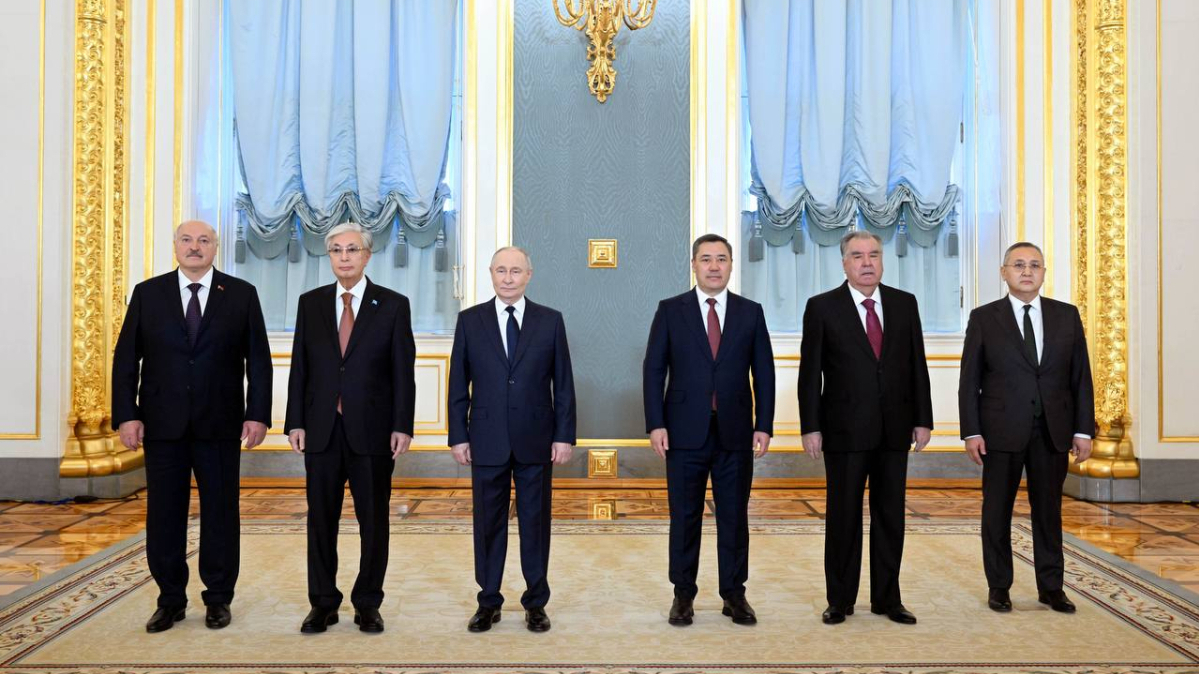
Armenia has lost its voting rights and the ability to nominate officials for certain posts within the Russian-led Collective Security Treaty Organization (CSTO). The decision was taken at a summit in Moscow on 11 November, amid years of strained relations between Yerevan and the alliance.
Kremlin spokesman Dmitry Peskov said the move was in line with the CSTO charter, citing Armenia’s failure to fulfil its obligations to the organisation. Russian Foreign Minister Sergei Lavrov had earlier said Yerevan had failed to pay its membership fees for more than two years.
Under Article 25 of the charter, unpaid contributions can lead to the suspension of voting rights and the ability to nominate nationals for designated positions until the debt is settled.
Armenia remains a member of the alliance, however. CSTO Secretary General Taalatbek Masadykov confirmed that Armenia's expulsion had not been discussed at the summit, while Lavrov said Moscow had no intention of seeking Yerevan’s removal.
Armenia also retains its rights under the Collective Security Treaty, including the right to collective defence.
Why Armenia's relations with the CSTO have deteriorated
The CSTO was established in 2002, building on a collective security treaty signed a decade earlier. Its six members are Armenia, Belarus, Kazakhstan, Kyrgyzstan, Russia and Tajikistan.
The alliance coordinates military cooperation and collective defence, with a key provision stipulating that an armed attack on one member is considered an attack on all. However, Armenia has increasingly challenged the alliance's commitment to that principle.
In February 2024, Prime Minister Nikol Pashinyan announced that Armenia was suspending its participation in the CSTO, arguing that the alliance had failed to honour its commitments to Yerevan.
His government’s criticism centred on the organisation’s response to regional security developments in the South Caucasus. Armenia subsequently stopped attending CSTO meetings and withdrew from joint activities and military exercises.
Despite the prolonged dispute, Yerevan has not formally withdrawn from the treaty.
Pashinyan skips Moscow summit
Pashinyan was also absent from the Moscow summit. The Armenian prime minister travelled instead to Antalya, Türkiye, for the United Nations COP31 climate conference.
On 5 November, he said Armenia had exhausted its interests in the CSTO. He had previously ruled out returning to active participation in the alliance for at least five years.
Lavrov confirmed ahead of the meeting that Yerevan had not submitted an official request to leave the alliance.
CSTO outlines security priorities and defence plans
Beyond the dispute with Armenia, the summit focused on the CSTO’s broader security priorities.
Leaders approved 19 documents, including a declaration outlining shared positions on international and regional security.
According to the Kremlin, the declaration opposes the deployment of weapons near the alliance’s area of responsibility if they pose a threat to collective security.
Russian President Vladimir Putin also announced plans to strengthen the CSTO’s aviation capabilities and establish mobile air defence units for joint military operations.
Leaders also discussed a counter-terrorism strategy running until 2030 and confirmed that Tajikistan would take over the organisation’s rotating chairmanship from Russia on 1 January 2027.
Read more:










What is your opinion on this topic?
Leave the first comment