Pakistan is pushing for urgent global action and greater climate funding as Prime Minister Shehbaz Sharif attends COP31 in Türkiye, warning that melting glaciers, devastating floods and extreme heat are putting millions of lives and livelihoods at risk.
Sharif arrived in Antalya on Tuesday, 10 November, ahead of his address to the COP31 Leaders' Summit on Wednesday. He is also due to speak at a high-level dialogue on the clean energy transition and electrification, titled “35 by 35: Powering the Future”.
Pakistan is demanding greater international cooperation, reliable climate funding and access to technology, arguing that developing countries responsible for relatively few emissions are bearing a disproportionate share of the climate crisis.
Melting glaciers put communities at risk
Pakistan's rapidly changing mountain ecosystems are among its most urgent climate concerns.
Climate Change Minister Musadik Malik has warned that accelerating glacier melt and glacial lake outburst floods threaten communities, homes and livelihoods.
Speaking at the UN Climate Change Pavilion, he called for closer international scientific cooperation to strengthen glacier monitoring and research into mountain ecosystems.
Pakistan accounts for less than one per cent of global greenhouse gas emissions, according to the minister, yet remains one of the countries hardest hit by climate change.
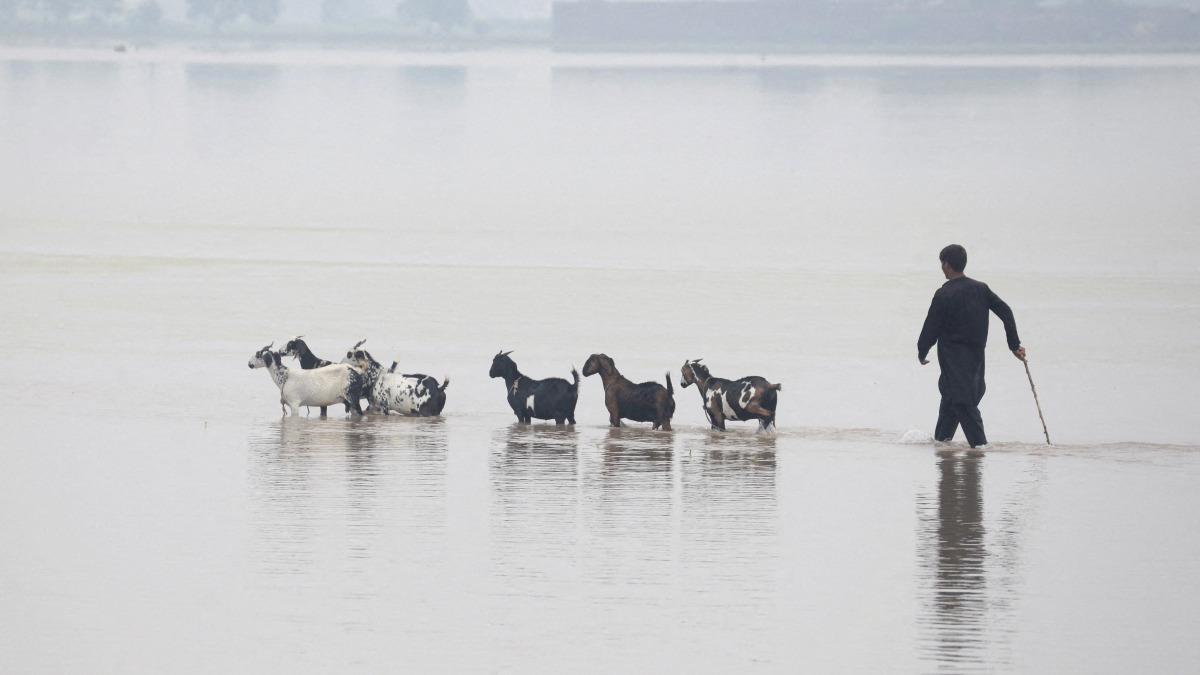
Deadly floods highlight growing climate threat
The devastating 2025 monsoon floods exposed the scale of Pakistan's vulnerability, causing an estimated 822 billion Pakistani rupees in economic damage, according to the Pakistan Economic Survey 2025–26.
More than 1,000 people were killed, over four million were displaced and approximately 6.5 million were affected across 70 districts.
Agriculture and infrastructure suffered some of the heaviest losses, deepening concerns about food security, rural livelihoods and the country's economic recovery.
Beyond flooding, Pakistan is grappling with extreme temperatures, shifting rainfall patterns and mounting pressure on its water supplies.
Pakistan needs $565.7 billion to meet climate goals
Pakistan's third Nationally Determined Contribution (NDC 3.0), submitted in September 2025, aims to cut projected greenhouse gas emissions by 50 per cent by 2035, compared with a business-as-usual scenario.
The plan commits to a 17 per cent reduction without external assistance, while a further 33 per cent depends on international support.
Meeting these targets will require an estimated $565.7 billion in investment by 2035, covering climate adaptation, disaster preparedness, renewable energy and other measures.
In a separate move at COP31, Communications Minister Abdul Aleem Khan endorsed the Global Green Freight Corridors Initiative, which promotes cleaner transport technologies, digital connectivity and more efficient route planning to cut emissions from international freight.
For Pakistan, the challenge now is to turn climate pledges into meaningful protection for millions of people facing worsening floods, glacier-related disasters and extreme heat.
With the country seeking greater financial and scientific support, the pressure is mounting to translate international commitments into action before the next disaster strikes.














What is your opinion on this topic?
Leave the first comment