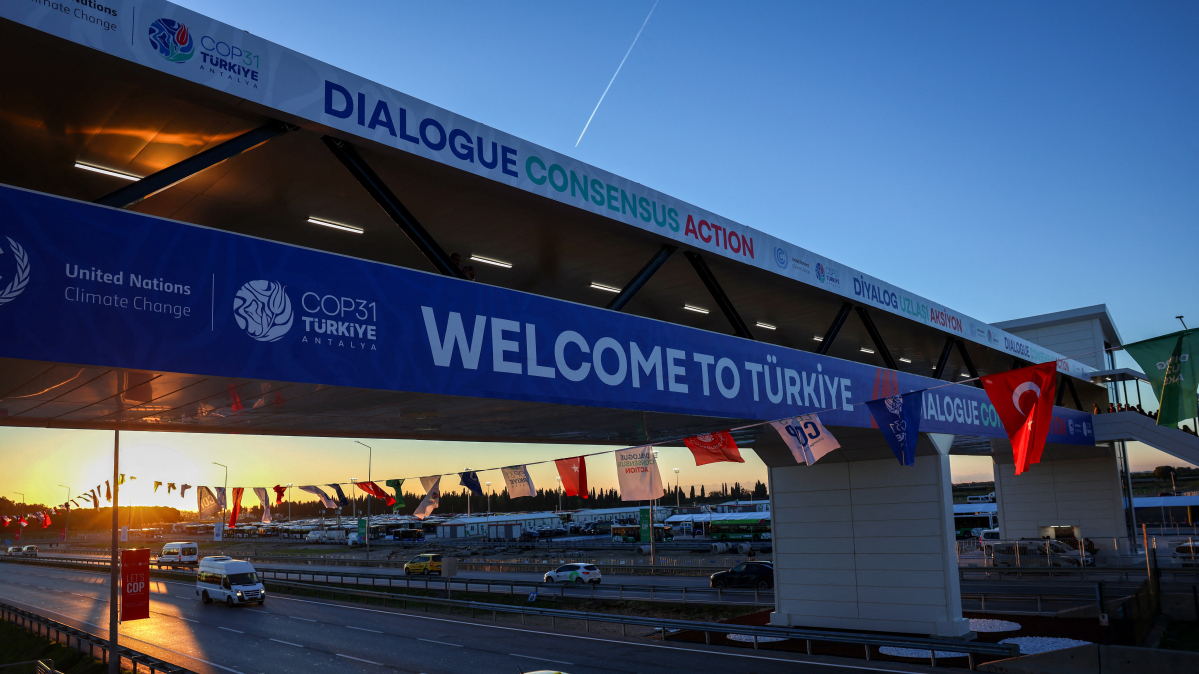
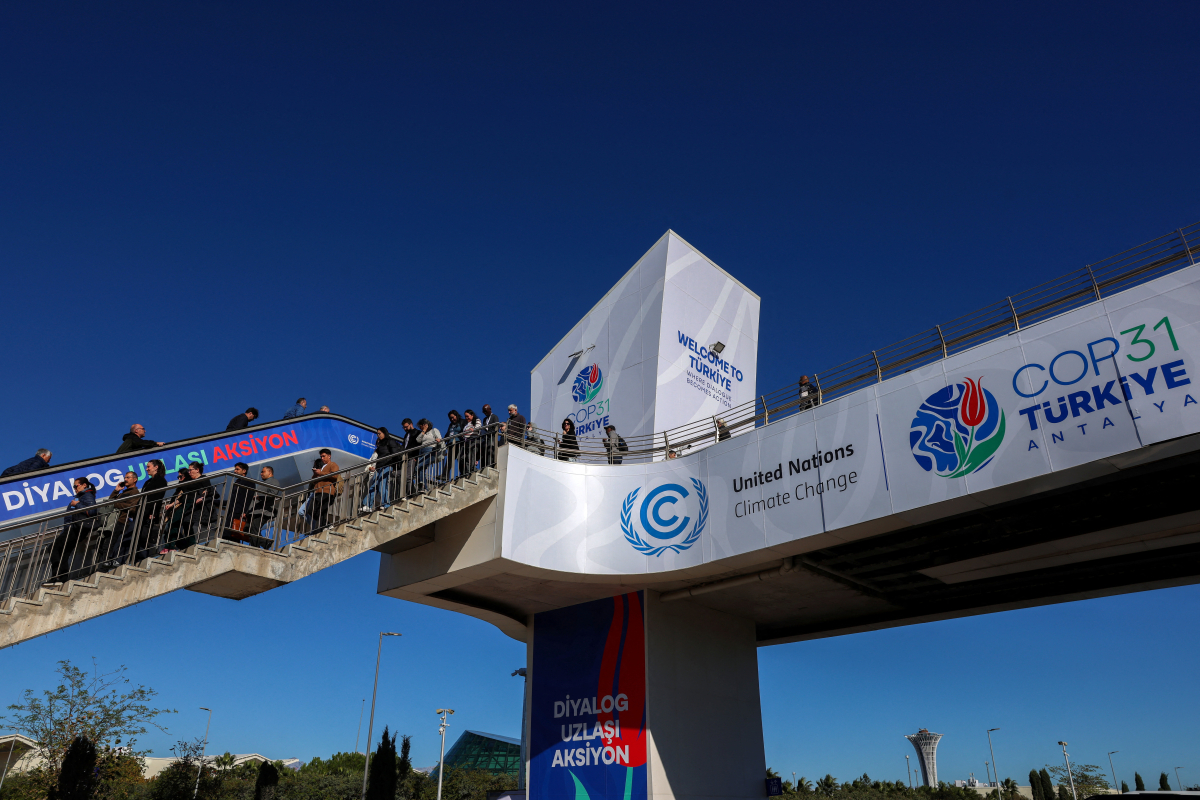
Representatives from nearly 200 countries are gathering on Türkiye’s Mediterranean coast for two weeks of climate negotiations, amid growing energy security concerns, rising electricity demand and weakening international cooperation.
The talks come as the U.S. conflict with Iran disrupts global oil supplies, pushing some countries towards coal. Meanwhile, the rapid expansion of artificial intelligence (AI) is increasing demand for electricity.
The United States' continued withdrawal from international climate cooperation has added to the challenges facing the summit.
“It's hard to be optimistic,” said John Holdren, a professor of environmental policy at Harvard University.
Türkiye pushes global electrification target
Türkiye's COP31 presidency is promoting a target to electrify more than a third of the global economy by 2035, compared with around a fifth today.
The initiative aims to cut emissions by accelerating the shift towards electric vehicles, heating systems and other technologies.
However, climate campaigners have criticised the proposal because it does not require electricity to come from low-carbon sources.
Several countries, including vulnerable Pacific island nations, are also calling for a clearer roadmap to move away from fossil fuels.
Oil and gas producers, including Saudi Arabia, argue that these energy sources can remain part of the global mix if emissions are reduced through technologies such as carbon capture.
War and AI complicate climate efforts
The conflict involving Iran has disrupted oil shipments through the Strait of Hormuz, pushing up fuel prices and forcing governments to seek alternative supplies.
Countries including India, South Korea and Thailand have increased their reliance on coal or considered expanding coal-fired power generation.
“A lot of people who previously might have been embarrassed to argue for continuing very high use of fossil fuel are now feeling empowered to make that case,” Holdren said.
However, the crisis has also strengthened arguments for renewable energy, with cheaper clean technology exports from China supporting the transition.
Artificial Intelligence (AI) presents another challenge. Growing demand for data centres and computing infrastructure is putting additional pressure on electricity supplies and could increase emissions.
Türkiye will also encourage governments and businesses to support principles for the sustainable development and use of AI.
Climate warnings intensify
A United Nations Environment Programme report published in October warned that the world is on course to exceed the 1.5°C warming limit established under the 2015 Paris Agreement.
Extreme weather has added urgency to the negotiations. Western Europe experienced severe heatwaves in 2026, while a glacier collapse in Nepal that triggered catastrophic flooding which killed more than 1,450 people.
“This year has proven to be one of the years with the highest casualties by the climate-induced disasters,” said Manjeet Dal, an adviser to the Least Developed Countries bloc.
Business leaders are also calling for clearer government commitments to encourage investment in clean energy and climate adaptation.
“Delivery cannot remain a slogan or be left to voluntary initiatives,” said John Denton, secretary-general of the International Chamber of Commerce.
With energy security, technological growth and climate risks competing for attention, COP31 faces a difficult task in securing stronger international commitments.
Read more:
















What is your opinion on this topic?
Leave the first comment