A family of six, including four children, has been killed after an Israeli airstrike hit their home in Gaza City, underscoring the continuing violence despite a ceasefire that has formally remained in place for more than nine months.
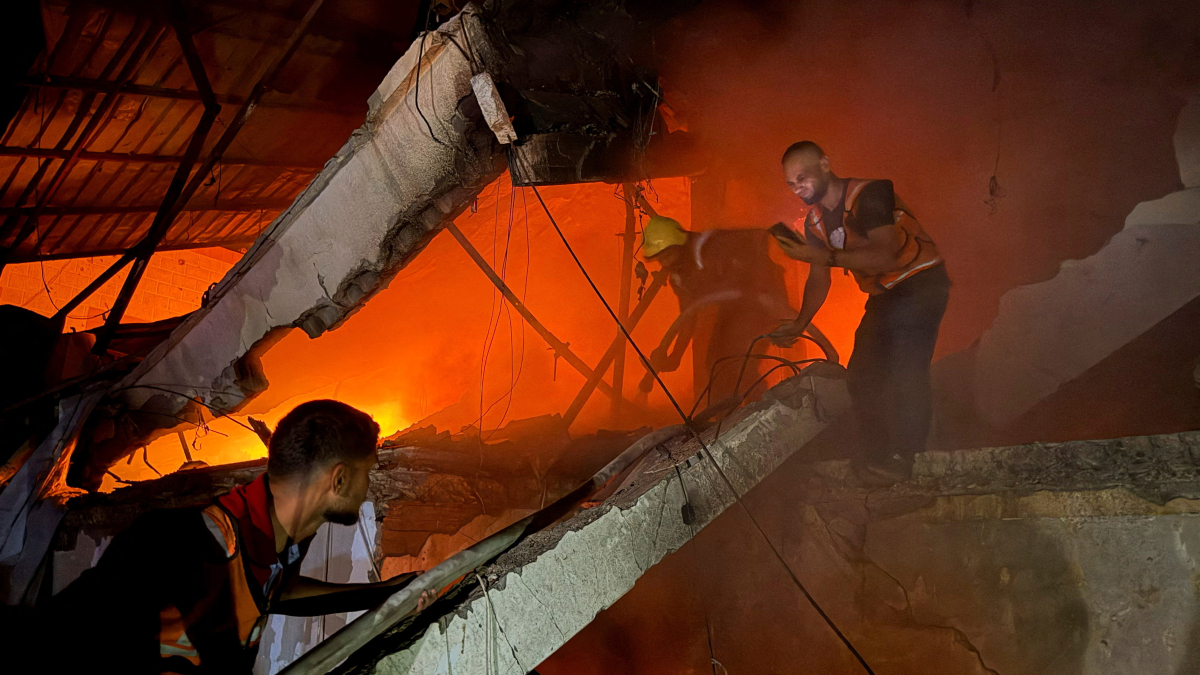
Palestinian health officials in Gaza said the strike, which took place in the Sabra neighbourhood on Tuesday (21 July), killed Firas al-Masri, his wife Salsabeel, and their three daughters and son after their house was engulfed in flames.
The Israeli military confirmed carrying out the strike but said it had been aimed at a Hamas militant. It added that it was examining the outcome of the operation following reports of civilian casualties.
Speaking outside the burnt-out home, Firas al-Masri's father, Abu Yusuf al-Masri, described the moment the strike hit while the family was asleep.
"We were unable to save our grandchildren and children from the flames and the devastation. Around five or six people were martyred, most of them children and women, without mercy and without any prior warning."
He also expressed frustration at the continuing insecurity in Gaza despite the ceasefire.
"There is no relative calm and there is no safe place, at all."
Ceasefire fails to halt strikes
Although a ceasefire between Israel and Hamas came into effect in October, it has not brought an end to military operations in the territory.
Israeli forces have continued to carry out frequent airstrikes, saying they are targeting militants involved in attacks against Israel, while Palestinian officials report ongoing civilian casualties.
According to Gaza health ministry, more than 1,150 Palestinians have been killed in Israeli attacks since the ceasefire began.
The ministry does not distinguish between civilians and combatants in its casualty figures, although it says most of those killed have been civilians.
The Israeli military said that in four separate strikes since Friday it had killed members of Hamas and Palestinian Islamic Jihad. It said several of those targeted had participated in the 7 October 2023 attacks on southern Israel and had been involved in holding Israeli hostages captured during the assault.
Four Israeli soldiers have also been killed by Palestinian militants in Gaza since the ceasefire took effect, according to Israeli officials.
Diplomatic efforts remain stalled
International mediators, including Egypt, Qatar, Türkiye and the United States, continue to push for a more permanent end to the conflict.
Discussions have centred on proposals that would see Hamas disarm and Israeli forces withdraw from Gaza, but negotiations have yet to produce a breakthrough.
The latest strike is likely to add further pressure on diplomatic efforts as both sides continue to accuse each other of undermining prospects for lasting peace.
Conflict with no end in sight
The war began on 7 October 2023 when Hamas launched an attack on southern Israel, killing around 1,200 people and taking approximately 250 hostages, according to Israeli authorities.
Israel responded with a large-scale military campaign in Gaza. According to Gaza health officials, more than 73,000 Palestinians have been killed since the conflict began.
Israel disputes some of the casualty reporting but says its operations are directed at Hamas and other militant groups.
The fighting has displaced the vast majority of Gaza's population of around two million people, many of whom are now living in temporary shelters or damaged buildings amid widespread shortages of food, water and medical supplies.
Read more:













What is your opinion on this topic?
Leave the first comment