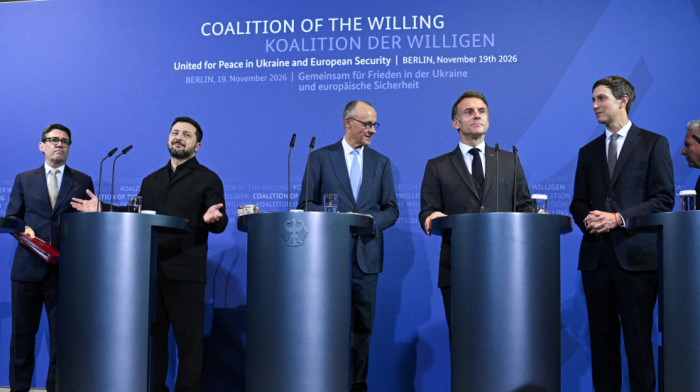
European leaders backing Ukraine met in Berlin on Thursday 19 November and warned that no peace deal should be settled without them.
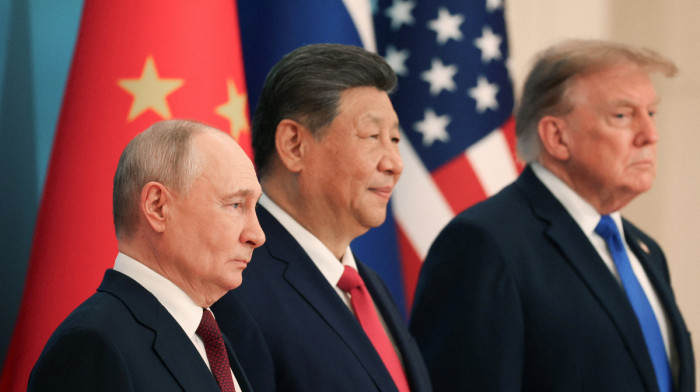
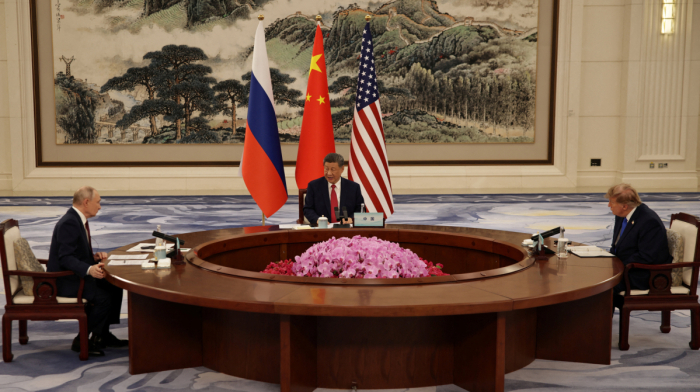
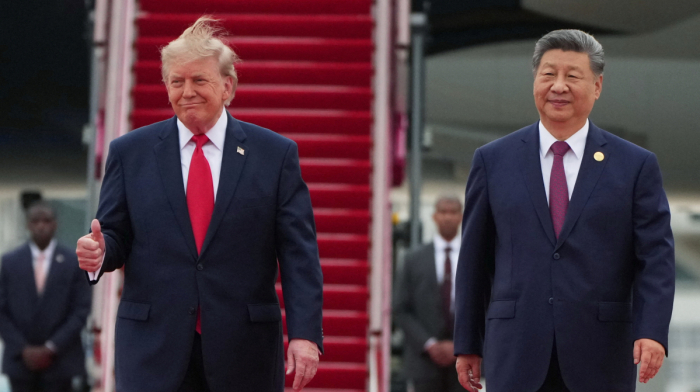
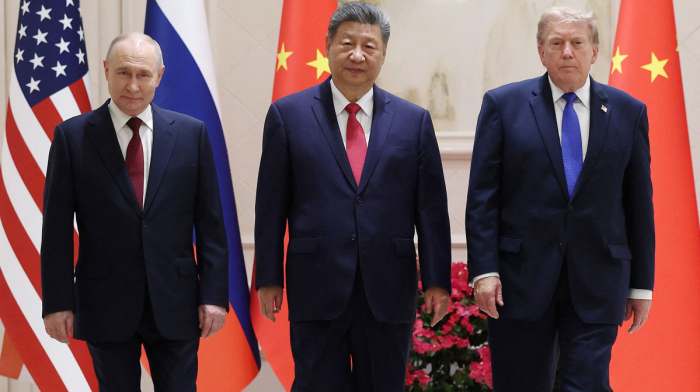
The meeting followed U.S. President Donald Trump’s summit with Russian President Vladimir Putin and Chinese President Xi Jinping in Shenzhen, where Trump greeted Putin as his “friend”.
The meeting of the “Coalition of the Willing” brought together the leaders of Germany, France, Britain, Poland and Italy, NATO, and Ukrainian President Volodymyr Zelenskyy. Trump’s special envoys, Steve Witkoff and Jared Kushner, also attended. Europe has been pressing for a seat in U.S.-backed negotiations to end Russia’s war in Ukraine.
Trump joined the summit by phone. French President Emmanuel Macron said the European leaders had been able to hold an exchange with him.
‘A Yalta format will not bring peace’
The Shenzhen meeting had heightened fears in Europe that decisions on Ukraine and the continent’s future could be made without European involvement.
It also drew comparisons with the 1945 Yalta Conference, where the U.S., Britain and the Soviet Union formalised spheres of influence. The term has since become shorthand for great-power deals imposed on smaller nations.
“A ‘Yalta’ format will not bring peace,” German Chancellor Friedrich Merz told reporters, adding that leaders would not allow Europe to be carved up. He dismissed the Shenzhen summit as above all “a photo opportunity”.
“The U.S. understands that there can be no peace without us. We, in turn, know that with the United States by our side, the prospects for peace increase,” Merz said.
Zelenskyy, standing alongside Merz and other leaders, said Europe must be part of peace negotiations from now on.
Kushner: Trump open to ‘Article 5-like’ guarantee
Speaking alongside Merz, Kushner sought to reassure European allies. He said Trump wanted Europe at his side in any peace deal and that Russia had agreed to take part in multilateral talks involving Europe.
According to Kushner, Trump left his meeting with Putin and Xi believing that “peace is achievable”.
Kushner said Trump was open to security guarantees for Ukraine modelled on Article 5, NATO’s mutual defence clause, and that Russia had become “comfortable” with the idea. Any such guarantee would have to be part of a broader security package, he said.
“From America’s perspective, giving an Article 5-like security guarantee is a really, really big deal. And I think that that’s something that President Trump is open to,” Kushner said.
He said the talks in Berlin with European leaders and Zelenskyy had “made a lot of progress on what those security guarantees can look like”, as well as on a post-war prosperity plan.
Macron calls for NATO membership question to be reopened
Macron said the question of Ukraine joining NATO was “relevant” for European security, given the strength and equipment of Ukraine’s army.
“I think we must reopen the question of Ukraine’s membership to NATO,” he told reporters after the summit.
“We had the opportunity to have the two special envoys, Mr. Kushner and Mr. Witkoff, of President Trump, who was able to have an exchange with us during this summit,” Macron said.
British Prime Minister Andy Burnham said U.S. participation in the meeting offered an opportunity to move towards peace.
“This clearly has got to be a moment to move towards peace because of the U.S. involvement that we’ve seen today and the progress clearly that is being made,” he said. “Europe is ready to enter these negotiations.”
Tusk: ‘Mr Putin is not our friend’
Not all leaders shared that optimism. Polish Prime Minister Donald Tusk said he did not expect Russia to negotiate seriously before winter ends.
“I don’t think it’s likely that Russia will sit down at the negotiating table in any serious way before the winter is over,” Tusk told reporters on his way back to Poland.
Responding to Trump, he also said: “Mr Putin is not our friend and will never be.”
Trump’s meeting with Putin prompted a backlash both from European allies and from his Democratic opponents in the U.S.
Danish Prime Minister Mette Frederiksen told reporters: “I find it very incomprehensible that a U.S. president wants to sit down with President Putin.” She warned that Putin “will be even more emboldened after today’s meeting. He looks happy.”
U.S. Senator Charles Schumer of New York, who leads the Democrats in the Senate, called the Shenzhen meeting a “historic embarrassment”.
When a reporter asked Zelenskyy about Trump greeting Putin as “my friend”, he shrugged and walked on.
NATO Secretary General Mark Rutte, who has repeatedly sought to ease tensions within the alliance and keep Trump onside, said it was normal for major nuclear powers to meet.
“President Trump has been constantly working Herculean efforts to get peace done in Ukraine, and I can only commend him for that,” Rutte said.
The U.S. and Europe have been close allies for decades since the end of the Second World War. They have drifted apart as the Trump administration has reduced its support for Ukraine and insisted that NATO partners pay more for their own defence.
European countries provide most of the aid to Ukraine, but have largely been kept out of the U.S.-sponsored talks with Moscow. They sent representatives to talks in Abu Dhabi last week, but Kremlin officials said Russia had not agreed to repeat that arrangement.
Moscow invites European envoys
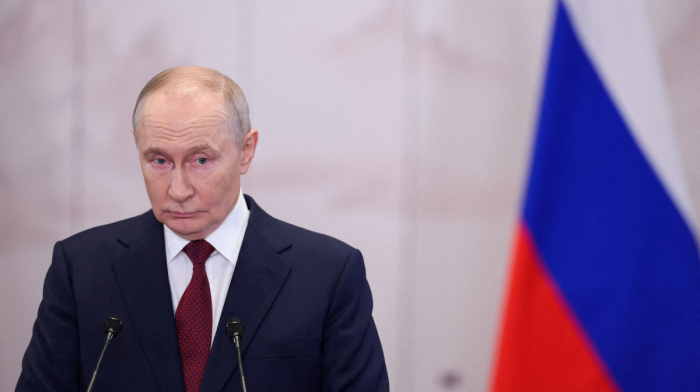
Speaking in Shenzhen, Putin said China, the U.S. and Russia had “numerous shared interests in the settlement of regional conflicts, including obviously the conflict in Ukraine”. His remarks came in the same week that Ukraine crippled the road bridge linking Crimea to Russia.
He said Russia had proposed that European envoys travel to Moscow to clarify their position before any decision is made on the format of future peace talks.
As the leaders met, Russian daytime drone attacks on Kyiv killed at least one person and injured five others, according to the city’s mayor. He said the Dutch and Austrian embassies, Saint Volodymyr Cathedral in central Kyiv and a residential building were damaged.
Russia’s Defence Ministry did not immediately comment. Moscow says it does not target civilians.
Read more:







What is your opinion on this topic?
Leave the first comment