Georgia is entering a pivotal economic and geopolitical phase, as talks with China to expand a free trade agreement coincide with renewed progress on the Anaklia Deep Sea Port.
The project could reshape trade routes between Asia and Europe while intensifying competition in the Black Sea.
Trade talks with China gather pace
Georgia’s Prime Minister, Irakli Kobakhidze, has confirmed that discussions are under way to broaden the scope of the country’s free trade agreement with China. While details remain under negotiation, officials say the talks are expected to strengthen economic ties and unlock new trade opportunities.
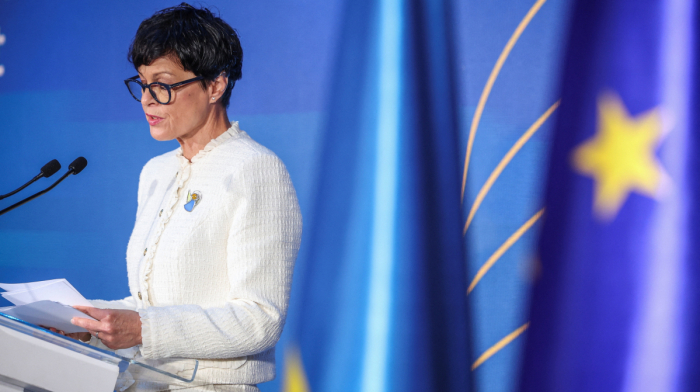
The negotiations come as Mariam Kvirivishvili, Georgia’s Minister of Economy and Sustainable Development, visits China to advance both commercial relations and strategic infrastructure discussions.
Anaklia port returns to the forefront
A key issue on the agenda is the future of the Anaklia Deep Sea Port, a long-delayed but highly significant project on Georgia’s Black Sea coast.
Originally launched in 2017, the Anaklia project has faced years of setbacks, including the termination of a contract with a Georgian-American consortium in 2020. Since then, the government has sought a new partner, naming China Communications Construction Company as the winning bidder in 2024.
The company is sanctioned by the U.S., adding a sensitive geopolitical dimension to the project, particularly as Washington and Beijing compete for influence in the Black Sea region. A final agreement, however, has yet to be signed.
Strategic importance of the Middle Corridor
The port’s significance extends beyond Georgia. It forms a central link in the Middle Corridor - a trade route connecting Asia to Europe via the South Caucasus - which is gaining traction as traditional northern and southern routes face increasing disruption.
This has attracted growing interest from the European Union, which views the corridor as a more stable and strategically important alternative.
Balancing geopolitical interests
At the same time, Anaklia sits at the crossroads of broader geopolitical competition. The involvement of a Chinese state-backed and U.S.-sanctioned firm, alongside continued engagement from Western partners, highlights the delicate balancing act facing Tbilisi.
Construction is already progressing, with Belgium-based Jan De Nul carrying out key operations on site. Meanwhile, U.S. officials remain engaged, monitoring developments and holding discussions with Georgian authorities.
As negotiations continue, the outcome is likely to shape not only Georgia’s trade policy but also its strategic direction in an increasingly contested geopolitical landscape.















What is your opinion on this topic?
Leave the first comment