The Iranian President Masoud Pezeshkian has instructed his first deputy to fulfill the public’s expectations regarding the access to the Internet services and platforms amid a wartime shut-down of international connection since late February.
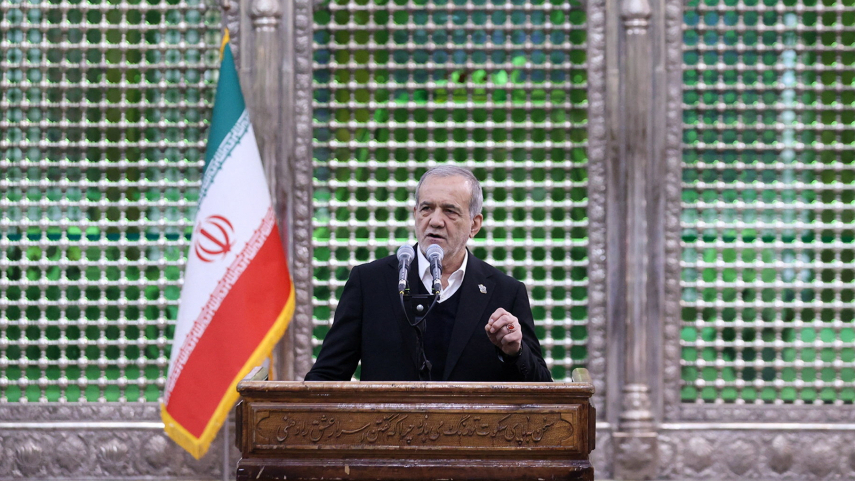
“Communication based on information technology and the Internet has become an inseparable part of people's lives,” he said on Tuesday in a post on the social platform X which is blocked to the public use.
“I commissioned my dear brother (First Vice President Mohammad Reza) Aref to provide better government services and fulfill public expectations in the form of an agile structure.”
Pezeshkian added that the sensitivities of governance, the Supreme Leader’s opinion, and his presidential campaign promise must be taken into consideration.
The order was issued in the wake of the international Internet blackout of more than 70 days since the Israel-US war on Iran broke out on 28 February, disrupting public use and paralysing business activities.
Lifting the Internet restrictions was one of the election promises of President Pezeshkian in 2024.
Moreover, Minister of Information and Communication Technology Seyed Sattar Hashemi called for supporting the discourse on the significance of access to the Internet and connection with the world.
“The importance of the economic, social, and human effects of Internet blocking must be clarified. Internet is a basic need of people's lives,” he said at a meeting with the digital economy stakeholders on Tuesday.
A PhD graduate in artificial intelligence (AI) from Australia and a faculty member of the Shiraz University, the Information and Communication Technology (ICT) Minister has been a supporter of removing Internet restrictions.
“The most important demand of digital economy is access to international Internet. The ICT Ministry has been pursuing this issue with the relevant institutions through continuous consultation and follow-up,” Hashemi added.
Prior to the war, the ICT Ministry had removed the ban on WhatsApp and Google Play and was due to lift the restriction on the Telegram and YouTube.
However, the violent riots in January buried the Ministry’s plans of incremental opening of the worldwide web access.
While supporting the public opinion in general and the demands of Internet-based businesses to carry out the president’s promise, the ICT Ministry has cited war-time security concerns as well as discretion of higher authorities in making the final decision.
Meantime, the Israel-U.S. war on Iran and air raids on the civilian infrastructure including the ICT facilities delayed the Ministry’s efforts to end the shut-down.
In early May, the Iranian minister urged the International Telecommunication Union (ITU) and its member states to condemn deliberate bombing of Iran’s ICT infrastructure in the Israeli-U.S. attacks.
He made the call during phone contacts with the Chairman of ITU Council 2026, and his Cuban, Malaysian and Turkish counterparts, calling for raising the issue of targeting of Iran’s ICT facilities at the Council’s meeting.
The annual meeting of the ITU Council, the governing body of the United Nations specialised agency of telecommunications, convened on 28 April - 8 May 2026 in Geneva, Switzerland.




















What is your opinion on this topic?
Leave the first comment