U.S. President Donald Trump said he does not think he will need China's help to end the war with Iran as he left for a high-stakes summit in Beijing on Tuesday, as hopes for a lasting peace deal dwindled and Tehran tightened its grip over the Strait of Hormuz.
⦿ 22:30 GMT | UPDATE
Rubio: U.S. wants China to press Iran to change course in Gulf
Reuters
The United States hopes to convince China to play a more active role in trying to persuade Iran to walk away from what it is doing in the Gulf, U.S. Secretary of State Marco Rubio said in an interview aired on Fox News on Wednesday.
⦿ 21:40 GMT | UPDATE
Fed's Collins expects inflation pressures from Iran war to eventually subside, WSJ reports
Reuters
Boston Federal Reserve President Susan Collins told the Wall Street Journal on Wednesday that she expects inflation pressures from the Iran war to eventually subside and that the current shock has masked evidence that underlying inflation is still headed down.
Collins said on Wednesday the U.S. central bank may need to raise interest rates if inflation pressures do not abate.
⦿ 20:30 GMT | UPDATE
Drone strike hits Iranian opposition camp north of Iraq’s Erbil, security sources say
Reuters
A drone strike hit an Iranian opposition camp north of Iraq's Erbil, security sources said on Wednesday, adding that an arms and ammunition depot inside the camp was targeted.
There were no reports of fatalities.
⦿ 20:00 GMT | UPDATE
Iran war looms over Trump's China visit, shifts alliances
Reuters
The war involving the United States and Israel against Iran overshadowed U.S. President Donald Trump’s visit to China on Wednesday, where he is expected to seek support from President Xi Jinping to help end the conflict. Analysts, however, believe Beijing is unlikely to fully support Washington’s position.
The conflict is increasingly reshaping alliances across the Middle East. Israel revealed that Prime Minister Benjamin Netanyahu secretly visited the United Arab Emirates in March, while Reuters reported that Saudi Arabia carried out strikes against Iran-backed militias in Iraq.
Meanwhile, Iran has tightened control over the Strait of Hormuz, a key global oil route, and signed new energy transport deals with Iraq and Pakistan. The International Energy Agency warned the war could significantly disrupt global oil supplies in 2026.
Despite a fragile ceasefire, major disagreements remain between Washington and Tehran, while Israeli strikes in Lebanon against the Iran-backed group Hezbollah continue.
⦿ 19:00 GMT | UPDATE
UAE reaffirms diplomacy, rejects confrontation with Iran, Gargash says
Reuters
Anwar Gargash, an adviser to the United Arab Emirates president, said on Wednesday that the UAE remained committed to political solutions and diplomacy amid regional tensions, while stressing the country's right to defend its sovereignty.
UAE said it had not sought conflict and had worked to avoid it, adding that relations between the Arab states and Iran should not be based on confrontation.
⦿ 17:33 GMT | UPDATE
Netanyahu held secret meeting with Emirati president in the UAE during Iran war, PM's office says
Reuters
Israeli Prime Minister Benjamin Netanyahu visited the United Arab Emirates and met with the Emirati president during the war with Iran, a statement from the Prime Minister's Office said on Wednesday.
According to the statement, the meeting resulted in an "historic breakthrough" in relations between Israel and the UAE.
The statement appeared to be the first confirmation of a meeting between Netanyahu and the Emirati president.
UAE is one of just a few Arab states with diplomatic relations with Israel, which were made official during the 2020 Abraham Accords, a signature foreign policy achievement of U.S. President Donald Trump and Netanyahu.
⦿ 16:52 GMT | UPDATE
Iran's foreign minister demands immediate release of four Iranians detained in Kuwait
Source
Iran's Foreign Minister Abbas Araghchi said on Wednesday that Kuwait had 'unlawfully' attacked an Iranian boat and detained four Iranian citizens in the Gulf, adding that Tehran demands their release and reserves the right to respond.
On Tuesday, Kuwait said it had arrested four people affiliated with Iran's Revolutionary Guards who attempted to infiltrate the Gulf state by sea.
⦿ 16:15 GMT | UPDATE
Trump says no need for China's help on Iran as shippers seek way through Hormuz
Source
U.S. President Donald Trump said Washington does not need China’s help to end the war with Iran or reduce Tehran’s influence over the Strait of Hormuz, ahead of talks with Chinese President Xi Jinping in Beijing.
The Strait of Hormuz, which carries around one-fifth of global oil supplies, has become a central issue in the conflict. Iran has recently strengthened its control over the waterway through energy agreements with Iraq and Pakistan, according to sources familiar with the matter.
Despite a fragile ceasefire, major differences remain between Washington and Tehran. The U.S. has demanded that Iran abandon its nuclear programme and loosen its grip on the strait, while Tehran is seeking compensation for war damage and an end to regional fighting.
The conflict is also affecting global energy markets. The International Energy Agency said disruptions linked to the war could cut global oil supply by nearly 4 million barrels per day in 2026, while Brent crude remained around $108 a barrel.
Meanwhile, a Chinese supertanker carrying two million barrels of Iraqi crude passed through the Strait of Hormuz on Wednesday, marking the third known Chinese oil tanker transit since the conflict began in February.
⦿ 15:29 GMT | UPDATE
Chinese oil tanker exits Strait of Hormuz, stops at Gulf of Oman, data shows
Reuters
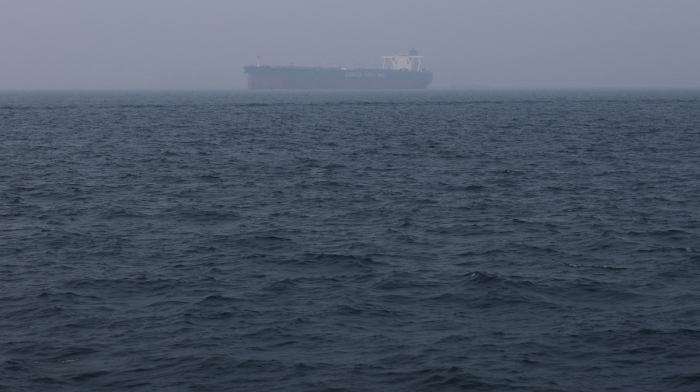
A Chinese supertanker carrying two million barrels of Iraqi crude oil passed through the Strait of Hormuz on Wednesday after being stuck in the Gulf for more than two months due to the U.S.-Iran conflict, according to ship-tracking data from LSEG and Kpler.
The Very Large Crude Carrier (VLCC) Yuan Hua Hu is now anchored near the Gulf of Oman, close to an area where the U.S. Navy has established a blockade targeting Iranian vessels, LSEG data showed.
The transit comes ahead of a planned meeting between U.S. President Donald Trump and Chinese President Xi Jinping over the next two days, and follows Iranian Foreign Minister Abbas Araqchi’s visit to Beijing last week.
Based on ship-tracking information, the voyage represents the third known passage by a Chinese oil tanker through the Strait of Hormuz since the U.S.-Israeli conflict with Iran began on 28 February.
In recent days, Iran appears to have strengthened its influence over the strait by reaching agreements with Iraq and Pakistan for the transportation of oil and liquefied natural gas from the region, according to sources familiar with the matter.
Sources added that other countries are also considering similar arrangements, a development that could further reinforce Tehran’s control over the strategic waterway.
The Chinese-flagged VLCC is owned and operated by the Hainan subsidiary of COSCO Shipping Energy Transportation and chartered by Unipec, the trading division of Sinopec.
Neither COSCO Shipping Energy Transportation nor Sinopec immediately responded to requests for comment.
Tracking data showed that the Yuan Hua Hu loaded nearly two million barrels of Basrah Medium crude at Iraq’s Basrah terminal in early March and had remained stranded inside the Gulf until now. The tanker is currently heading towards Asia.
Two other Chinese-flagged VLCCs, Cospearl Lake and He Rong Hai, exited the Strait of Hormuz on 11 April.
Meanwhile, a vehicle carrier named Xiang Jiang Kou also travelled through the strait within the past 12 hours. According to satellite analysis by data specialists SynMax and separate MarineTraffic data, the vessel transmitted the message “Chinese vessel and crew” through its AIS public transponder. The ship is operated by Singapore-registered group Xin Yin Chuang Yuan 6 Tianjin.
⦿ 12:40 GMT | UPDATE
Switzerland considers alternative air defence as U.S. Patriot delays lengthen
Reuters
Switzerland is reviewing whether to source air‑defence systems from alternative suppliers after the United States warned that deliveries of Patriot missile systems will be delayed further due to the war in Iran.
Originally ordered in 2022 with expected delivery between 2026 and 2028, the systems are now facing an additional delay of five to seven years, alongside rising costs.
The government said it is seeking feedback from suppliers in Germany, France, Israel and South Korea, as concerns grow over both timing and expense. A final decision is expected in the coming months, with officials previously indicating that cancelling the Patriot deal remains an option.
⦿ 12:33 GMT | UPDATE
Chinese tanker clears Strait of Hormuz after weeks stranded
Reuters
A Chinese supertanker carrying around two million barrels of Iraqi crude has passed through the Strait of Hormuz after being stranded in the Gulf for more than two months amid the U.S.-Iran conflict, according to ship‑tracking data. The Yuan Hua Hu is now anchored off the Gulf of Oman, near an area where U.S. forces have been enforcing a blockade on Iranian-linked shipping.
The vessel, operated by COSCO Shipping Energy Transportation and chartered by Sinopec’s trading arm Unipec, loaded the cargo in Iraq in early March and is bound for Asia. Its transit marks one of a small number of Chinese tanker passages through the strait since late February, as traffic cautiously resumes along one of the world’s most critical energy routes.
⦿ 12:19 GMT | UPDATE
Vietnam seeks passage for oil tanker amid U.S. Gulf blockade
Reuters
Vietnam’s state oil trading arm has urged the U.S. Navy to allow an oil tanker carrying Iraqi crude to pass through the Middle East, warning of critical supply risks for a key refinery.
In a letter dated 12 May, Petrovietnam Oil Corporation (PVOIL) said the Malta‑flagged supertanker Agio Fanourios I, loaded with around 2 million barrels of crude, is vital for operations at the Nghi Son refinery.
U.S. Central Command said the vessel was redirected as part of its expanded enforcement of a blockade targeting Iran, but did not indicate whether the tanker would be allowed to continue to Vietnam.
Ship tracking data shows the tanker exited the Strait of Hormuz on 10 May before turning back in the Gulf of Oman a day later.
PVOIL stressed the cargo is Iraqi Basra crude supplied by state marketer SOMO, warning that refinery inventories are now “critically low” and further delays could disrupt fuel supplies across Vietnam.
The developments come as conflict-linked restrictions in the region continue to disrupt shipping through the Strait of Hormuz, a vital artery for global energy flows.
⦿ 10:17 GMT | UPDATE
Iran discusses Hormuz transit safety in talks with Azerbaijan
Anadolu
Iran and Azerbaijan foreign ministers held a phone conversation on Wednesday to discuss regional developments.
Tehran said it is working on arrangements to strengthen and facilitate safe transit through the Strait of Hormuz.
The discussions came a day after Iranian Foreign Minister Abbas Araghchi said Tehran is holding consultations to develop executive arrangements aimed at strengthening and facilitating safe transit through the Strait of Hormuz in accordance with international law.
⦿ 09:45 GMT | UPDATE
Italy to move minesweepers closer to Hormuz
Anadolu
Italy is preparing to move two minesweepers closer to the Strait of Hormuz as a precaution while ruling out any immediate request for a new military mission, Foreign Minister Antonio Tajani and Defense Minister Guido Crosetto told lawmakers.
Crosetto said the ships would be repositioned in stages- first to the eastern Mediterranean and then to the Red Sea- within existing missions already authorised by parliament.
⦿ 08:57 GMT | UPDATE
Chinese crude oil tanker seen sailing via Strait of Hormuz
Anadolu
The tanker, identified as Yuan Hua Hu, was seen sailing past Iran’s Larak Island before continuing its voyage, according to MarineTraffic data cited in the report.
The vessel is reported to have a Chinese owner and crew.
The development comes as U.S. President Donald Trump is visiting China from Wednesday to Friday.
⦿ 07:05 GMT | UPDATE
European shares rise as oil prices slip on fragile ceasefire
Reuters
European shares rose on Wednesday, recovering from a sharp drop in the previous session, as oil prices retreated after peace negotiations between Washington and Tehran remained deadlocked.
With first-quarter earnings winding up, corporate profits in aggregate are expected to rise at their fastest pace in three years.
European earnings are expected to have grown 10.2% for the quarter, according to LSEG-compiled data.
⦿ 06:37 GMT | UPDATE
EU discussing tax on energy firms' war-linked profits
Reuters
European Union energy ministers are discussing the creation of a tax on energy companies' windfall profits from the price hikes that followed the eruption of the Iran war, Greek Energy Minister Nikos Taragas said on Wednesday.
Spanish Energy Minister Sara Aagesen said five EU countries, including Spain, are in favour of such a tax.
EU energy ministers are set to meet on Thursday in Nicosia.
⦿ 06:00 GMT | UPDATE
Two Israeli soldiers injured in explosive drone blast
Anadolu
According to Israel’s public broadcaster, the army said that “two soldiers sustained moderate and light injuries after an explosive drone exploded near the border with Lebanon overnight.”
It also said that the Israeli Air Force intercepted a “suspicious aerial target” detected over the area where its forces are operating in southern Lebanon on Wednesday morning.
⦿ 05:30 GMT | UPDATE
Iraq, Pakistan strike energy deals with Iran
Reuters
Iraq and Pakistan have reportedly reached separate agreements with Iran to secure the passage of oil and LNG shipments through the Strait of Hormuz amid ongoing regional disruption, according to an exclusive from Reuters.
The deals highlight Tehran’s growing control over the waterway, as energy exports from the Gulf remain heavily affected by the conflict and reduced shipping traffic.
While officials say the arrangements aim to stabilise supplies, sources note that Iran is increasingly regulating transit terms through designated routes under its supervision.
⦿ 05:20 GMT | UPDATE
Oil spill in Gulf likely caused by tanker dump
Reuters
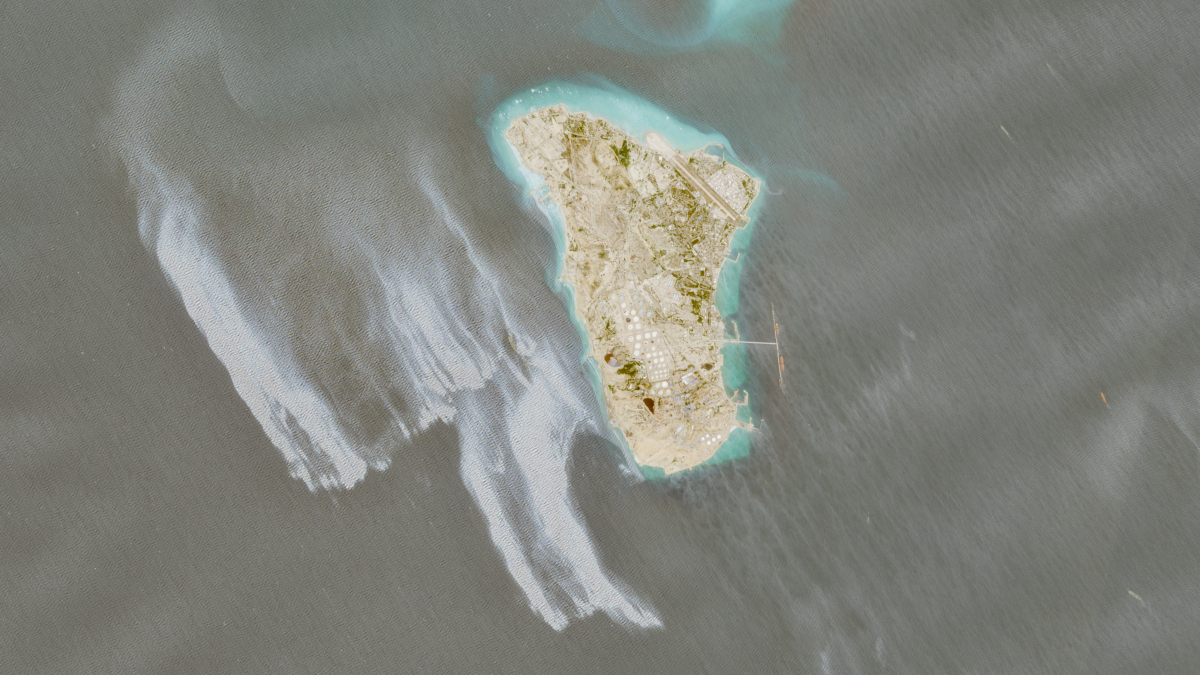
Iran's top environmental official said that a suspected oil spill in the Gulf near Iran's Kharg Island was likely caused by a tanker dumping waste water and not a leak from oil facilities.
The suspected oil spill covering dozens of square kilometres of sea near Iran's main oil hub of Kharg Island has been seen on satellite imagery.
The likely spill, appearing on images as a grey and white slick, covered waters to the west of the 8-kilometre (5-mile) long island, pictures from Copernicus’s Sentinel-1, Sentinel-2 and Sentinel-3 satellites showed on 6-8 May.
⦿ 05:14 GMT | UPDATE
Kuwait arrests four IRGC-linked individuals, Iran rejects claims
Reuters
Kuwait's Interior Ministry said on Tuesday it had arrested four people affiliated with Iran's Revolutionary Guards (IRGC) who attempted to infiltrate the Gulf state by sea, the state news agency KUNA reported.
Iran condemned Kuwait's arrest of four people, saying they were on maritime patrol and entered the Gulf country's territorial waters due to "disruption in their navigation".
Tehran also rejected Kuwait's statements that Iran was planning "hostile actions" against the Gulf country and demanded that its embassy in Kuwait be granted access to the detained Iranian nationals
05:00 GMT | UPDATE
Iran executes man accused of spying for Israel
Reuters
Iran executed a man convicted of spying for Israel’s intelligence service after the Supreme Court upheld his death sentence, the judiciary's Mizan news outlet reported on Wednesday.
According to rights group HRANA, the 32-year-old defendant named Ehsan Afrashteh was arrested in 2024 and sentenced to death in 2025 based on confessions that were fabricated.
⦿ 04:00 GMT | UPDATE
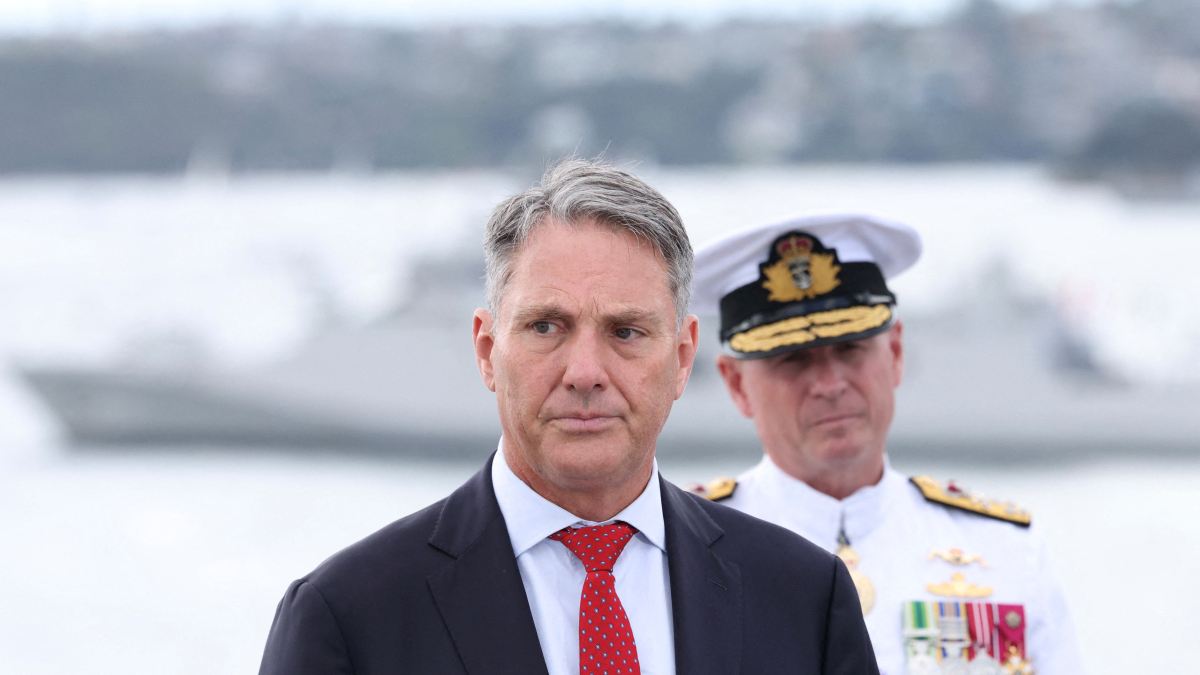
Australia to join 40-nation post-war mission to secure Strait of Hormuz navigation
Defence Minister Richard Marles said Australia will support the “independent and strictly defensive” multinational military mission to ensure free navigation in the strait, which will be led by the UK and France.
“We want to see this conflict end, the Strait of Hormuz open and freedom of navigation resume. The longer this conflict goes on the more significant the impact on Australia will be,” he said in a statement.
⦿ 03:27 GMT | UPDATE
Trump says he doesn’t need China’s help to end the Iran war
Reuters
Ahead of a high-stakes summit in Beijing, U.S. President said he did not think he would need to enlist Chinese President Xi Jinping to resolve the conflict, which has continued to block maritime traffic that normally provides one-fifth of the world's oil supply.
"I don't think we need any help with Iran. We'll win it one way or the other, peacefully or otherwise," he told reporters.
⦿ 03:12GMT | UPDATE
South Korea to review phased contributions to U.S.-led Hormuz initiative
Anadolu
South Korea’s Defence Minister Ahn Gyu-back said Seoul has informed U.S. officials it will “participate as a responsible member of the international community.” He added that South Korea is considering phased contributions to maritime security in the Strait of Hormuz.
Ahn said possible measures include the declaring of support, deploying personnel, sharing information and providing military assets, though direct military participation has not been discussed in detail.












What is your opinion on this topic?
Leave the first comment