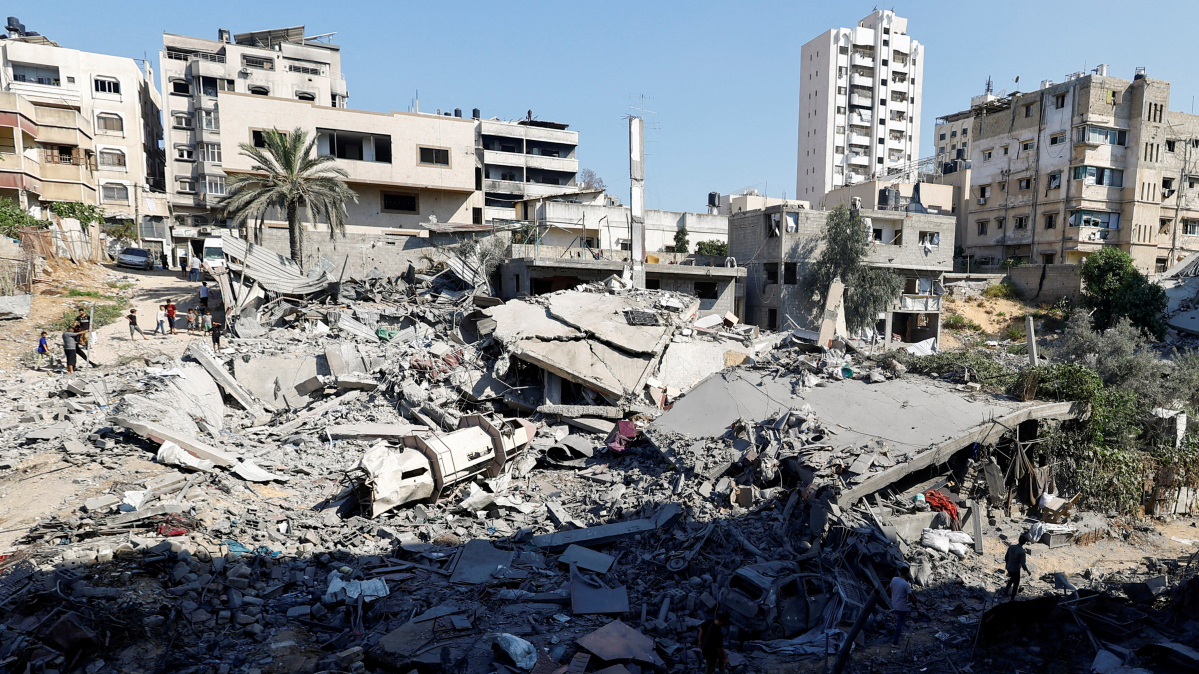
Saudi Arabia, Qatar, Jordan and Kuwait on Friday welcomed an agreement to implement the next phase of the comprehensive peace plan for the Gaza Strip, urging Israel to fully comply with the deal, withdraw its forces.
The reactions came after U.S. President Donald Trump and the Board of Peace announced an agreement to move forward with the next stage of the ceasefire plan.
Saudi Arabia backs Gaza disarmament agreement
Saudi Arabia’s Foreign Ministry welcomed Trump’s “historic agreement” on Gaza’s disarmament, praising the efforts of Egypt, Qatar, Türkiye, the U.S., the Board of Peace and other partners involved in reaching the deal.
Riyadh reaffirmed its commitment to implementing the comprehensive peace plan endorsed by the UN Security Council in Resolution 2803, stressing that all phases must be completed within a defined timetable in a “credible, final and irreversible manner.”
The ministry called for the full withdrawal of Israeli forces from Gaza, the deployment of the International Stabilisation Force, uninterrupted humanitarian aid deliveries and support for reconstruction efforts.
Qatar urges implementation of ceasefire roadmap
Qatari Prime Minister and Foreign Minister Sheikh Mohammed bin Abdulrahman Al Thani held talks with Hamas Political Bureau chief Khalil al-Hayya, congratulating him on his new role.
Qatar welcomed Hamas’ acceptance of the roadmap for implementing the next phase of the agreement and expressed hope that it would help end the suffering of Palestinians in Gaza.
Jordan, Kuwait support peace plan
Jordan’s Foreign Ministry welcomed the agreement, including arrangements for Gaza’s disarmament and the withdrawal of Israeli forces. It praised the roles of Trump, Egypt, Qatar, Türkiye, the U.S. and the Board of Peace in reaching the deal.
Kuwait also welcomed the agreement and praised mediation efforts. It reaffirmed support for the full implementation of the plan, including the withdrawal of Israeli forces and the provision of humanitarian assistance.
Roadmap outlines next phase of Gaza ceasefire
Earlier on Friday, the Board of Peace published a document titled “A Roadmap for Completing the Implementation of President Trump’s Comprehensive Peace Plan in Gaza,” outlining mechanisms for the next stages of the agreement, including security, administrative and transitional arrangements.
Hamas spokesman Hazem Qassem later announced the group’s approval of the mediators’ proposal to complete the remaining phases of the ceasefire deal.
The Israeli government has not officially commented on the roadmap. Far-right National Security Minister Itamar Ben-Gvir rejected the draft agreement, calling it unacceptable for Israel.





















What is your opinion on this topic?
Leave the first comment