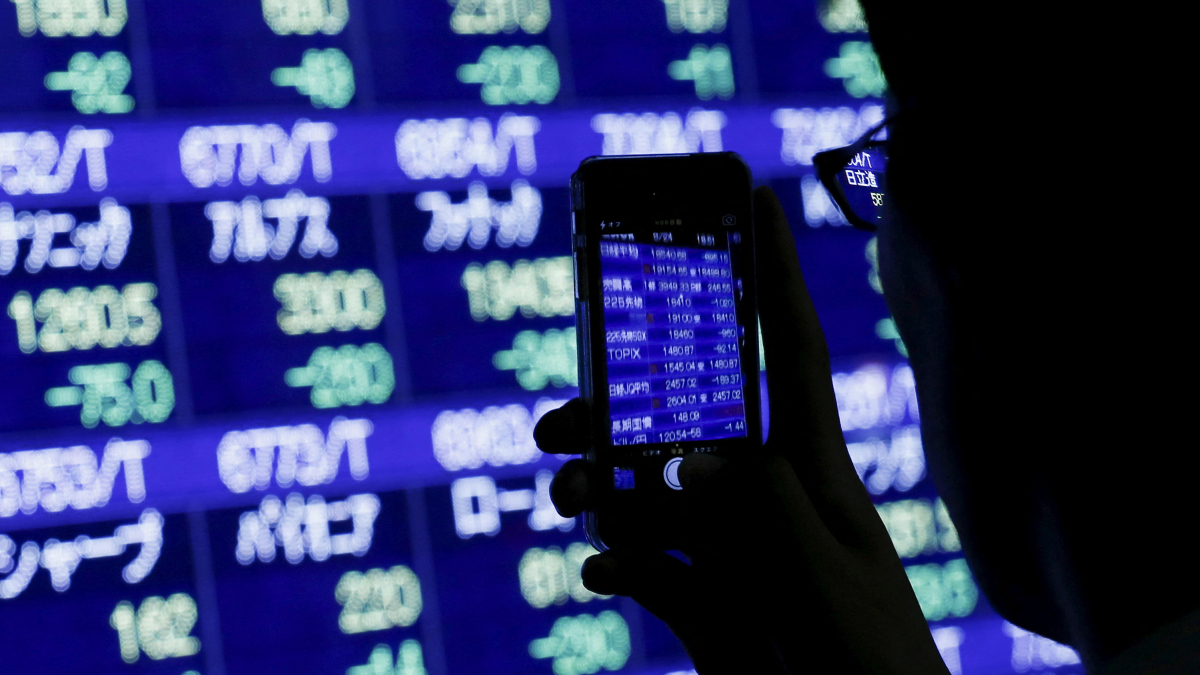
Stocks around the world climbed to fresh record highs on Wednesday (6 May), while oil prices fell sharply, after reports suggested the United States and Iran were nearing an agreement to end conflict.
Investors also continued to pour into artificial intelligence-related shares, helping to drive gains across global markets.
Brent crude, the international benchmark for oil prices, initially dropped to just below $100 a barrel, its lowest level in two weeks. Brent later settled 7.83% lower at $101.27 a barrel.
U.S. West Texas Intermediate crude also declined by about 7%, ending the session at $95.08.
On Wall Street, strong corporate earnings helped extend a rally in U.S. equities. The Dow Jones Industrial Average rose 1.24%, while the S&P 500 gained 1.46%. The Nasdaq Composite jumped 2%, with both the S&P 500 and Nasdaq reaching fresh highs.
European markets also advanced. The STOXX 600 index extended earlier gains and was last up 2.2%, after rising 0.7% the previous day. MSCI’s All-Country World Index climbed 1.64% to a new record.
Michael Brown, Senior Research Strategist at Pepperstone, said markets appeared to be responding aggressively to hopes of a breakthrough.
“A pretty punchy move on the back of those stories, almost as if the market has shifted into ‘buy everything’ mode,” he said.
Brown added that uncertainty remained over how close the two sides were to reaching an agreement.
“It’s difficult to say how close to a deal we might be. Market participants, though, aren’t going to wait for confirmation of good news and are essentially now front-running a positive outcome.”
The U.S. dollar, which had benefited from safe-haven demand during the conflict, fell 0.3% against a basket of major currencies as investors grew more optimistic about a possible deal.
Japan’s yen strengthened by as much as 1.8% against the dollar in a rapid move that prompted speculation of another round of market intervention.
Government bond yields also moved lower alongside oil prices, as traders reduced expectations for further central bank interest rate increases. The yield on the benchmark 10-year U.S. Treasury note fell 6.4 basis points to 4.352%.
Despite the strong gains in equities, analysts warned that continued volatility in energy and bond markets could still weigh on global economic growth.
Oil prices remain around 35% higher than when the conflict began in late February, while yields on 10-year U.S. Treasuries are roughly 40 basis points higher.
AI rally gathers pace
Technology shares linked to artificial intelligence (AI) were among the strongest performers.
In the United States, shares in chipmaker Advanced Micro Devices surged about 18.6% after the company forecast second-quarter revenue above Wall Street expectations, fuelling further enthusiasm for AI-related investments.
Rival Intel also climbed to a record high, while Arm Holdings and Qualcomm posted strong gains.
The rally spread into Asia, where the broadest index of Asia-Pacific shares outside Japan rose 3.2%.
Samsung Electronics jumped 14%, lifting the company’s market value above $1tn and pushing it ahead of Berkshire Hathaway.






















What is your opinion on this topic?
Leave the first comment