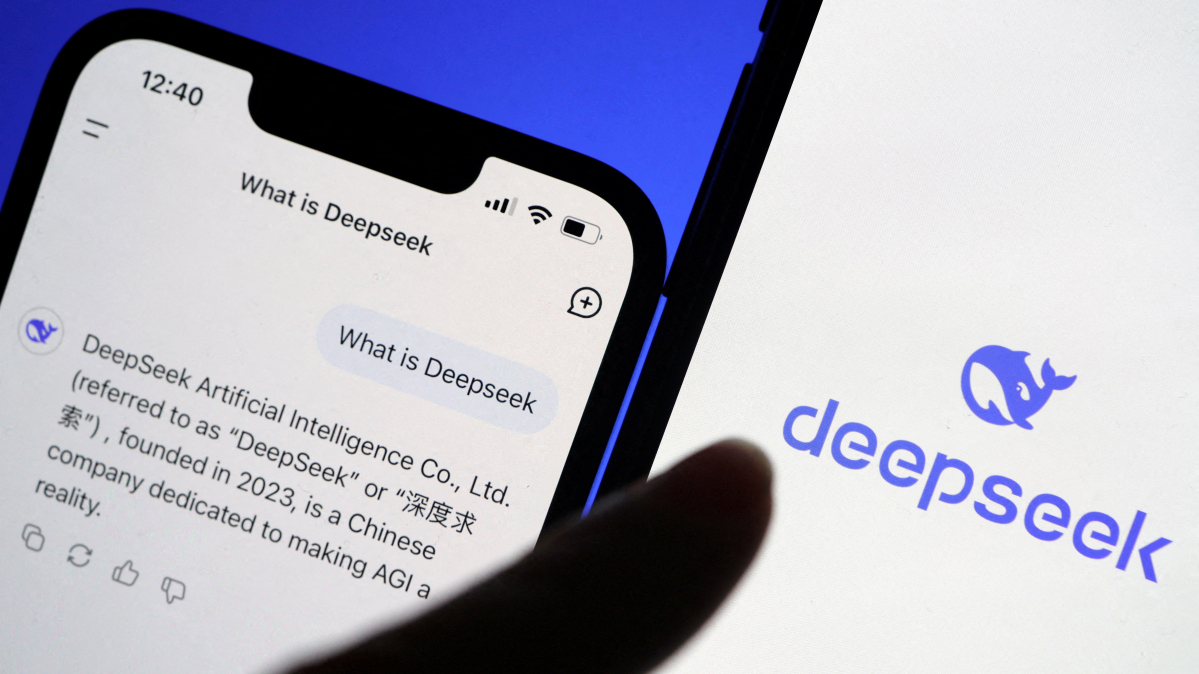
Market reaction to DeepSeek’s preview of its next-generation artificial intelligence model has been relatively subdued, in sharp contrast to the global shock triggered by its breakthrough releases last year.
The Hangzhou-based firm’s earlier models, including DeepSeek-V3 and R1, were credited with reshaping investor expectations after demonstrating strong performance while using significantly fewer computing resources than leading U.S. systems.
That release sparked a global sell-off in technology stocks as investors reassessed the scale of spending required to build frontier AI systems.
At the time, analysts described the episode as a “black swan” moment that challenged assumptions about the dominance of major U.S. AI players and the impact of export controls on Chinese innovation.
However, the launch of DeepSeek-V4 on Friday has not produced a similar market reaction, with investors appearing more accustomed to rapid iteration and cost-efficient model development across the industry.
“This announcement followed a rather predictable path,” said Lian Jye Su, chief analyst at Omdia, noting that efficiency gains and architectural improvements are now widespread among both Chinese and global AI developers.
Benchmark data from Artificial Analysis show DeepSeek-V4 Pro delivers measurable improvements over previous versions but sits broadly within a competitive field of leading open-weight models, alongside rivals such as Kimi and Qwen, rather than decisively outperforming them.
AI competition intensifies
The shift also reflects growing competition within China’s AI sector, where multiple firms are releasing increasingly capable models, reducing the relative advantage once held by DeepSeek.
According to analysts, the earlier market shock was driven by a combination of inflated expectations for U.S. technology dominance, high valuations in AI-related equities, and the unexpected emergence of a low-cost Chinese challenger delivering strong results under U.S. chip restrictions.
Those conditions have since evolved, with markets now pricing in continued innovation from new entrants.
“The expectation that new players will emerge is now baked into valuations,” Su said. “Markets have become more realistic about both the capabilities and limits of AI.”
Geopolitics and chip constraints
Despite the muted market response, analysts say DeepSeek’s latest model remains significant in the broader U.S.-China technology competition.
Alfredo Montufar-Helu of Ankura China Advisors said the focus has shifted from short-term market impact to long-term strategic positioning.
He noted that DeepSeek-V4 has been optimised to run effectively on Huawei chips, highlighting how Chinese firms are adapting to tightening U.S. export controls that restrict access to advanced semiconductors used in AI development.
“The ‘wow factor’ was last year, that’s already priced in,” he said.
“What matters now is whether China can continue advancing AI development, potentially with its own chips. The geopolitical implications would be significant.”
Meanwhile, Asian technology markets showed continued strength, with stocks in South Korea and Taiwan reaching new highs on Monday amid sustained optimism around global AI demand.




















What is your opinion on this topic?
Leave the first comment