The AnewZ Opinion section provides a platform for independent voices to share expert perspectives on global and regional issues. The views expressed are solely those of the authors and do not represent the official position of AnewZ
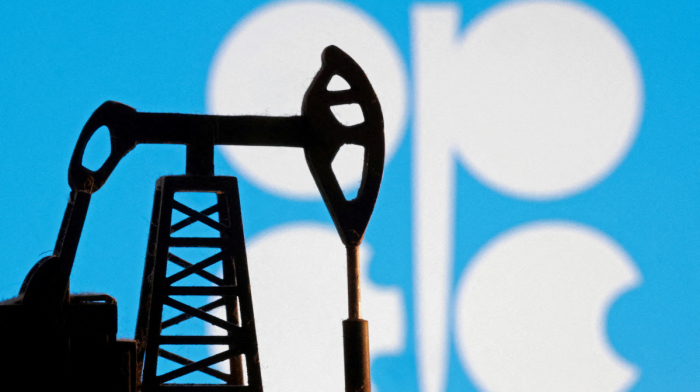
The Organization of the Petroleum Exporting Countries (OPEC) exit by the United Arab Emirates has largely been viewed through a narrow economic lens: higher Emirati output, potential increases by Saudi Arabia and others to protect market share, and downward pressure on global prices.
That scenario remains plausible. However, focusing solely on price risks overlooking the broader significance of Abu Dhabi’s move.
The UAE’s withdrawal is better understood as a geopolitical signal. It reflects growing divergence between Abu Dhabi and Riyadh over regional leadership, security alignments and the future of Gulf coordination. Oil policy is only one element of a wider political transformation.
Timing highlights strategic tensions
The timing of the decision is particularly revealing. The UAE formally exited OPEC/OPEC+ on 1 May, coinciding with one of the organisation’s most politically sensitive meetings in years. This round of consultations marks the first major quota discussion since the departure, shifting focus from technical oil management to institutional credibility.
Saudi Arabia now faces the challenge of demonstrating that OPEC+ can function coherently after losing one of its most economically dynamic members.
Reports suggest OPEC+ is considering a modest production increase for June. Under normal circumstances, such a move might trigger strong market reactions. But current conditions are far from typical.
The ongoing conflict involving Iran, the United States and Israel - alongside disruptions in the Strait of Hormuz - limits Gulf producers’ ability to significantly expand exports. In effect, the crisis is temporarily shielding OPEC+ from the immediate consequences of the UAE’s exit.
Why this exit matters more than Qatar’s
The UAE is not the first Gulf state to leave OPEC. Qatar withdrew in 2019 to focus on gas and LNG expansion. However, its departure had minimal impact due to its relatively small oil output and continued political alignment within Gulf energy frameworks.
The Emirati case is different. As one of OPEC’s largest producers and a central regional actor, its withdrawal carries far greater geopolitical and institutional implications.
Predictions of an imminent oil-price collapse therefore appear premature. Such a scenario would require several conditions simultaneously: major Emirati production increases, a competitive Saudi response, weak global demand and normalised shipping through Hormuz. None of these conditions is fully present.
However, the medium-term implications are more significant.
A broader strategic reorientation
For years, the UAE has grown increasingly uneasy with OPEC quotas that limit its expanding production capacity. Abu Dhabi has invested heavily in upstream infrastructure and sees itself as a rising global energy player.
Yet framing the decision purely as a quota dispute understates its strategic depth.
The UAE’s foreign policy has evolved towards greater autonomy from collective Gulf frameworks. Abu Dhabi is increasingly willing to pursue flexible, transactional partnerships beyond Gulf Cooperation Council (GCC) consensus or Saudi preferences.
This shift is visible across three key areas.
Security realignment with Israel
First, the UAE’s deepening security and technological ties with Israel have reshaped its regional posture. Since the Abraham Accords, cooperation has expanded into intelligence, cyber security, defence and infrastructure.
Despite ongoing regional conflicts, Abu Dhabi has largely maintained this relationship. While it has not abandoned the Palestinian issue, it increasingly views security through a framework aligned with Washington and advanced technological partnerships in which Israel plays a growing role.
Growing distance from GCC discipline
Second, the UAE has gradually distanced itself from traditional GCC coordination. Frictions with Saudi Arabia have emerged over Yemen, Sudan, Red Sea influence and economic competition.
While both remain close partners, their visions diverge. Riyadh tends to favour hierarchical regional leadership, whereas Abu Dhabi prioritises diversified alliances and strategic flexibility.
OPEC has long functioned not only as an economic body but also as a mechanism of political discipline. Leaving it signals that the UAE no longer sees Saudi-led oil governance as essential.
Economic strategy requires flexibility
Third, the UAE’s global economic ambitions demand flexibility. Abu Dhabi aims to position itself as a financial hub, logistics centre, technology leader and reliable energy supplier.
Production autonomy, therefore, is part of a broader strategy to maximise geopolitical influence in an era of global fragmentation and energy transition.
Saudi Arabia’s strategic dilemma
Saudi Arabia now faces a delicate balancing act. It cannot allow unchecked Emirati production growth without risking its leadership position. Yet it also cannot afford a price war, particularly amid regional instability.
The most likely short-term outcome is cautious coexistence. Riyadh will seek to preserve cohesion without escalation, while Abu Dhabi appears intent on demonstrating that it can pursue independence without destabilising markets.
A new era of Gulf competition
The underlying tension, however, will persist. Once maritime flows stabilise and regional pressures ease, the Gulf may enter a phase of intensified competition - not only economically but strategically.
Energy policy could become another arena of rivalry alongside logistics, artificial intelligence, finance, ports and defence partnerships.
In this context, the UAE’s departure from OPEC may prove more politically significant than economically disruptive.
The central issue is credibility: can OPEC+ maintain discipline without one of its key members? Can Saudi Arabia sustain leadership without triggering fragmentation? And can Gulf coordination survive as national ambitions increasingly outweigh collective frameworks?
Conclusion: Beyond oil prices
The real story is not whether the UAE’s exit alone will crash global oil prices. It is whether it signals the emergence of a more fragmented Gulf order - one where traditional coordination mechanisms give way to a more competitive and strategically autonomous regional landscape.



















What is your opinion on this topic?
Leave the first comment