The AnewZ Opinion section provides a platform for independent voices to share expert perspectives on global and regional issues. The views expressed are solely those of the authors and do not represent the official position of AnewZ
Commemorating human suffering is a moral duty. Remembering the dead, acknowledging pain, and reaffirming a commitment to prevent future atrocities - these are responsibilities that transcend politics, geography and identity.
Yet the way we remember matters as much as the act of remembrance itself.
A recent statement on 24 April by Zohran Kwame Mamdani has brought this issue into focus. It reflects a perspective that resonates with parts of his constituency, particularly the Armenian community. That is understandable in a democratic setting where elected officials respond to the concerns of their voters.
However, when such statements move from commemoration to interpretation - especially of complex historical and geopolitical issues - the need for balance, precision and contextual awareness becomes critical.
History is complex, not absolute
The events of 1915 remain one of the most sensitive and debated subjects in modern history. Scholars, institutions, and governments have not reached a universally accepted interpretation. Historical archives, wartime conditions and competing narratives all contribute to an often polarised debate.
This does not diminish the human tragedy. On the contrary, it underscores its complexity.
Reducing such a multi-layered historical episode into a single, definitive narrative risks oversimplification. History, particularly in periods of imperial collapse and war, requires careful study, open debate and intellectual humility.
Wider historical context often overlooked
Balanced remembrance also requires acknowledging that suffering in that era was not confined to a single community.
During the First World War, large numbers of Muslim civilians - Turks, Kurds and others - lost their lives amid the chaos of imperial collapse, inter-communal violence and military confrontation. There were documented instances of attacks by Armenian armed groups, at times operating in coordination with advancing Russian forces, against Muslim populations in eastern Anatolia.
Similarly, the late Ottoman retreat from the Balkans was accompanied by profound human tragedy. In territories such as Bulgaria, significant numbers of Muslim civilians were killed, displaced or forced to flee toward Anatolia.
These events left deep and lasting scars across generations.
Pain, in that period, was not one-dimensional. It was widespread, overlapping and deeply human.
Distinguishing past from present
The discussion becomes more delicate when historical events are directly linked to contemporary conflicts.
The now resolved conflict in Garabagh, involving Azerbaijan and Armenia, was rooted in a different historical and political context. The conflict has produced undeniable suffering, including displacement and civilian casualties. However, framing these events as a direct continuation of earlier historical tragedies risks conflating distinct issues. Each period and each conflict deserves to be understood within its own context.
Recent remarks by Zohran Kwame Mamdani regarding the 2023 developments in Garabakh further illustrate this challenge. The assertion that Azerbaijan “expelled more than 100,000 Armenians as part of a continuing genocidal campaign” reflects a particular one-sided interpretation. Azerbaijan has publicly articulated a policy of reintegrating the ethnic Armenian population within its constitutional framework as equal citizens.
Precision in language is essential here - not to diminish suffering, but to preserve clarity.
Importance of inclusive memory
If remembrance is to carry moral weight, it must be inclusive.
The Khojaly Genocide remains a deeply painful chapter for Azerbaijanis, just as Armenian suffering remains central to Armenian historical memory. Decades of displacement and insecurity have shaped entire generations.
Acknowledging these realities does not create equivalence between different events, but it does foster a more complete and empathetic understanding of shared human suffering.
Selective memory, even when unintended, risks reinforcing division. Inclusive memory, by contrast, opens the door to mutual recognition.
Selective memory is also evident in discussions around Cyprus.
The period between 1963 and 1975 saw serious intercommunal violence affecting Turkish Cypriots, including massacres, displacement and prolonged insecurity. These experiences remain an essential part of the island’s modern history.
They should not be forgotten, nor omitted from international narratives. Acknowledging them completes the picture. History cannot begin at a convenient moment. When it does, it ceases to be history and becomes advocacy.
Region at a Turning Point
The South Caucasus today is not frozen in its past. It is, cautiously, moving forward.
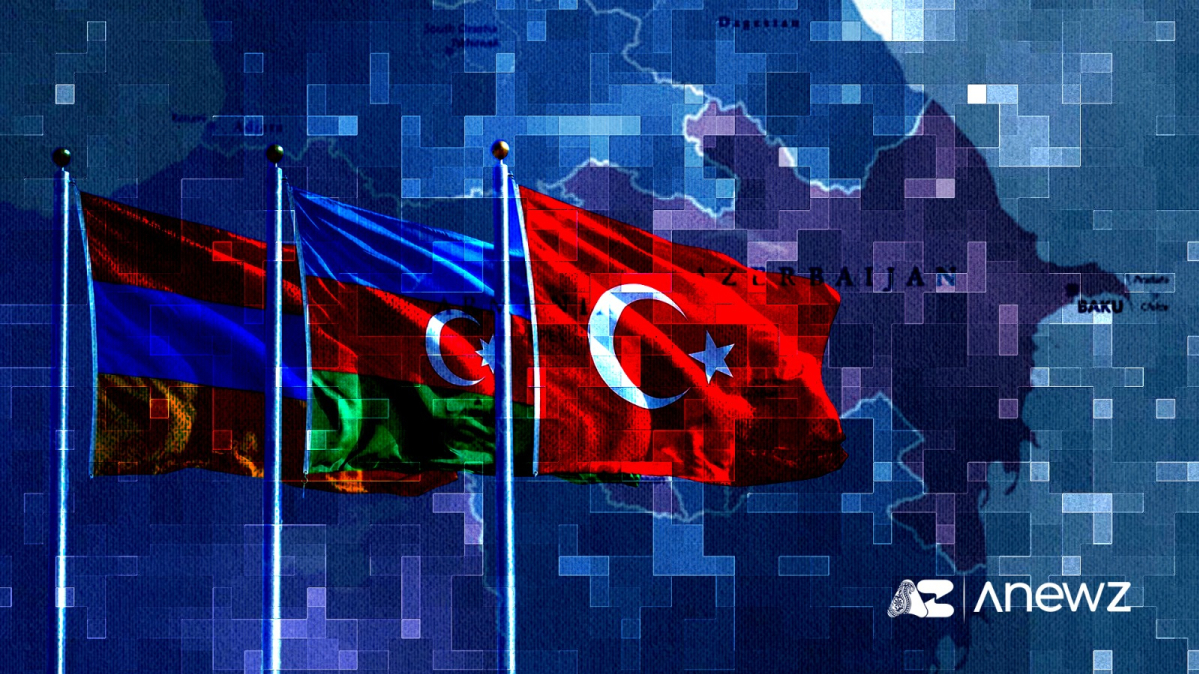
There are ongoing efforts toward normalisation between Armenia and Azerbaijan, alongside parallel engagement between Türkiye and Armenia. These processes are fragile, uneven and politically sensitive - but they represent a meaningful shift.
Discussions on reopening borders, restoring connectivity and building economic interdependence are gaining traction. There are also diplomatic initiatives, by U.S. President Donald Trump together with the President of Azerbaijan, Ilham Aliyev and Armenian Prime Minister Nikol Pashinyan, aimed at facilitating dialogue and potential agreements.
These initiatives signal something important: a willingness, however cautious, to move forward.
Call for Balance and Shared Humanity
In an interconnected world, words spoken in New York resonate far beyond the city. They echo in regions still grappling with the weight of history and the fragility of peace.
This is why balance matters. This is why precision matters.
Zohran Kwame Mamdani is a respected public figure, representing one of the most diverse cities in the world. That diversity brings with it a responsibility to reflect multiple perspectives - not just one.
I would respectfully call on Mayor Mamdani - whom I believe to be a fair-minded leader - to consider revisiting his statement. A more balanced approach, one that recognises all dimensions of suffering and the complexity of history, would not weaken his message; it would strengthen its credibility.
To honour all victims with fairness is to remain faithful both to history and to the values of the present generation.
Pain exists on all sides of history. Wherever it has occurred, it must be acknowledged. Whatever its source, it must be condemned. And above all, it must never be allowed to repeat.
At a time when Armenia, Azerbaijan and Türkiye are cautiously exploring pathways toward normalisation and reconciliation, voices from global cities can either reinforce old divisions or support new beginnings.
The more constructive choice is clear: to recognise suffering in all its forms, to resist selective narratives. And to contribute, however modestly, to a future where history informs peace rather than perpetuates conflict.
Because in the end, history is not only about what happened. It is about what we choose to do with it.
Read more:













What is your opinion on this topic?
Leave the first comment