The Security Council selectivity, the Iran War, and Hormuz threshold
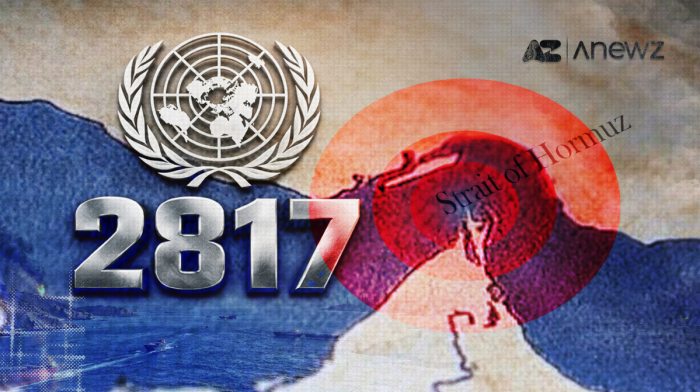
The United Nations Security Council did not fail because it was silent after the war against Iran began on 28 February 2026.
In times of geopolitical upheaval, nuance is often the first casualty. Complex realities are reduced to convenient narratives and countries caught in the crosscurrents of regional tensions find themselves portrayed through a single, often misleading lens.
Recent operations by the U.S. military have led some to believe that a decapitating strike is a silver bullet capable of fixing any foreign policy problem swiftly. However, this logic is flawed, and the risks of relying on swift, targeted actions are too great to ignore.
In the Middle East, wars rarely remain confined to battlefields. Their most profound and enduring consequences are often measured not in military victories but in human displacement.
What has unfolded in northern Syria recently is not the dramatic defeat of a community, nor a humanitarian parable of “betrayal”. It reflects a familiar pattern in Middle Eastern geopolitics: the quiet removal of a proxy whose strategic usefulness has expired.
Global media outlets have extensively covered the C5+1 Summit held in Washington, highlighting its significant outcomes for both the United States and Central Asian countries.
Political violence in Armenia often emerges at critical junctures when peace has appeared possible. Next year’s parliamentary elections could test whether the country has finally broken that cycle.
The narrative surrounding China’s economy has long been defined by sheer scale. For decades, the nation was synonymous with mass manufacturing and an endlessly expanding consumer base, a market so vast that its very size eclipsed nuanced analysis.
Donald Trump’s order to resume testing nuclear weapons after a 33-year gap may come as a shock, especially given his efforts to stop conflicts around the world. As contradictory as it may sound, there is logic attached to it.
Global finance is entering a new era. The long-standing dominance of the US dollar is showing signs of strain as political conflicts and financial sanctions push countries to seek alternatives.
On 2 September, spot gold briefly broke through the historic threshold of $3,500 an ounce, before settling just under that level at $3,494. This rally not only eclipsed the previous peak set in April but also cemented gold’s position as one of the best-performing assets of 2025.
President Ilham Aliyev’s working visit to Beijing on 30 August 2025 was primarily to attend the Shanghai Cooperation Organization (SCO) Summit, and his meeting with Chinese President Xi Jinping took place on the sidelines of this multilateral gathering.
Côte d'Ivoire has maintained its position as a major political and economic force in West Africa. The region has been experiencing a number of political challenges with several countries either under the military rule grappling with uncertainty.
You can download the AnewZ application from Play Store and the App Store.