The AnewZ Opinion section provides a platform for independent voices to share expert perspectives on global and regional issues. The views expressed are solely those of the authors and do not represent the official position of AnewZ
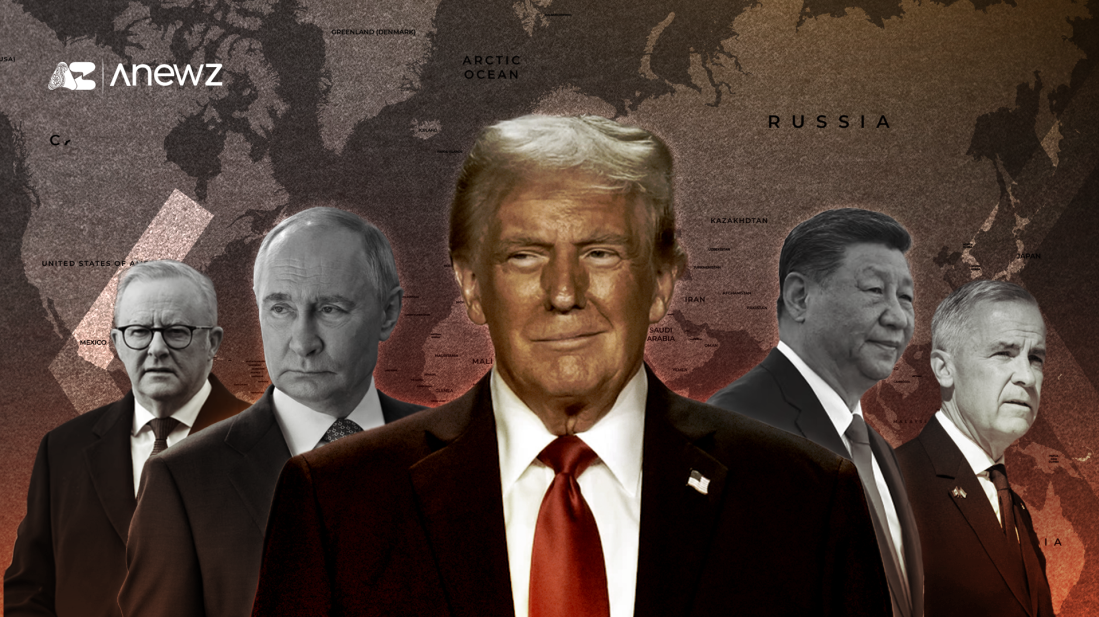
In recent months, the global trading environment has entered a new phase of uncertainty, largely driven by unilateral tariff actions spearheaded by the United States. Once regarded as the champion of free trade, Washington’s increasing reliance on tariffs as a policy tool is now reshaping the structure of international commerce — with far-reaching consequences for developed and developing economies alike.
According to the latest forecasts by the World Trade Organization (WTO) and the International Monetary Fund (IMF), global trade growth is slowing at a pace not witnessed since the early 2000s. The WTO recently downgraded its global goods trade growth projection for 2026 to just 0.5 per cent, from 1.8 per cent earlier, citing the cumulative impact of trade-policy uncertainty and tariff measures. The IMF also warned that the “full effects of tariff policies have yet to be felt,” hinting at deeper structural repercussions that could test the resilience of the world economy.
The protectionist turn in U.S. policy has revived debates about the future of the multilateral trading system. Economists agree that such unilateral actions violate the spirit — if not the letter — of the WTO’s core principles of most-favoured-nation treatment and non-discrimination. More importantly, they undermine the sense of predictability and cooperation that global trade depends upon.
The New Trade Alignments
For manufacturing hubs integrated into global value chains, tariffs have triggered a domino effect. Components once freely traded between countries are now subject to higher duties, disrupting the efficiency that globalisation once promised. As production networks adjust, multinational firms are re-evaluating their sourcing strategies — shifting some operations to third countries or regional blocs to mitigate risks.
The consequences extend well beyond corporate boardrooms. Developing nations — particularly those that rely on export-led growth — are among the hardest hit. Many of these countries had built their economic strategies around predictable access to global markets. As tariffs reshape trade flows, they risk marginalisation and a loss of competitiveness. For landlocked and least developed countries already burdened with high transport costs, the additional layer of trade barriers threatens to erode hard-won development gains.
A senior trade analyst at the IMF recently noted that the “cost of protectionism is disproportionately borne by those least able to absorb it.” The warning underscores a deeper concern: that widening inequalities between nations could become a lasting legacy of today’s tariff wars.
According to the WTO’s own estimates, a prolonged tariff escalation between major economies could reduce global GDP by as much as 1.5 per cent annually over the next decade. Inflationary pressures would rise, productivity growth would slow, and global investment flows could become increasingly volatile.
As the multilateral trading system faces unprecedented strain, many regions are beginning to explore new frameworks to restore balance and stability in global trade. With traditional leadership models under question, fresh alignments and partnerships are emerging that aim to redefine cooperation beyond the existing order — setting the stage for a new phase in the evolution of global commerce.
CPTPP and the Geopolitics of a New Trade Order
Recent developments in Europe and the Asia-Pacific suggest that global trade dynamics are entering a redefined phase of alignment. At a press conference following the European Union summit, European Commission President Ursula von der Leyen proposed that the 27 EU countries could join hands with the relevant members of the Comprehensive and Progressive Agreement for Trans-Pacific Partnership (CPTPP) to jointly launch a new trade initiative — one that could reshape the global trade order.
Von der Leyen further remarked that the participation of the United States “will not be taken for granted,” indicating that the EU and CPTPP members would collectively determine whether Washington could join such a framework. The statement reflects a broader sentiment among many economies that the next stage of globalisation may no longer depend exclusively on U.S. leadership.
The CPTPP, in this context, has evolved into more than a trade agreement — it symbolises a vision of a diversified, rules-based order that balances influence among major economies. China, too, has expressed its intention to join the partnership, signalling that it views participation as part of a long-term strategy to deepen regional and international economic cooperation.
In essence, the emerging discussions around CPTPP reveal a changing geopolitical narrative: one where regional blocs, rather than a single dominant power, drive the future of trade governance. The focus is shifting from competition to coordination — from unilateral action to collective strategy.
Adapting to a New Trade Reality
While the global trading system faces undeniable challenges, it is not without capacity for adaptation. Businesses and governments are already seeking innovative ways to adjust. Regional supply chains are being strengthened, digital trade platforms are expanding, and green technologies are opening new frontiers for sustainable commerce.
However, these transitions cannot substitute for a truly open and stable multilateral framework. Fragmentation may provide temporary alternatives, but it cannot replicate the efficiency and inclusivity of global cooperation. As many analysts warn, an increasingly divided trading world risks becoming less resilient, less efficient, and less equitable.
It is therefore essential for leading economies — including the United States — to re-engage constructively in global trade governance. Addressing legitimate domestic concerns does not require abandoning the multilateral order. Instead, reforms within the WTO and other institutions should focus on modernising trade rules, promoting digital inclusivity, and ensuring fair competition — goals that can be achieved only through consensus, not confrontation.
A Way Forward
The world has faced similar crossroads before. In the aftermath of the Great Depression, nations turned inward — with disastrous consequences. The creation of post-war institutions like the General Agreement on Tariffs and Trade (GATT) was a recognition that prosperity depends on cooperation, not isolation. Today’s leaders must recall that lesson.
As the world economy undergoes a structural transformation — driven by technology, climate imperatives, and demographic shifts — the need for a predictable and rules-based trading environment has never been greater. It is only by embracing genuine multilateralism, guided by fairness and mutual benefit, that global trade can be steered back on a path of shared progress.
The growing interest in the CPTPP and other regional initiatives shows that countries are already exploring alternative models of cooperation to uphold the spirit of openness that defined past decades. If managed wisely, this emerging multipolar trade order could mark a new chapter — one defined not by division, but by balance and mutual respect.
Qaiser Nawab is Chairman of the Belt and Road Initiative for Sustainable Development (BRISD), an international platform focused on fostering cooperation and innovation across Asia, Africa, and Latin America.














What is your opinion on this topic?
Leave the first comment