The AnewZ Opinion section provides a platform for independent voices to share expert perspectives on global and regional issues. The views expressed are solely those of the authors and do not represent the official position of AnewZ
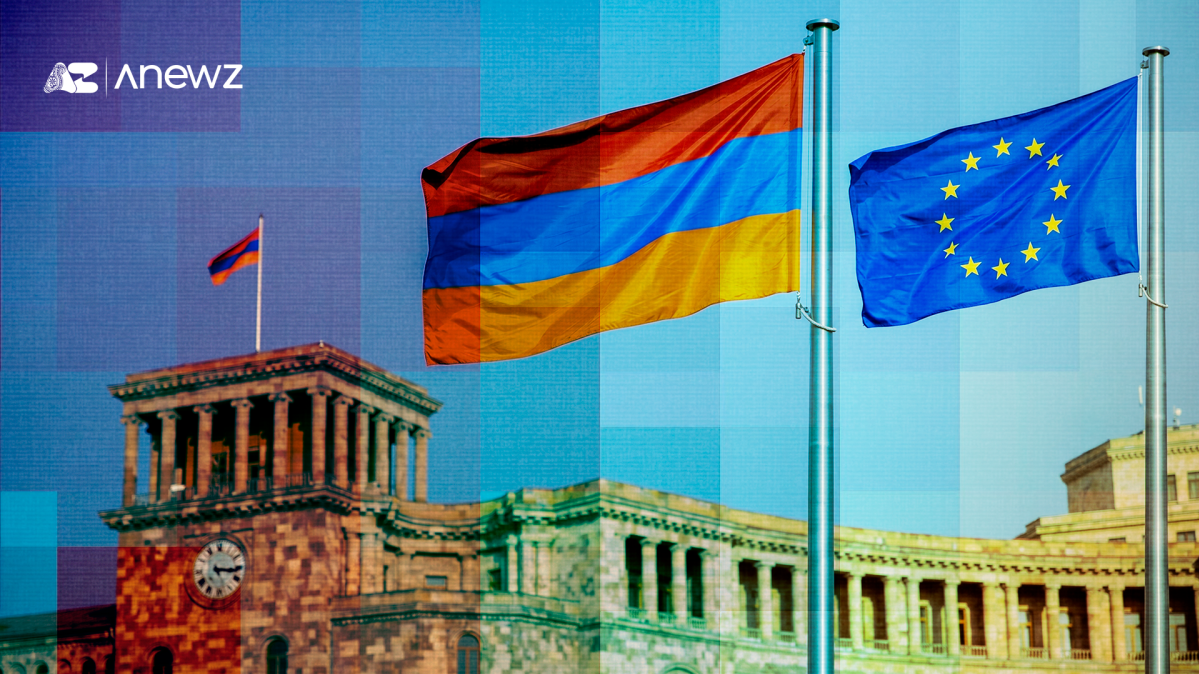
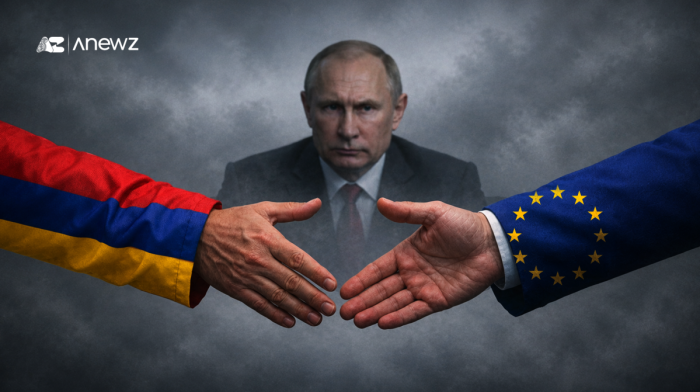
The European Union has held its first-ever summit with Armenia in Yerevan this week - a diplomatic milestone that produced a joint declaration, a new connectivity partnership and a broader commitment to deepen ties. For Armenia, it is a political moment. For Europe, it is a strategic signal.
But in the South Caucasus, political momentum and strategic leverage are rarely the same thing. And leverage, in this region, still belongs to those who shape routes, secure energy and influence the movement of goods across borders.
That is why the South Caucasus cannot be understood through summit declarations alone. Peace may be discussed in European halls, but the strategic shape of the region will still be decided by those who live in it.
And on that front, Azerbaijan remains impossible to bypass.
The summit builds on the EU-Armenia Strategic Agenda adopted in December 2025 and strengthens Brussels’ support for Armenia’s reform agenda, infrastructure plans and economic resilience. The new Connectivity Partnership is intended to expand transport, energy and digital cooperation.
That gives Yerevan momentum. Whether it changes the regional equation is another question. Because in the South Caucasus, connectivity is never just about trade.
It is about leverage. Roads, railways and transit corridors are political instruments as much as economic ones. Every route shifts influence, opens dependencies and redraws strategic maps. That is why transport agreements in this region are watched as closely as military ones.
Geography still matters
Whatever new partnerships emerge in Yerevan, the region’s established energy and transport architecture remains heavily tied to Azerbaijan. Europe’s push to diversify energy supplies and strengthen east-west trade routes has only deepened that reality.
That is the harder strategic fact beneath the summit optics.
There is also the France factor. President Emmanuel Macron’s visit to Armenia during the summit was not simply ceremonial. If Brussels provides the institutional framework, Paris increasingly provides much of the political weight behind Europe’s engagement with Yerevan. France has become one of Armenia’s most visible supporters inside Europe. Because it shows that Europe’s Armenian track is no longer just administrative - it is political. But even that political weight runs into regional realities.
Timing is revealing
As Yerevan hosted European leaders, Italian Prime Minister Giorgia Meloni concluded her official visit to Baku, while Vice President of the European Commission Kaja Kallas was also in Azerbaijan for talks. That overlap tells its own story. Brussels is expanding its Armenian track without stepping away from Baku.
Because while Armenia’s European trajectory is becoming more visible, Azerbaijan remains tied to Europe’s practical interests in the region - particularly in energy, transport and regional connectivity. That is not a future calculation. It is part of Europe’s current policy.
There is also a contradiction at the heart of Europe’s regional approach. Brussels is deepening its political investment in Armenia while continuing to rely on Azerbaijan for parts of its energy diversification and regional transit strategy. That is not necessarily incompatible - but it does raise a harder question: can Europe build political trust in one capital while depending on the strategic weight of the other?
And then there is Russia. The EU’s growing civilian and political footprint in Armenia will inevitably be watched closely in Moscow. Russia may no longer define every regional move, but it remains deeply invested in the South Caucasus security balance.
The political contrast is equally telling.
At the latest European Political Community summit, President Ilham Aliyev addressed participants by video, describing the current phase of relations with Armenia as one of de facto peace, while criticising the European Parliament over its approach to Azerbaijan.
The response from Roberta Metsola underlined an uncomfortable reality for Brussels: influence in the South Caucasus does not automatically bring trust. And trust matters.
Because Europe’s political role in the region is growing, but its credibility remains uneven depending on which capital you ask.
Yerevan has gained momentum. But in the South Caucasus, momentum is not the same as leverage — and Europe knows the difference.
Read more:















What is your opinion on this topic?
Leave the first comment