The AnewZ Opinion section provides a platform for independent voices to share expert perspectives on global and regional issues. The views expressed are solely those of the authors and do not represent the official position of AnewZ
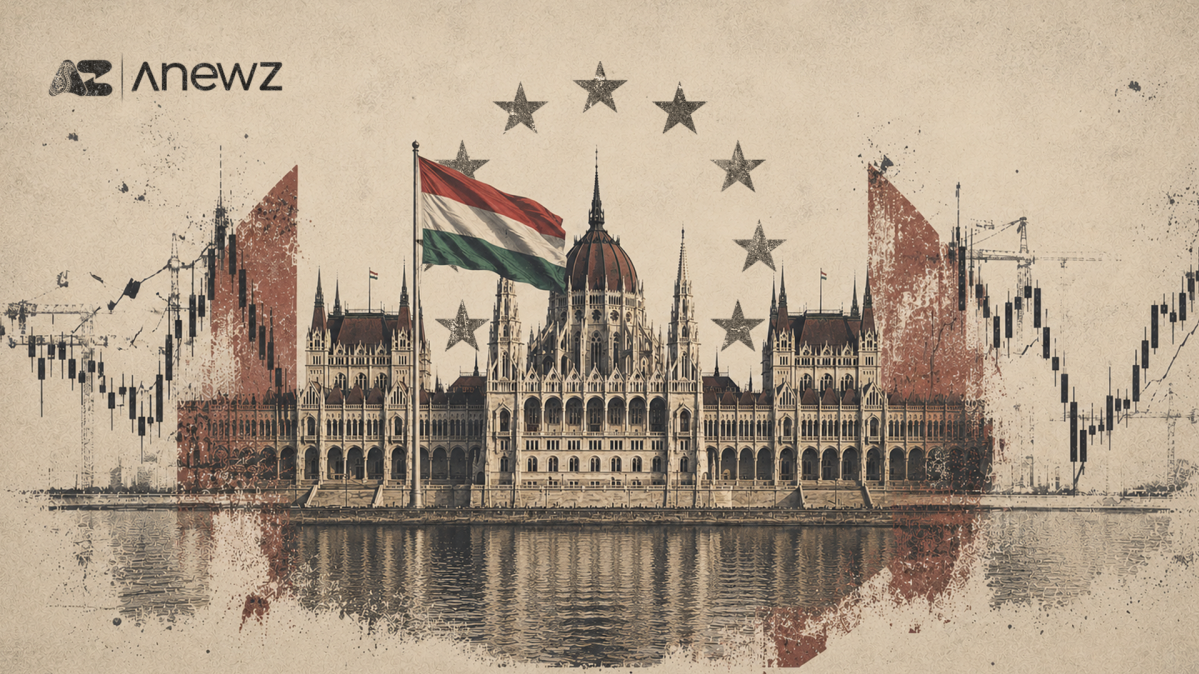
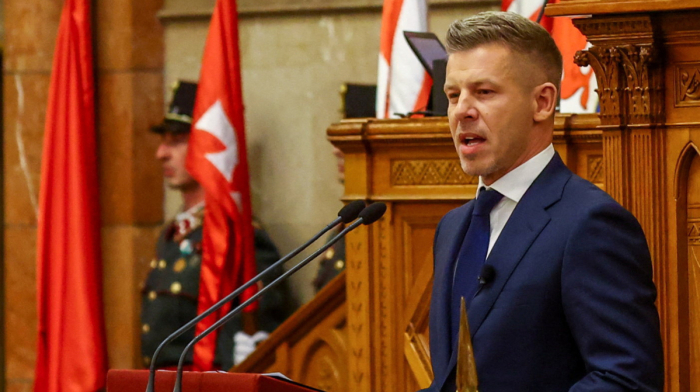
Hungarians put an end to the sixteen years of Viktor Orbán’s premiership on the night of 12 April when Fidesz - Orbán’s party - witnessed its largest and most bitter defeat in all of its history. In a matter of hours, 155 of the Hungarian parliament’s seats went to Tisza, Magyar’s party.
That’s well above the constitutional majority threshold.
Developments in Budapest are important for Azerbaijan. Hungary seems like a minor power, which in fact it is, especially if compared to Azerbaijan’s immediate neighbours, such as Türkiye, Iran, and Russia. Or even to greater powers with whom Baku enjoys warm relations, such as China and the United States. But thinking that, would be deliberately choosing to have a strategic blindspot.
Few countries represent a bridge as direct to Europe as Hungary. This is curious, since Hungary is landlocked. And what's even more curious, is that it's a bridge made of energy.
Two Orbáns
The new prime minister's likely pick for the foreign affairs ministry will be Anita Orbán (no relation to Viktor). In 2008, she authored Power, Energy, and the New Russian Imperialism, a study of Russia’s use of geoeconomic leverage as a deterrent. Since much of Magyar’s campaign was based on disparaging Fidesz’s warm and close relations with Russia, it follows that the new government will likely want to reassess its commitments with Moscow. Currently around 80-85% of its crude oil and 80% of its natural gas comes from Russia.
Strategic need and logistical convenience are as important as ideology here. Russia has oil and gas in abundance, and it is cheap to buy energy from Moscow. Besides, Hungary’s pipeline structure is poor - the country is very reliant on the Druzhba pipeline, which carries Russian oil through Ukraine. That by itself is a problem in light of Budapest’s cozying up with Moscow.
But that’s not the whole story. The Druzhba pipeline goes through the Zakarpattia Oblast. With close to 500,000 ethnic Hungarians living in Ukraine, the region is a flashpoint of irredentist sentiment in Budapest.
Thus it makes sense to try and disengage from Russian dependency. With the 2027 deadline for disengagement from Russian energy the European Union set, time isn’t on Hungary’s side. For all of its close ties with Putin, Orbán’s administration had been taking not-so-discreet steps to that end. This is where Azerbaijan becomes important.
Across the Black Sea and into the Caucasus
Hungary’s energy company MOL had in the last few years given considerable attention to Azerbaijan. It has a 9.5% stake in the Azeri-Chirag-Gunashli (ACG) gas field. Last year, it acquired a 65% operator stake in the onshore joint hydrocarbon exploration in the Shamakhi-Gobustan area. In other words, Hungary is perfectly aware of Azerbaijan’s energy wealth. Its relative proximity makes it a desirable and strategic partner. But Azerbaijan is also landlocked.
Much of Hungary’s behavior in relation to South Caucasus countries is explainable once you take Azerbaijan into consideration. Under present conditions, Georgian ports such as Kulevi are essential - but most are either under the threat of or under actual sanctions because they move Russian oil. Until Orbán’s fall, Hungary was Georgia’s biggest ally in Europe. But that doesn’t quite cut it, so Budapest needs other ways to get energy from beyond the Black Sea. At this point in time, Türkiye is the answer, via the Trans-Anatolian Natural Gas Pipeline, which means that gas travels through potentially volatile Balkans.
An alternative is the Croatian–Hungarian interconnector pipeline, importing less than 2 bcm per year - less than 25% of Hungary’s gas demand. And that considers non-Azerbaijani deliveries. All in all, Hungary’s share of total Azerbaijani deliveries to Southeast Europe is less than 1 bcm - less than 10% of its needs.
It’s thus obvious, that from a strategic point of view, Hungary has a vested interest in keeping its assets in the region. But will they manage to finally put them into good use?
The incentives are there. And Magyar is a man that wishes to erase Orbán’s legacy from Hungary. The question is, from the standpoint of international relations, how he will do it. Magyar is not a Euro-supremacist. He understands that his country plays a weaker hand vis-à-vis Russia; the alternative is to race west to Europe’s embrace. But not in Brussels’ terms. At least in matters of energy, the new government seems to be aware that to break free from Gazprom’s iron grip it needs to have improved access to the sea.
Magyar’s recent speeches on “resurrecting” the Austro-Hungarian dual monarchy seem to bolster that view. A renewed alliance between Vienna and Budapest would probably create a gravitational force field that could easily absorb Slovenia and Croatia, whose territories not only have a coast but actually once belonged to the empire. And while actual territorial conquest is unlikely, economic leverage is not.
In that light, Magyar’s recent talks about adopting the Euro by 2030, with all the advantages in financing and loans from the European Central Bank that come with it, suddenly begin to make a lot of sense.
In the end, it’s a matter of waiting and seeing. Hungary will keep its eyes on Azerbaijan. Should it manage to invest more in infrastructure, Baku should expect energy to be the reason for that. And be all the more eager to play along. A door into Hungary is another door to Europe. And Europe needs that Azerbaijani energy.
Victor F. Bruno is a geopolitical analyst and scholar focused on Central Europe and Central Asia power relations. He’s Principal at Bruno Advisory. He also writes the Substack newsletter The Prince’s Report.
Read more:











What is your opinion on this topic?
Leave the first comment