Kazakhstan offers Germany bigger role in critical minerals supply chains
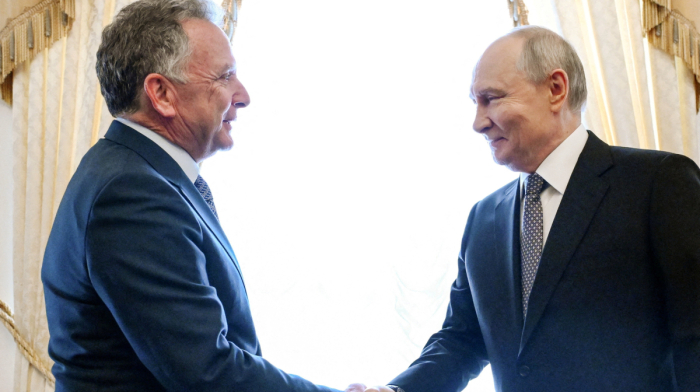
Kazakhstan and Germany have agreed to expand cooperation in critical minerals, industry, energy and transport, with Astana seeking a greater German...
China’s exports grew faster than expected in April, as overseas buyers moved quickly to secure supplies amid fears that the conflict involving Iran could drive up global energy and transport costs.
Official customs data released on Saturday showed exports rose by 14.1 per cent year on year in dollar terms, accelerating sharply from growth of 2.5 per cent in March.
Imports remained strong, climbing 25.3 per cent in April, pointing to resilient domestic demand for raw materials and components. As a result, China’s trade surplus widened to 84.8 billion dollars, up from 51.1 billion dollars the previous month.
Economists said the figures suggest exporters benefited from a wave of front‑loaded overseas orders, as companies sought to stockpile goods and parts ahead of potential cost increases linked to instability in the Middle East.
Recent factory surveys showed new export orders reached their highest level in two years, highlighting the strength of demand in recent months. However, analysts cautioned that this momentum may not last.
Despite gross domestic product growth of 5 per cent in the first quarter, prolonged geopolitical tensions and higher energy prices could weaken global demand later in the year, adding pressure to China’s already subdued consumer spending.
Attention is also turning to diplomacy, with U.S. President Donald Trump expected to visit China next week for talks with President Xi Jinping.
The discussions are likely to centre on trade relations, as well as cooperation in agriculture and the aviation sector, at a time when global supply chains remain sensitive to political and economic shocks.

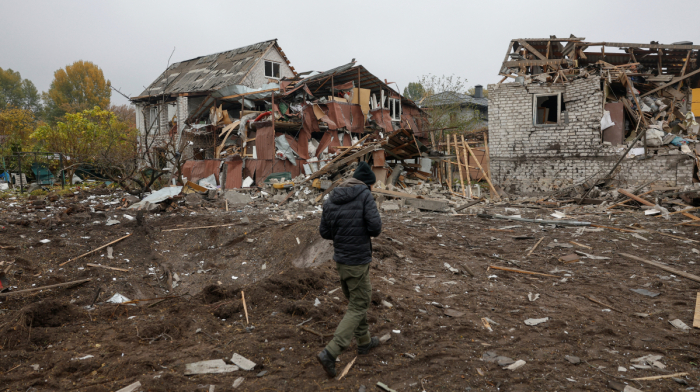
A Russian guided aerial bomb has struck an apartment building in Kharkiv, injuring 22 people, including children, according to the city’s mayor. The strike follows a day of near-continuous Russian attacks across Ukraine that killed at least five people.
Here's your AnewZ Daily Brief for 28 September 2026. These are the top stories making headlines in technology.
Saudi Foreign Minister Prince Faisal bin Farhan has arrived in Washington for talks with U.S. Secretary of State Marco Rubio on bilateral ties and key regional and international developments, Saudi state news agency SPA reported.
The European Union's decision to simultaneously advance accession talks with Ukraine, Moldova, Montenegro and Albania marks its most ambitious enlargement effort in more than two decades.
U.S. President Donald Trump has denied reports that he offered Iran sanctions relief and access to frozen funds in exchange for nuclear concessions.
In the marshlands of Malluba in southern Azerbaijan, Kamil Mammadov follows a routine that has been passed down through generations. His family has worked with medicinal leeches for centuries, harvesting and breeding a species known as Hirudo orientalis, or the Caucasian medicinal leech.
Baku is hosting the second Azerbaijan International Investment Forum (AIIF 2026) and it’s attracting more interest this year, Azerbaijan’s Deputy Prime Minister told AnewZ. “The agenda is very impressive. More guests, more interest,” he said.
Warren Buffett has stepped down as chairman of Berkshire Hathaway, marking the end of one of the most influential leadership tenures in corporate history and completing a succession process that has been years in the making.
Nigerian billionaire Aliko Dangote launched Africa's biggest-ever share sale on Monday, opening the oil refinery that has remade the country's fuel market to public ownership for the first time.
Volkswagen’s supervisory board has approved a major overhaul aimed at cutting 100,000 jobs by 2030 as the German carmaker battles weaker sales, falling profits and intensifying global competition.
You can download the AnewZ application from Play Store and the App Store.
What is your opinion on this topic?
Leave the first comment