A group of Azerbaijani civil society organisations has called for increased scrutiny of Swiss building materials giant Holcim, citing court rulings and ongoing investigations linked to its subsidiary Lafarge's activities during the Syrian conflict.
Appeals sent to governments and agencies
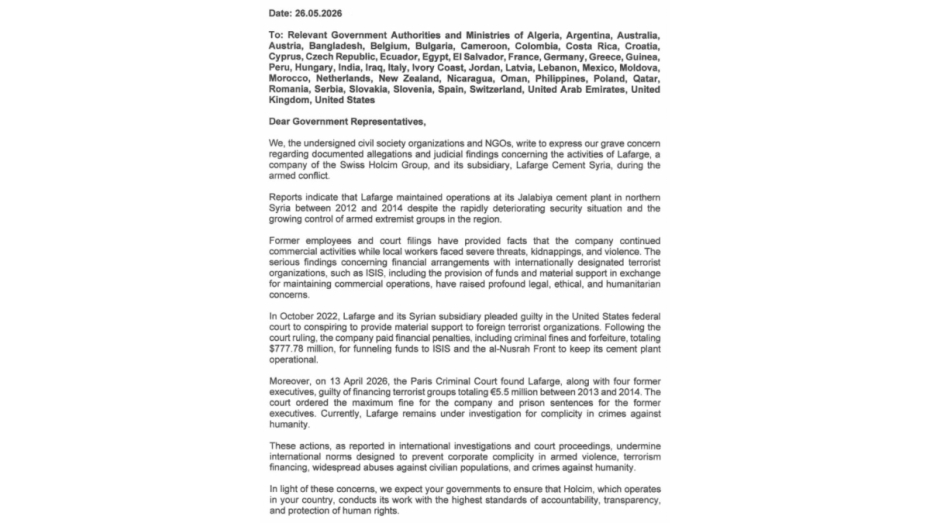
The NGOs have sent letters to foreign government representatives, diplomatic missions and international organisations, urging closer examination of allegations surrounding Lafarge Cement Syria's operations during the country's civil war.
The organisations said they had also written to Azerbaijani ministries and state agencies, including law enforcement, tax and financial monitoring authorities, calling for a transparent review of Holcim Azerbaijan's activities.
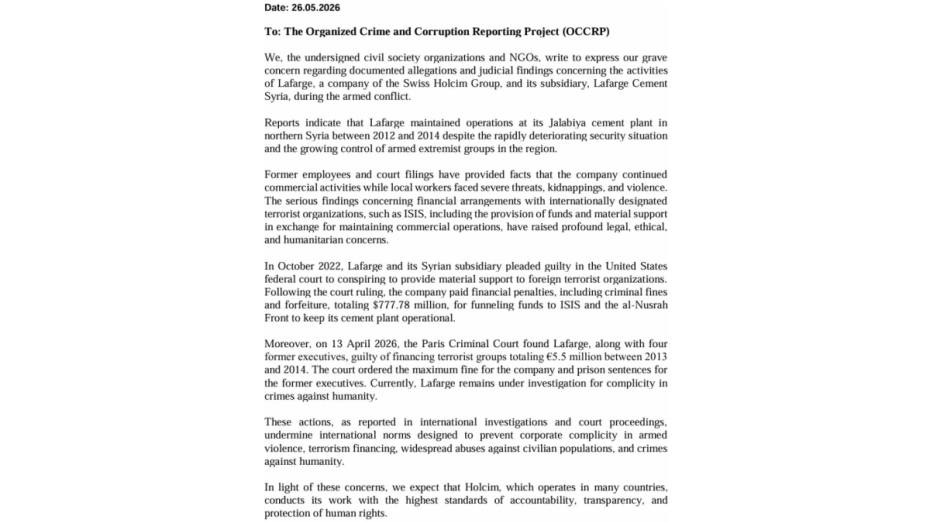
In addition, the group addressed a letter to the Organized Crime and Corruption Reporting Project, drawing attention to the issue and calling for continued scrutiny of the company's conduct.
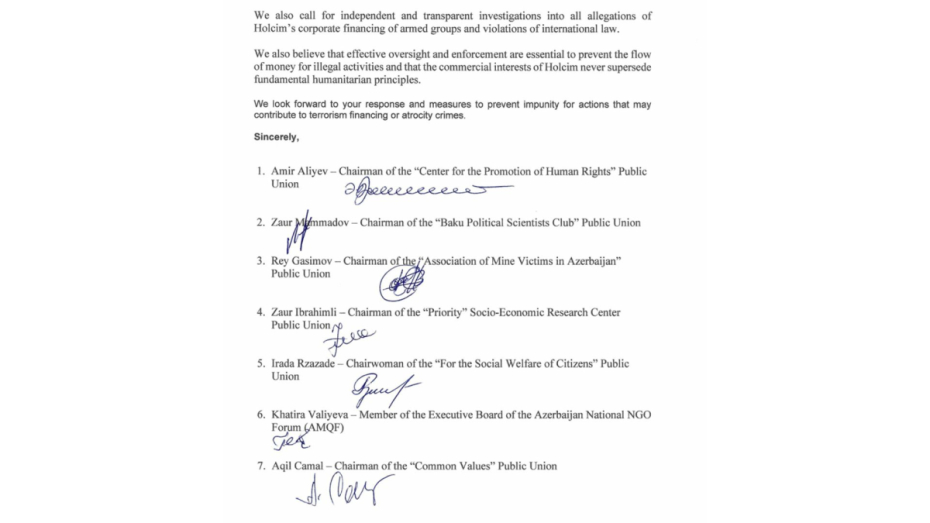
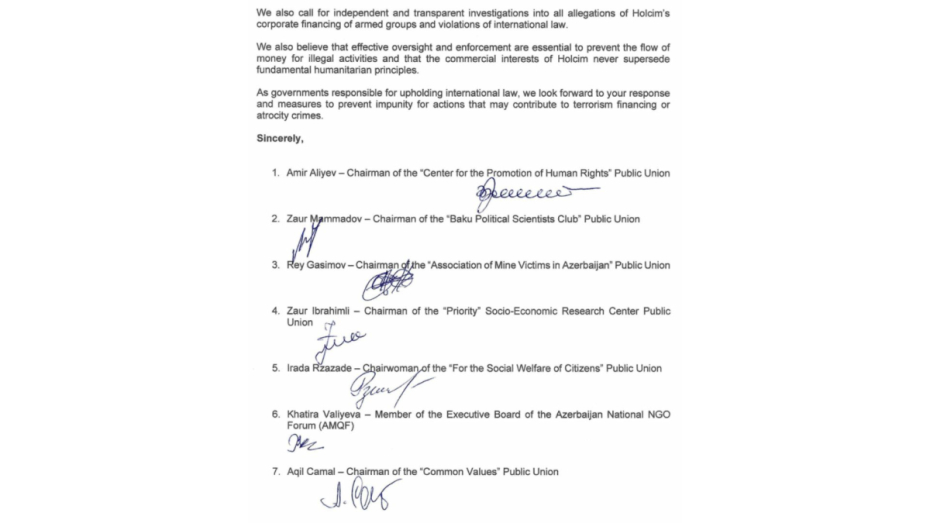
The appeal was signed by representatives of the Center for the Promotion of Human Rights Public Union, the Baku Political Scientists Club Public Union, the Association of Mine Victims in Azerbaijan Public Union, the Priority Socio-Economic Research Center Public Union, the For the Social Welfare of Citizens Public Union, the Azerbaijan National NGO Forum and the Common Values Public Union.
Focus on Lafarge's Syria operations
The letters refer to documented allegations and judicial findings concerning Lafarge, a company within the Holcim Group, and its subsidiary Lafarge Cement Syria during the armed conflict in Syria.
According to the NGOs, Lafarge continued operating its Jalabiya cement plant in northern Syria between 2012 and 2014 despite deteriorating security conditions and the growing presence of armed extremist groups in the region.
The organisations cited court filings and testimony from former employees indicating that commercial operations continued while local workers faced serious threats, kidnappings and violence.
They also pointed to findings concerning financial arrangements with internationally designated terrorist organisations, including ISIS, which have raised legal, ethical and humanitarian concerns.
Court rulings and ongoing investigations
The letters highlight Lafarge's October 2022 guilty plea in a U.S. federal court, where the company and its Syrian subsidiary admitted to conspiring to provide material support to foreign terrorist organisations.
The case resulted in financial penalties totalling approximately $777.8 million after prosecutors found that payments had been made to ISIS and the al-Nusrah Front in exchange for keeping the cement plant operational.
The NGOs also referenced a ruling by the Paris Criminal Court on 13 April 2026, which found Lafarge and four former executives guilty of financing terrorist groups between 2013 and 2014. The court imposed the maximum fine on the company and handed prison sentences to the former executives.
Lafarge remains under investigation in France over allegations of complicity in crimes against humanity.
Call for accountability
In their appeal, the organisations argued that the findings outlined in international investigations and court proceedings undermine international efforts to prevent corporate involvement in terrorism financing, armed violence and abuses against civilian populations.
They called for independent and transparent investigations into allegations concerning Holcim's financing of armed groups and possible violations of international law, while urging governments to ensure companies operating within their jurisdictions uphold the highest standards of accountability, transparency and respect for human rights.
The NGOs also stressed the need for effective oversight to prevent commercial interests from taking precedence over humanitarian principles and international legal obligations.
Holcim became the parent company of Lafarge following the merger of the two firms in 2015. The legacy of Lafarge's operations in Syria has continued to attract international attention, making the case one of the most closely scrutinised corporate controversies linked to the Syrian conflict.










What is your opinion on this topic?
Leave the first comment