Israeli Prime Minister Benjamin Netanyahu has issued his strongest warning yet over Türkiye's growing military role in Syria, saying Israel will not accept Turkish forces expanding their presence further south.
His warning came days after Israeli warplanes struck the Abu al-Duhur military airbase in northwestern Syria, further straining relations between Israel and Türkiye and raising concerns in Washington about a wider regional confrontation.
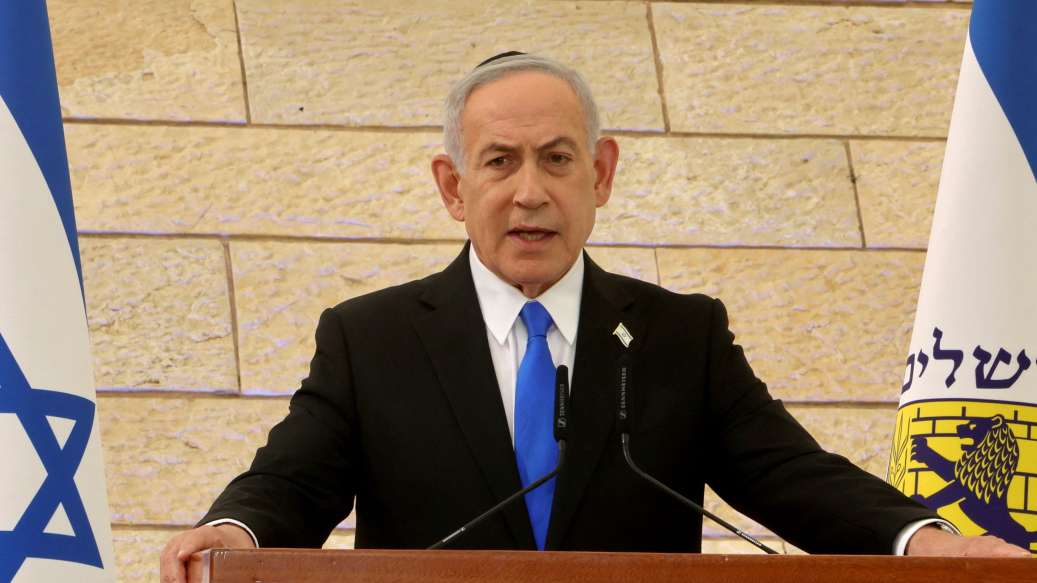
"We will not tolerate Turkish military presence establishing itself as it moves south. It threatens us," Netanyahu said in remarks released by his Likud party on Wednesday.
Netanyahu said Israel had conveyed its concerns to Syria before the strike but believed its warnings were not being heeded.
"The message went through, but it seems that they did not listen, and so we made sure that they would understand it better," he said, referring to the airstrike.
Israel says strike was a warning
The attack targeted the Abu al-Duhur airbase in Syria's Idlib province, about 70 kilometres from the Turkish border.
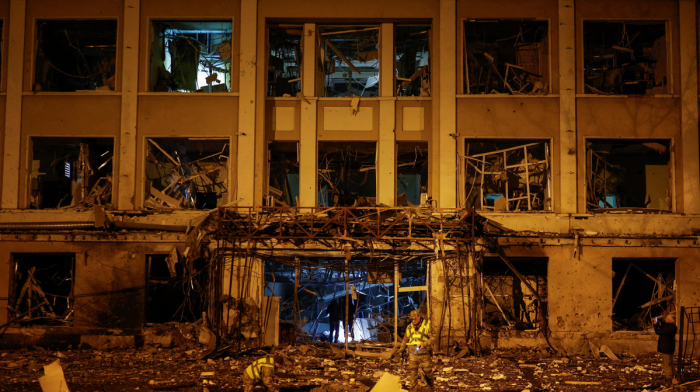
According to Syrian state media, Israeli aircraft carried out eight strikes on the runway and storage facilities, causing material damage but no casualties.
Israel justified the operation by claiming Syria was close to violating what Netanyahu's office described as a security "status quo" by allowing Turkish troops to deploy at the base.
Israeli Defence Minister Israel Katz issued a similar warning on Thursday, accusing President Recep Tayyip Erdoğan of "dragging Türkiye into dangerous adventures in Syria."
Israeli officials have argued that a deeper Turkish military foothold in Syria could alter the regional security balance and challenge Israel's strategic interests.
Türkiye rejects Israeli claims
Ankara has firmly denied that the airbase was being prepared for a Turkish deployment.
In a statement on Wednesday, the Turkish presidency dismissed Israel's justification for the strike as "untenable" and accused Israel of attempting to legitimise attacks on Syria's sovereignty and territorial integrity.
"Türkiye will resolutely continue to cooperate with the Syrian government on a legitimate basis for the establishment of peace, stability and prosperity in Syria," the statement said.
The Turkish Foreign Ministry separately condemned the attack "in the strongest terms", accusing Israel of repeatedly targeting Syrian infrastructure and undermining regional stability.
On Thursday, Türkiye's Defence Ministry reiterated that no Turkish military delegation was present at the airbase before or during the Israeli operation. It said Ankara would continue to support Syria's efforts to develop its military capacity and rebuild critical infrastructure.
Damascus denies plans for Turkish base
Syrian officials have also rejected Israel's allegations.
Foreign Minister Asaad al-Shaibani said he had made it clear to Israel that there were no plans to establish a Turkish military base at Abu al-Duhur.
Instead, he said the facility was being rehabilitated for future use by the Syrian Air Force.
Al-Shaibani described the Israeli strikes as an "unjustified provocation" and a violation of Syrian sovereignty.
The tensions come as Syria's new government, led by President Ahmed al-Sharaa, works to rebuild state institutions following the overthrow of Bashar al-Assad in late 2024.
Türkiye has emerged as one of Damascus' closest regional partners, providing political backing, military assistance and training for Syrian security forces.
Washington seeks to prevent escalation
The incident has prompted fresh diplomatic efforts by the U.S., amid concerns about an accidental confrontation between two key regional actors.
U.S. Ambassador to Türkiye and Special Envoy for Syria Tom Barrack said Ankara had not received advance warning of the Israeli strike.
According to Barrack, Turkish authorities observed Israeli aircraft moving north towards their border and could reasonably have interpreted the activity as a potential threat.
"Thankfully, calm heads were able to prevent the situation from deteriorating further," Barrack said.
He described the Israeli operation as an "unnecessary escalation" and said Washington was working to establish a formal deconfliction mechanism involving Israel, Türkiye and Syria.
Such a mechanism would allow governments and militaries to exchange information to reduce the risk of unintended clashes.
Barrack said the U.S. already facilitates communication among the parties but believes a more robust structure is needed as regional tensions increase.
"What is required is a more robust architecture with greater resources committed to it," he said.
Syria emerges as new flashpoint
The dispute highlights the growing rivalry between Israel and Türkiye over Syria's future.
Since Assad's fall, Ankara has expanded its influence in the country, helping to train security forces and support reconstruction efforts.
Israel, meanwhile, has remained deeply suspicious of Syria's new leadership and has continued military operations inside Syrian territory. In the 18 months since Assad's removal, Israel has conducted hundreds of strikes across Syria and taken control of a UN-monitored buffer zone in the country's southwest.
Despite several rounds of U.S.-backed security talks between Israel and Syria, no agreement has been reached.
Barrack said the latest airstrike showed why stronger communication channels are urgently needed.
"The priority now is to lower tensions and allow space for a more measured approach," he said.















What is your opinion on this topic?
Leave the first comment