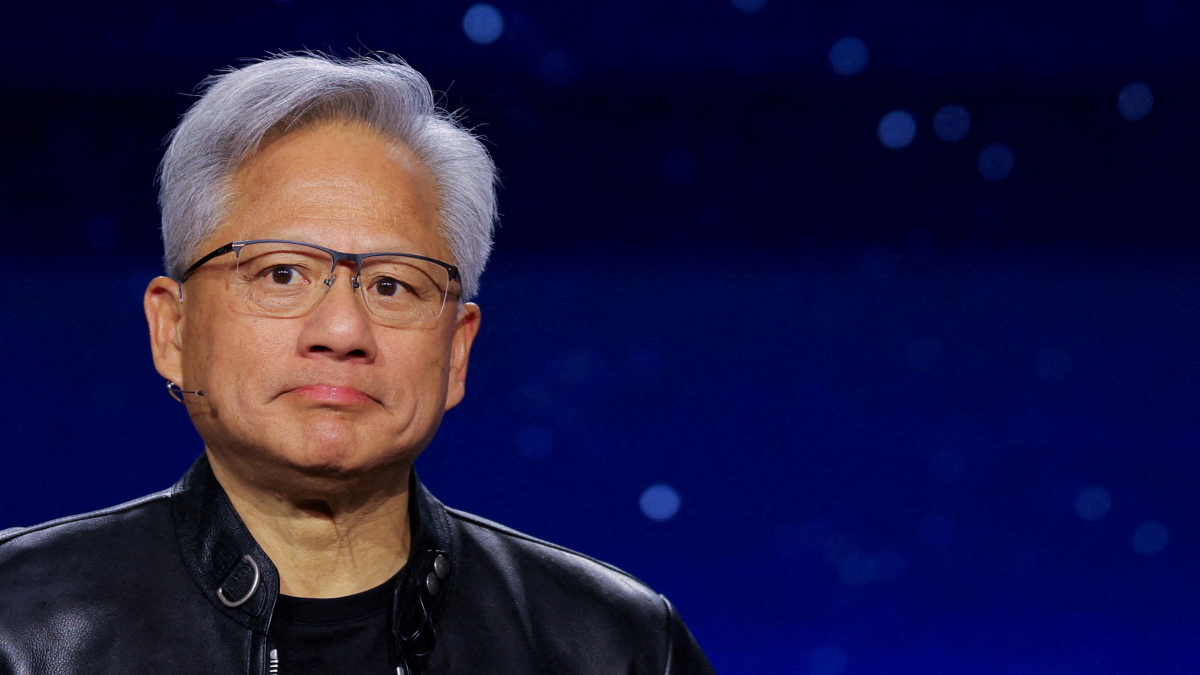
Nvidia chief executive Jensen Huang is stepping down amid reports linking him to a woman suspected by U.S. authorities of spying for China, throwing the future of the $4 trillion chipmaker into uncertainty.
Chief Financial Officer Colette Kress will take over as interim chief executive while Nvidia searches for a permanent successor, the company said on Thursday. The chipmaker has also named Harvey Jones, a board member and former chief executive of Synopsys, as its first board chairman.
Huang, who co-founded Nvidia and is its fourth-largest investor with a stake of about 3.61 per cent, will also step down from the board.
Nvidia shares plunged more than 10 per cent in premarket trading, weighing on the broader market.
Mounting pressure
Pressure on Huang intensified after reports emerged that the 63-year-old, who is married, had an affair with a Chinese businesswoman suspected by U.S. authorities of spying for Beijing.
Nvidia’s board met on Wednesday to consider his removal, according to a person familiar with the matter.
Earlier that day, The New York Times reported that Huang had also had an affair with Kimberly Powell, Nvidia’s vice president of healthcare, who reported directly to him.
The Alice Huang link
At the centre of the allegations is Huang’s relationship with Alice Huang, a former executive at Singapore-based cloud company Megaspeed.
According to media reports, U.S. authorities have concluded that she was a Chinese intelligence asset. Beijing has denied the spying allegations.
The two, who are not related, have been photographed together in Taiwan, Singapore and California.
Washington has also reportedly investigated Megaspeed, an official Nvidia cloud partner with priority access to its chips, over suspicions that it helped China obtain advanced AI chips subject to U.S. export controls.
Earlier this month, Nvidia’s board launched an investigation, led by independent directors and supported by outside legal counsel, into whether Huang had been targeted by a foreign intelligence operation. The board initially expressed confidence in his leadership.
On Sunday, U.S. President Donald Trump said Huang had “done an amazing job for our country”. Trump added thatHuang had told him he had no idea the woman was a spy.
Uncertainty for the AI boom
Huang’s exit raises questions about Nvidia’s future and the wider AI industry, which has relied heavily on the chipmaker’s technology and investment.
He helped build an AI ecosystem by channelling Nvidia’s growing cash reserves into cloud providers, suppliers and some of the industry’s biggest research labs.
Investor sentiment towards AI stocks was already fragile. Soaring spending, mounting debt and cash burn among traditionally cash-rich technology giants have fuelled concerns about whether massive investments in AI will deliver the expected returns.
Huang’s departure could also have far-reaching consequences for U.S. chip export policy. He had advocated maintaining access to China’s lucrative market and cultivated close ties with Trump.
From gaming chips to AI dominance
Nvidia’s rise from a gaming graphics specialist to the world’s most valuable company has been one of the defining stories of the AI boom.
For years, the company was best known for producing high-performance graphics chips prized by gamers. But their ability to handle vast numbers of calculations simultaneously made them essential to AI development, turning Nvidia into a strategic player in the U.S.-China race for technological dominance.
The company's extraordinary success also transformed Huang into a celebrity chief executive.
Fans in Taiwan and South Korea crowded around him, asking him to sign books, posters and sometimes even their bodies.
His influence extended to financial markets, where simply mentioning another company at an event could send its shares moving.
Read more:

















What is your opinion on this topic?
Leave the first comment