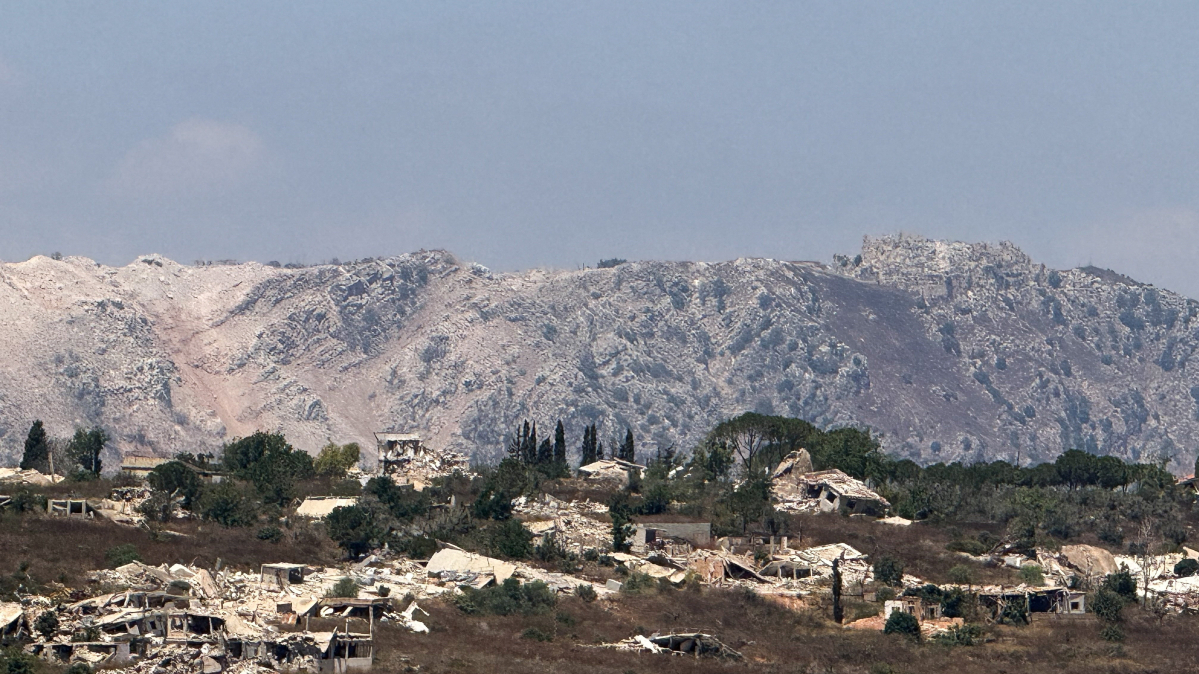
At least 11 people, including three children and two women, were killed in Israeli airstrikes in southern Lebanon on Saturday, according to Lebanese authorities, in one of the deadliest escalations since a U.S.-mediated framework was agreed between Lebanon and Israel.
Nineteen people were also wounded, Lebanon’s National News Agency reported. Seven of those killed died when a house was hit in the village of Ansar, while four were killed in a separate strike on a building in nearby Deir al-Zahrani.
The attacks have raised fresh concerns over the future of a fragile ceasefire and negotiations aimed at ending the conflict.
Israel says strikes targeted Hezbollah
The Israeli military said its overnight strikes targeted Hezbollah infrastructure in southern Lebanon after what it described as an attack on its soldiers.
The office of Israeli Prime Minister Benjamin Netanyahu said three Israeli soldiers were injured and accused Hezbollah of violating the ceasefire.
“The IDF responded by striking the Hezbollah terror headquarters which ordered the attack,” the statement said.
Israel said one of those killed was Ali Samir Al-Haj Hassan, a Commander in Hezbollah’s elite Radwan Force. It described the site in Ansar as a “central headquarters” of the unit.
The military said Hassan’s family was also inside the building when it was struck, but insisted they were not the intended targets.
Hezbollah said the Israeli attacks would be “met with what they deserve”.
Lebanon condemns civilian deaths
Lebanese Prime Minister Nawaf Salam rejected Israel’s description of the site in Ansar as military infrastructure.
“The martyrs of the Israeli raid on the village of Ansar are not ‘military infrastructure’ and the women and children killed in it are not military targets,” he said.
Lebanese President Joseph Aoun described the strikes as a “clear message” aimed at ongoing negotiations and U.S. efforts to implement the framework agreement.
Parliament Speaker Nabih Berri, a Hezbollah ally, called for national unity and urged those involved in the ceasefire and peace talks to act before the conflict escalated further.
Arab League warns of wider escalation
The Arab League also condemned the strikes, describing them as a “blatant violation” of Lebanon’s sovereignty.
It warned that the escalation could undermine efforts to resolve the conflict and called on the international community, particularly the United States, to intervene.
The Arab League urged Israel to comply with United Nations Security Council Resolution 1701, which forms a key part of efforts to maintain stability along the Lebanon-Israel border.
Dispute over Israeli withdrawal
The latest violence comes as Lebanon and Israel continue talks under a framework agreed on 26 June. The deal envisages a gradual Israeli withdrawal from Lebanese territory and continued negotiations between the two sides.
But a central disagreement remains over the presence of Israeli forces in southern Lebanon.
Israel says its troops will remain in areas under its control until Hezbollah is disarmed, while Hezbollah has rejected the terms, arguing that they amount to surrender.
A U.S. State Department official has said a permanent Israeli military presence in Lebanon would not be consistent with the commitments set out in the agreement.
Israeli Prime Minister’s Office Spokesperson Doron Spielman said Saturday’s strikes could instead strengthen the negotiations.
“I think it should make the negotiations more serious and more real,” he told Reuters, arguing that the attacks highlighted the reasons behind the talks.
Fears of a wider conflict
Israeli strikes continued across southern Lebanon on Saturday, including around Ali al-Taher hill and other areas in the Nabatieh district.
One strike near Ansar was reported to be the deepest Israeli attack inside Lebanon in two months.
Hezbollah accused Israel of deliberately widening the conflict and said the escalation was aimed at strengthening Prime Minister Benjamin Netanyahu’s domestic position and appeasing the far right.
The latest violence adds to a growing toll in Lebanon, where at least 4,300 people have been killed since the latest round of hostilities began on 2 March, according to the figures provided by Lebanese authorities.
Read more:










What is your opinion on this topic?
Leave the first comment