Democrats' sweeping victory in the U.S. midterm elections has sent technology stocks plunging, as investors fear tougher AI regulations could slow infrastructure development and threaten the boom that has driven market gains this year.
Democrats flipped seven Senate seats in traditional Republican strongholds, gained at least 39 seats in the House of Representatives and secured five governorships triggering widespread plunge in global stock markets.
The tech-heavy Nasdaq Composite dropped 5.56 per cent, marking its steepest decline in 19 months.
Chipmaking giant Nvidia dropped more than nine percent, wiping more than 400 billion dollars from its valuation, while AMD and Micron each lost more than 17 per cent.
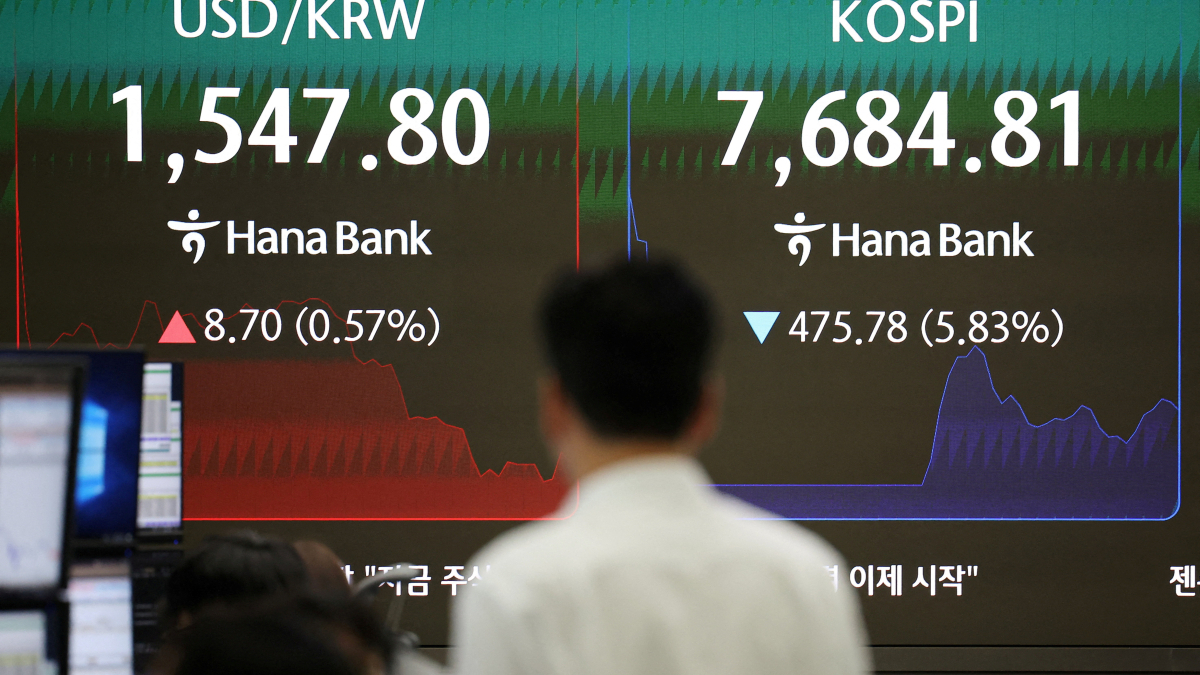
The losses quickly spread to Asia on Friday, where technology and semiconductor companies faced heavy selling pressure.
Japan's Nikkei index fell around six per cent in early trading, while South Korea's Kospi plunged more than eight per cent, triggering a temporary trading halt.
Taiwan's benchmark index also dropped sharply, with major chipmakers including Samsung, SK Hynix and TSMC suffering significant losses.
The sell-off comes as investors question whether the enormous sums being invested in AI will generate the expected returns due to prevailing anti-AI sentiments among Democrats.
The election results meanwhile reflected widespread dissatisfaction with President Donald Trump, particularly over his decision to launch a war in Iran, which has driven fuel prices sharply higher.
Democrats secured victories in traditionally Republican-led states, including Texas, South Carolina, Kansas and Iowa.
AI expansion faces regulatory uncertainty
“Investors appear to be recognising that some newly elected members of Congress and governors are looking to slow the pace of AI infrastructure development,” said Melissa Brown, global head of investment decision research at SimCorp.
“While it seems unlikely that they will be able to stop it altogether, any slowdown would raise concerns because the AI growth story has largely depended on the rapid buildout of supporting infrastructure.”
In Texas, Governor-elect Gina Hinojosa, who defeated three-term Republican incumbent Greg Abbott, has pledged to halt the construction of new data centres in one of the fastest-growing markets for AI server facilities.
Democrats in Congress have also pushed for legislation to protect consumers from rising electricity costs linked to data centres and require independent testing of AI systems.
The party's wins promised to give new power to opponents of new data centres, which are at the heart of the AI boom but are loud, thirsty for water, hungry for electricity and increasingly unpopular with their neighbours.
Meanwhile, President Trump used his only public appearance on Thursday to sign a document aimed at designating the White House's Oval Office as a national monument.
Since returning to power last year, Trump has redecorated the office with gold-coloured trim, new statues and paintings.
“We've had a lot of victories in this office,” Trump told reporters, two days after Republicans suffered a major defeat in the midterm elections.
He did not address the stock market sell-off or concerns over potential restrictions on AI development.
“There's been some mistakes too, but we've had tremendous victory in this office,” Trump continued, sitting at a desk now decorated with a red hat bearing the word “VETO” in all capital letters.
“So we're making it a national monument, and it will not be allowed to be touched by anybody, destroyed, ripped down by stupid people, in order to build something in a slightly different shape.”
Trump's recent public appearances have also focused on White House renovations. On Monday, he discussed changes to the Lincoln Memorial Reflecting Pool, while on Wednesday he showed reporters the ballroom being built at the White House, replacing the historic East Wing that he had demolished.
Democrats could expand Senate majority
Close Senate races in Alaska and Mississippi remained undecided as of Thursday, with Democrats holding narrow leads in both states.
If the party wins both contests, its Senate majority could grow to 56 seats, leaving Republicans with 44.
When the new Congress takes office in January, Democrats are expected to use their expanded powers to investigate Trump's administration, family and allies, while seeking concessions on major legislation.
Their Senate majority will also allow them to block Trump's nominees, including any appointments to the U.S. Supreme Court if a vacancy arises.
Until then, Republicans remain in control of Congress and face a key legislative deadline. Lawmakers must pass a measure to fund the federal government beyond December 11.
Republicans could use the remaining lame-duck session to advance conservative policy priorities before Democrats take power.
Read more:



















What is your opinion on this topic?
Leave the first comment