Hundreds of millions of U.S. citizens head to the polls on 3 November to elect the House of Representatives and Senate. How they vote could influence the direction of Donald Trump’s remaining 26 months in office and the outcomes of the Ukraine and Iran conflicts.
All 435 seats in the House of Representatives, the lower chamber of Congress, are up for election, alongside 35 seats in the Senate, the upper chamber.
The House of Representatives and the Senate work together to pass laws that apply across the U.S.
Members of the chamber introduce bills, debate them and vote on legislation. The House of Representatives also plays a central role in approving the federal budget.
It has the power to impeach the president and other federal officials, including judges.
Each member of the House represents a specific congressional district, with an average population of around 761,000 people.
U.S. President Donald Trump's Republican Party currently has a narrow majority in the House of Representatives.
The Democratic Party is seeking to win control of the chamber, which would give it greater power to scrutinise the administration and challenge its policies.
Senators share responsibility for passing legislation with the House of Representatives. Each U.S. state has two senators.
The Senate can also approve or reject presidential nominations for senior officials, federal judges and ambassadors.
It holds trials to determine whether to convict and remove officials after the House votes to impeach them.
Republicans currently hold a 53-47 majority in the Senate and 35 seats are being contested in November.
The Democratic Party needs a net gain of four seats to reach 51 and take control of the chamber.
Why are the elections important?
The elections are a major test for the Republican Party ahead of the 2028 presidential election and will influence how Trump spends the remainder of his term in office. The U.S. Constitution prevents him from serving a third term.
If the Democratic Party wins control of the House, it could block legislation, investigate decisions made by the Trump administration and use negotiations over government spending to challenge its priorities.
Taking the Senate would give the Democratic Party greater influence over presidential appointments, including senior officials and ambassadors.
Control of Congress, however, would not automatically allow the Democratic Party to block Trump's agenda.
The U.S. President can veto legislation and use executive orders to direct the government without seeking congressional approval, although these actions cannot override existing laws.
What could the elections mean for U.S. foreign policy?
In his 2024 victory speech, Trump said he was “not going to start wars”, having repeatedly criticised conflicts launched by previous presidents.
The U.S. war against Iran, which began in February, has become a major foreign policy challenge for his administration.
Around two-thirds of Americans (65 per cent) disapproved of Trump's handling of the conflict, according to a Pew Research Center survey published in October.
The elections could therefore serve as a test of public support for the administration's handling of the war, although the results will not necessarily lead to an immediate change of approach.
A Democratic majority in either chamber would give the party greater scope to scrutinise Trump's military decisions, investigate the conduct of the war and challenge requests for additional funding.
The Senate narrowly rejected a Democratic-led resolution in September that would have required Trump to end military operations against Iran or seek congressional authorisation to continue them.
A different balance of power in the Senate could make it harder for the administration to defeat similar proposals. However, Trump could still veto legislation seeking to restrict his actions, requiring Congress to secure a two-thirds majority in both chambers to override him.
Democratic Party members could also use congressional hearings to challenge Trump's approach to Russia, including his decisions on sanctions and relations with Moscow, and to examine the administration's handling of Russia's war against Ukraine.
Which races are the ones to watch?
Several closely contested Senate races could determine which party controls the chamber, while the battle for the House will depend on results across dozens of competitive districts.
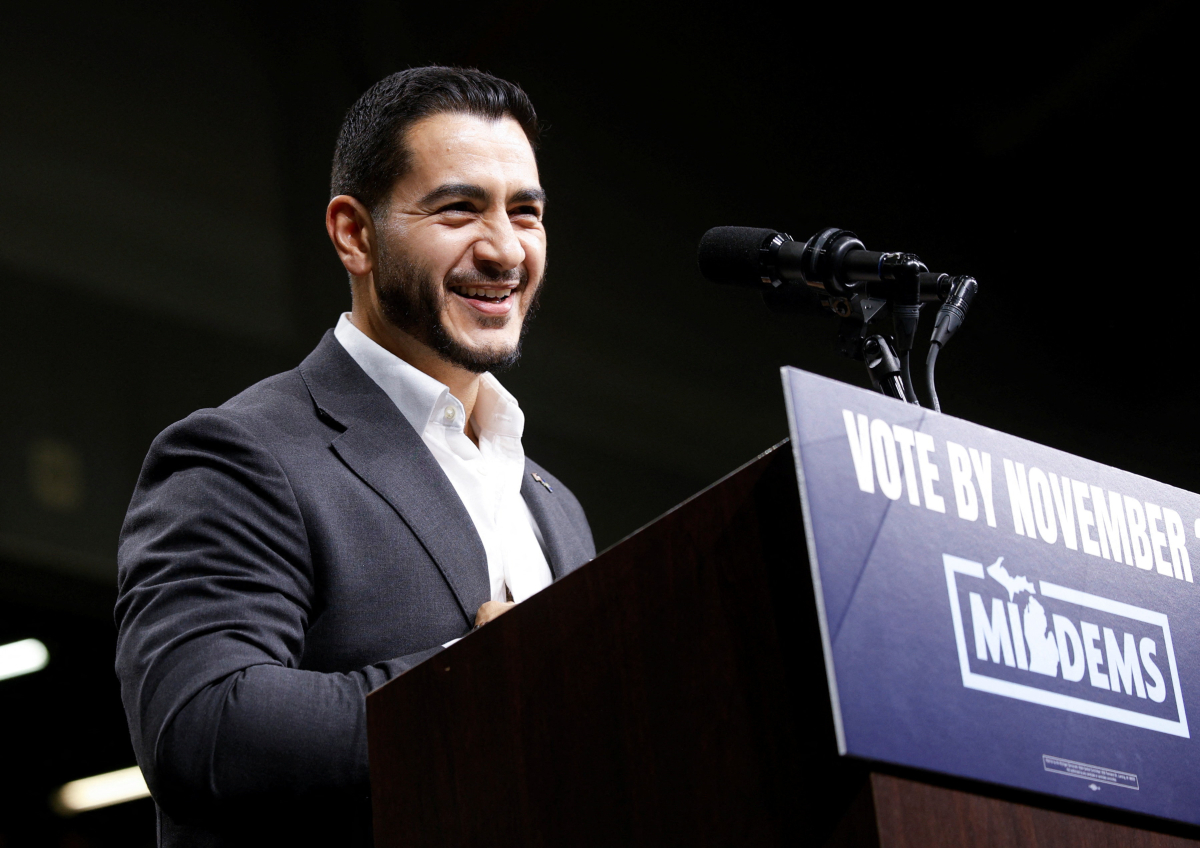
In Michigan, left-wing Democratic candidate Abdul El-Sayed is defending a seat against Republican Mike Rogers. El-Sayed narrowly defeated a more centrist candidate to win the Democratic primary in August. His candidacy will be a test of whether a left-wing politician can win an election in a swing state.
In Maine, Republican Senator Susan Collins is seeking re-election against the Democratic Party’s Troy Jackson, a former state Senate president. Collins has sometimes broken with Trump, including backing a September resolution seeking to limit his military action against Iran. Polls have shown a close contest, with a Washington Post survey in October putting Jackson four percentage points ahead.
Texas is another closely watched contest. Republican Ken Paxton, the state's Attorney General, is facing the Democratic Party’s James Talarico. Texas has traditionally been a Republican stronghold in federal elections, but recent polls have shown a competitive race. A University of Houston poll published in October put Talarico on 48 per cent, against 46 per cent for Paxton. A Democratic victory would represent a significant gain for the party and could change the balance of power in the Senate.
What are the polls saying?
Surveys suggest the Democratic Party is in a strong position to win control of the House of Representatives, while the battle for the Senate is expected to be more difficult.
A Reuters/Ipsos poll published on 26 October put the Democratic Party nine percentage points ahead of the Republican Party among likely voters asked which party they would support in their congressional district, at 53 per cent to 44 per cent.
Trump's approval rating stood at 32 per cent in the same poll, while 73 per cent of respondents said the cost of living was moving in the wrong direction.
On the domestic front, rising prices, some which are linked to the Iran war, pose a big problem for Trump.
Speaking at a discussion on 20 October, Ben Harris, Director of Economic Studies at the Brookings Institution, a Washington-based think tank, said voters had been promised lower prices but hadn’t seen this.
“They haven’t received that in the form of retail gas. That’s up quite a bit since the war in Iran. They were promised cheaper prices in food. They didn’t get that. They were promised cheaper prices on housing. They didn’t get that,” he said.
Read more from the U.S.:


















What is your opinion on this topic?
Leave the first comment