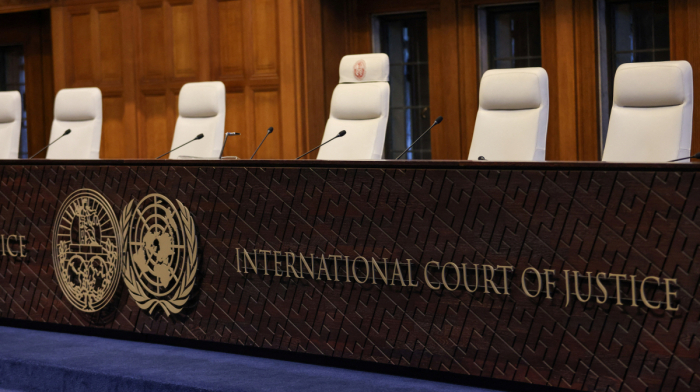
The International Court of Justice (ICJ) is the United Nations’ highest court. Known as the World Court, it is the only international court where countries take each other to court over breaches of international law.
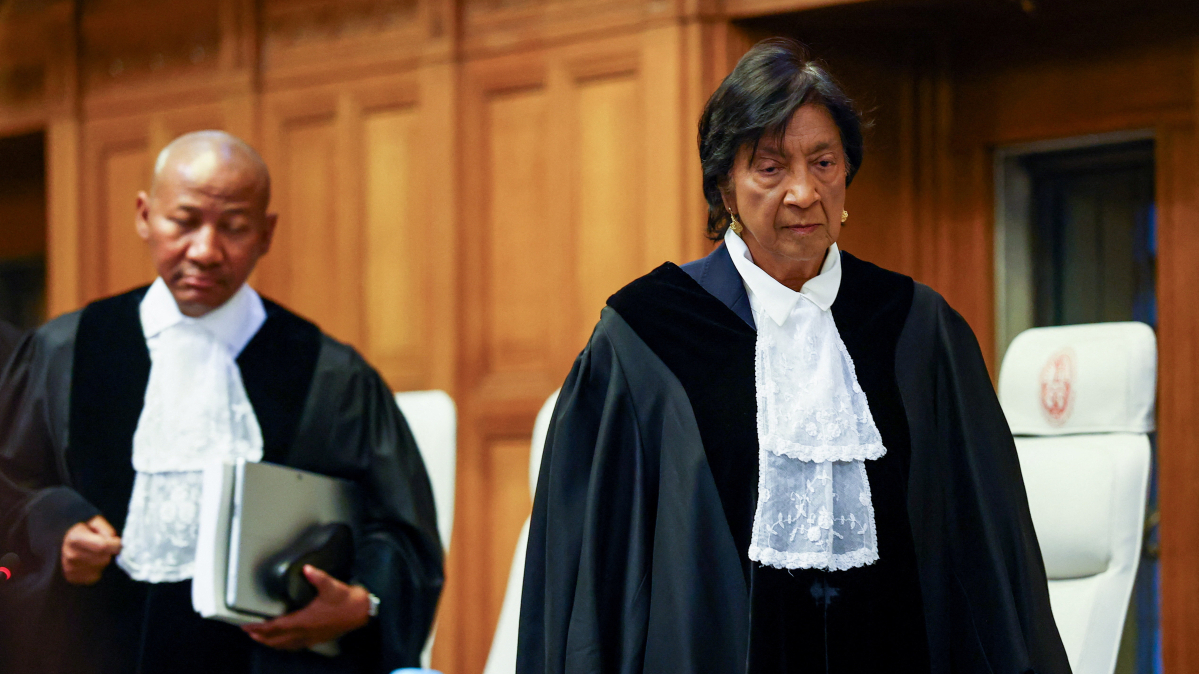
Its 15 judges, based at the Peace Palace in The Hague, rule on matters ranging from border disputes to accusations of genocide. Their judgments are binding and cannot be appealed.
Yet the court has no power of its own to enforce them, and relies on states’ willingness to comply and on pressure from the wider world.
That tension has come under growing scrutiny as more countries turn to the court over wars and human rights.
Why was the court created?
The ICJ is the principal judicial body of the United Nations. It was set up under the 1945 UN Charter to give countries a permanent forum for settling legal disputes and seeking legal advice, as an alternative to war.
The Court's first first sitting took place on 18 April 1946, it is based at the Peace Palace in The Hague.
A recent Georgetown Law Journal study described the court as “a principal alternative to the use of force”.
How is it different from the International Criminal Court?
The two courts are often confused, but they do different jobs. The ICJ settles disputes between states. The International Criminal Court, also in The Hague, prosecutes individuals for crimes such as war crimes and genocide. The ICJ cannot convict a person. It can only rule on whether a state has breached international law.
Who are the judges?
The court has 15 judges, each elected for a nine-year term. According to a research paper by Canada’s Library of Parliament:
- No two judges may come from the same country.
- Candidates must win an absolute majority in both the UN General Assembly and the Security Council, which vote separately.
- The bench is meant to reflect the world’s main legal systems.
- A country with no judge of its own nationality on the bench may appoint a temporary “ad hoc” judge for its case.
The same paper notes criticism that the five permanent members of the Security Council have almost always had a judge on the court.
Who can bring a case?
Only states can be parties to disputes. All 193 UN member states have access to the court, but it can only hear a case if the countries involved have consented to its jurisdiction. Carnegie Endowment scholars Tino Cuéllar and Oona Hathaway note that “the court gains jurisdiction through consent of the parties”.
That consent can come in three ways:
- A special agreement: two countries agree to submit a particular dispute.
- A treaty clause: more than 300 international treaties, including the Genocide Convention, refer disputes to the ICJ.
- A standing declaration: 75 countries have declared that they accept the court’s jurisdiction in advance.
Myanmar case widened the treaty route. In a 2019 preliminary ruling, the court accepted that any party to a treaty protecting shared obligations, such as the Genocide Convention, can bring a case, even without being directly affected. Cuéllar and Hathaway link that principle to South Africa’s later case against Israel.
UN bodies such as the General Assembly can also ask the court for advisory opinions on legal questions. These opinions are not binding, but they often carry significant weight.
What kinds of cases does it hear?
The court has ruled on land borders, maritime boundaries, hostage-taking and genocide. Between 1947 and September 2025, 201 cases were entered on its list, according to Canada’s Library of Parliament.
Human rights now make up a growing share of its work, with around a third of current cases involving such allegations.
Two high-profile cases remain unresolved:
- South Africa v. Israel: in 2023, South Africa accused Israel of committing genocide against Palestinians in Gaza. The court has ordered emergency measures, but main arguments are not expected until late 2029. Israel rejects the case and says it respects international law.
- Ukraine v. Russia: In March 2022, weeks after Russia’s full-scale invasion, the court ordered Moscow to “immediately suspend the military operations”. There has been no final ruling.
What did the court decide on Myanmar?
The case was brought in November 2019 by The Gambia under the 1948 Genocide Convention. Human Rights Watch said this was the first time a country with no direct link to alleged crimes had used its membership of the convention to take a case to the ICJ.
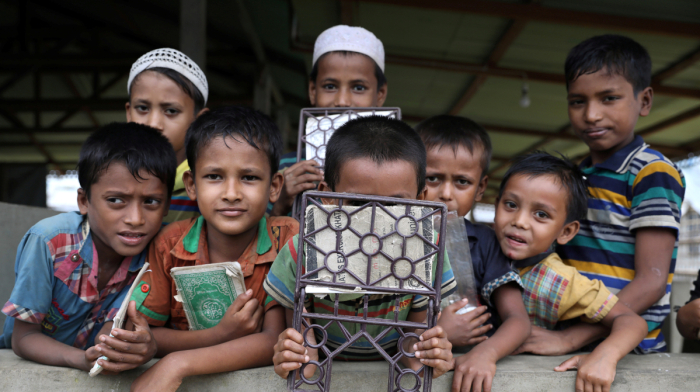
By nine votes to six, the judges found that Myanmar’s security forces and other state bodies committed genocide during the military’s “clearance operations” of 2016 and 2017.
The court found Myanmar had acted with intent to destroy a substantial part of the Rohingya population, calling that intent “the only reasonable inference” from the evidence. It also found Myanmar had failed in its duty to prevent and punish genocide.
According to Human Rights Watch, Myanmar must:
- stop its ongoing violations.
- give assurances that they will not be repeated.
- pay reparations to Rohingya victims, including help with safe and voluntary return and with reuniting displaced families.
Are its rulings enforced?
ICJ judgments are binding on the countries involved and cannot be appealed. However, the court has no police force or army.
Under Article 94 of the UN Charter, a country whose opponent ignores a judgment can turn to the Security Council. The Georgetown study says the council “has never taken such action and most likely never will”. Carnegie scholars note that any of the five permanent members can veto enforcement.
The best-known case of defiance is Nicaragua v. United States in the 1980s. Washington refused to comply with the 1986 judgment against it and vetoed Nicaragua’s draft resolutions at the Security Council.
Even so, the Canadian research paper says rulings have been complied with “in the overwhelming majority of cases”. The Georgetown authors also describe compliance as strong overall, but warn that growing pressure on enforcement threatens the court’s legitimacy.
Cuéllar and Hathaway put it this way: “It is difficult for a tribunal to maintain its legitimacy if its orders are regularly ignored.”
What next for the Rohingya?
The judgment places binding obligations on Myanmar, but compliance will depend largely on political pressure.
Human Rights Watch noted that, while the Security Council has never used its power to enforce ICJ rulings, the General Assembly can call on states to comply.
“Myanmar should swiftly comply with the World Court’s judgment and end its oppression of the Rohingya,” said Maria Elena Vignoli, senior international justice counsel at Human Rights Watch.
Read more:








What is your opinion on this topic?
Leave the first comment