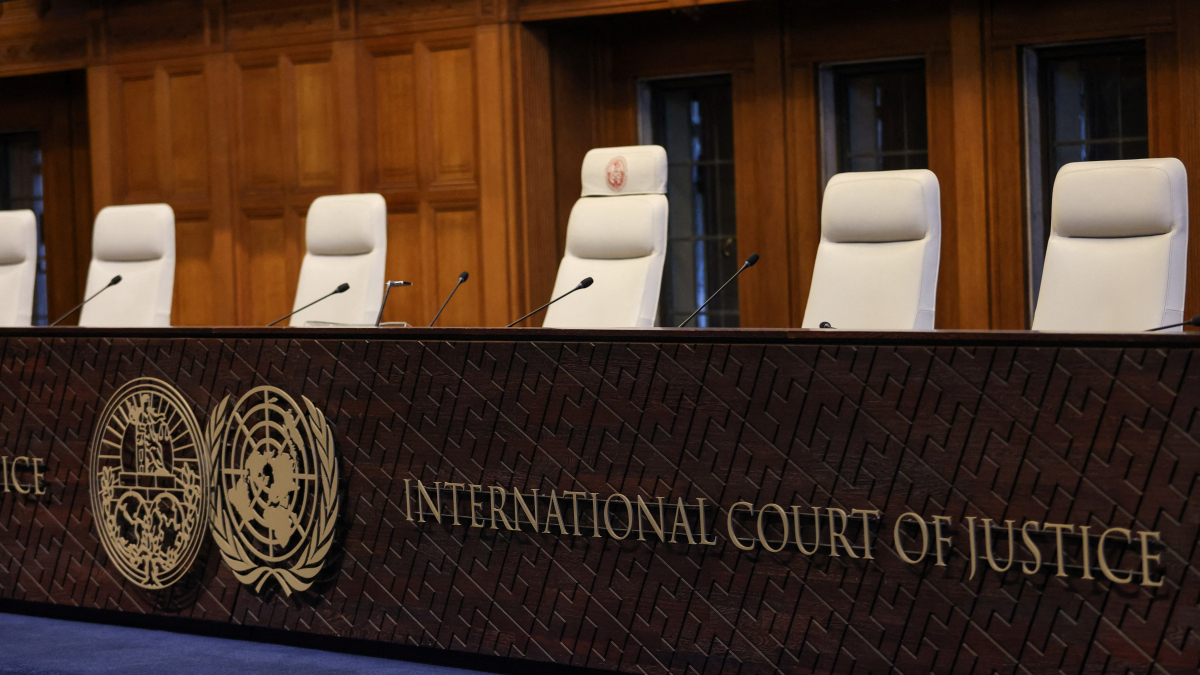
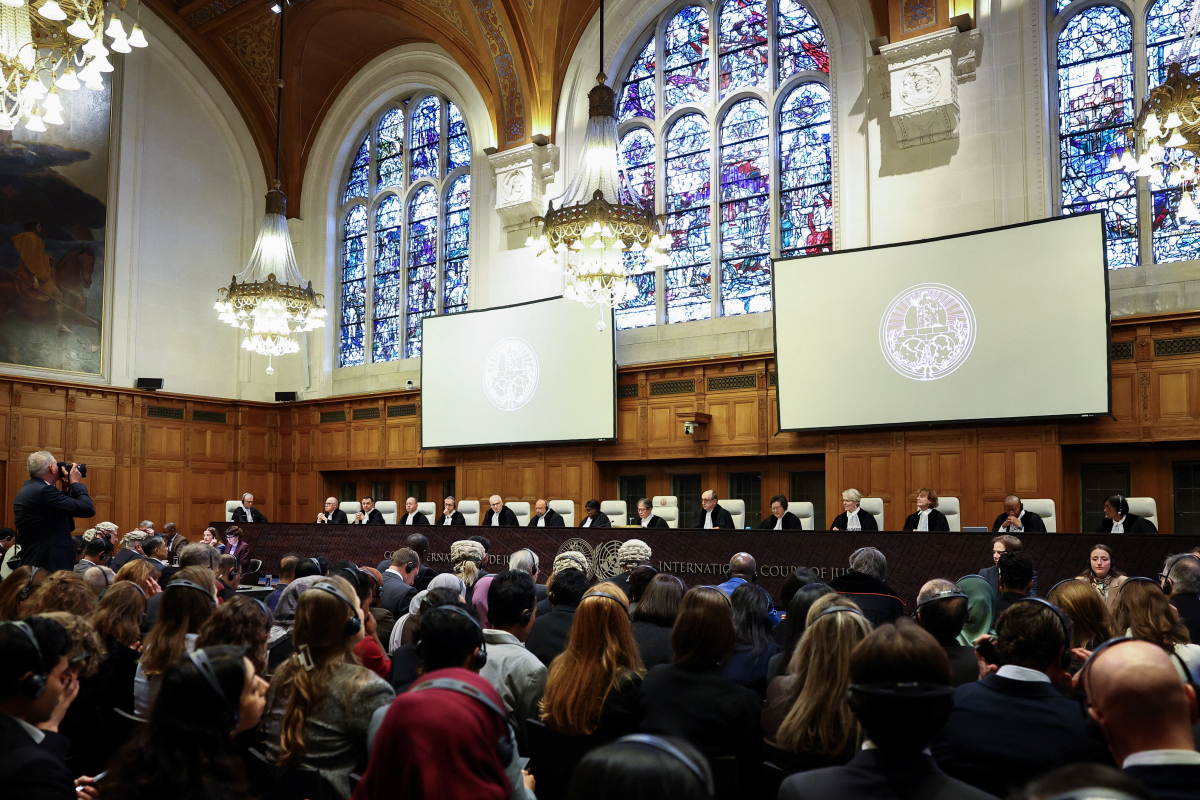
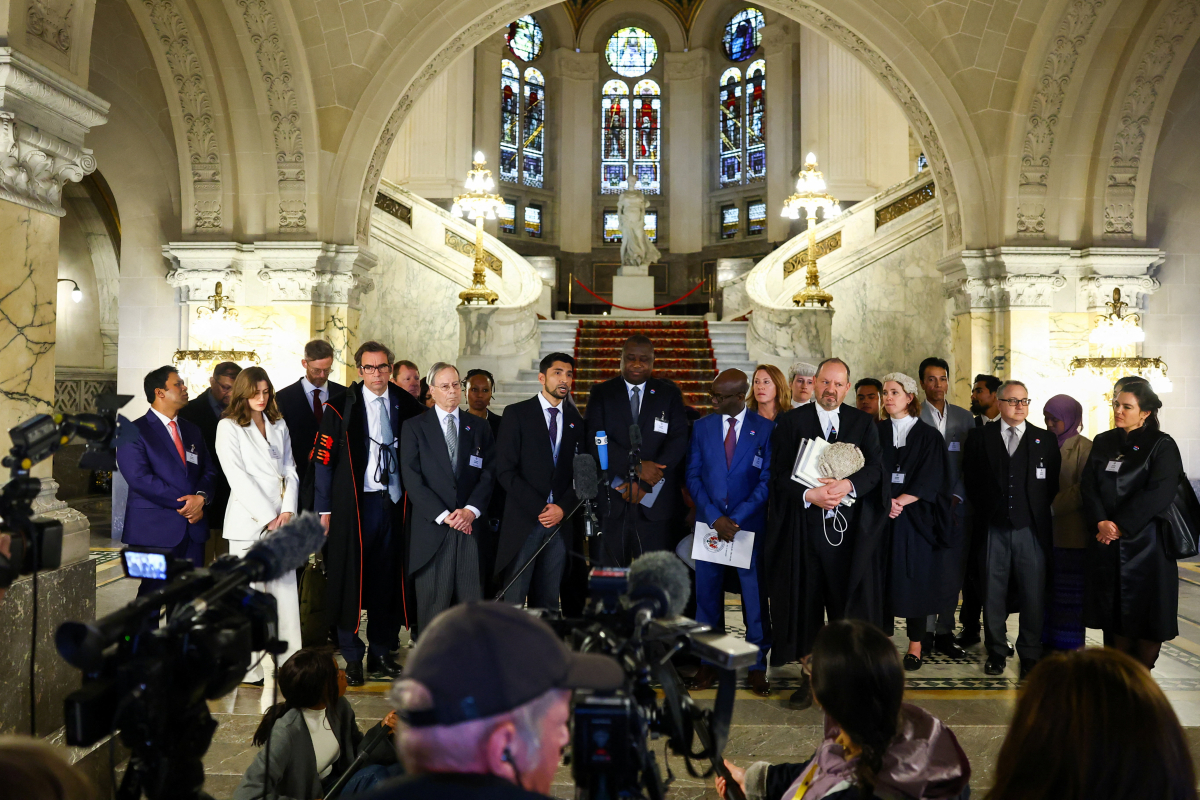
The International Court of Justice ruled on Thursday, 19 November, that Myanmar committed genocide against its Rohingya Muslim minority during a military crackdown in 2017. The judgment marks the first time the United Nations' highest court has held a state directly responsible for genocide.
The decision also raises questions about how genocide is established under international law and what the ruling could mean for other cases, including South Africa's proceedings against Israel over the war in Gaza.
Genocide has a specific legal definition established by the 1948 Genocide Convention, adopted after the Holocaust. It involves acts committed with the intent to destroy, in whole or in part, a national, ethnic, racial or religious group.
The convention identifies five acts that can constitute genocide. These include:
- Killing members of a protected group.
- Causing serious bodily or mental harm.
- Deliberately creating living conditions intended to bring about the group's physical destruction.
- Imposing measures intended to prevent births within the group.
- Forcibly transferring children to another group.
A court does not need to establish all five acts. One can be sufficient if the required intent is proven.
Genocide is legally distinct from war crimes and crimes against humanity, although the same conduct may qualify as more than one international crime.
Why is genocide so difficult to prove?
The central challenge is establishing genocidal intent: the intention to destroy a protected group, either entirely or in substantial part.
Mass killings, forced displacement or widespread sexual violence do not automatically establish genocide. Courts must determine whether the acts were carried out with the specific intention required by the Genocide Convention.
Evidence may include military orders, statements by officials, patterns of violence and the systematic targeting of particular communities.
Direct evidence, such as an explicit order to destroy a group, is not always available. Courts can therefore infer intent from the overall pattern of conduct. However, the ICJ applies a demanding standard when making such findings.
In the Myanmar case, judges concluded that the intention to destroy a substantial part of the Rohingya population was the only reasonable inference from the evidence.
The court rejected Myanmar's argument that its actions could be explained solely as counter-insurgency operations.
When has genocide been established by international courts?
International courts and tribunals have established genocide in a limited number of cases.
In Rwanda, an estimated 800,000 people, predominantly Tutsis, were killed during approximately 100 days of violence in 1994. The UN International Criminal Tribunal for Rwanda subsequently convicted senior officials and others of genocide.
In Bosnia, Bosnian Serb forces killed around 8,000 Bosniak Muslim men and boys in Srebrenica in 1995. International courts recognised the massacre as genocide, and several military and political leaders were convicted.
In 2007, the ICJ ruled that Serbia had failed to prevent the Srebrenica genocide and punish those responsible, but did not find Serbia itself responsible for committing genocide.
In Cambodia, approximately 1.7 million people died under the Khmer Rouge regime during the 1970s through executions, starvation, forced labour and disease.
In 2018, a UN-backed Cambodian tribunal convicted two former Khmer Rouge leaders of genocide against ethnic Vietnamese and Cham Muslim minorities.
In 2015, the ICJ rejected genocide claims brought by Croatia and Serbia against each other. Although serious crimes had occurred, the court found that genocidal intent had not been established. These cases illustrate why the legal classification depends not only on the scale of atrocities but also on evidence of intent.
What did the ICJ establish in Myanmar?
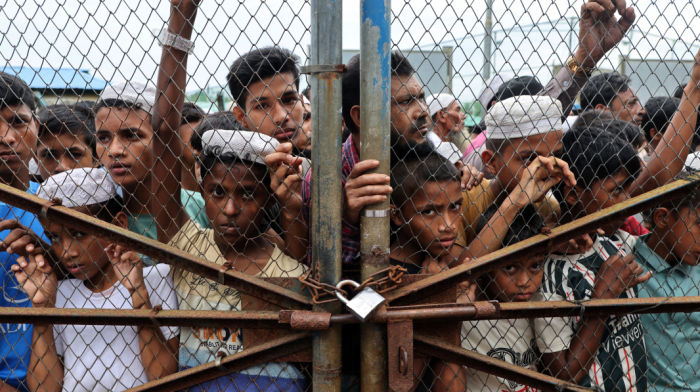
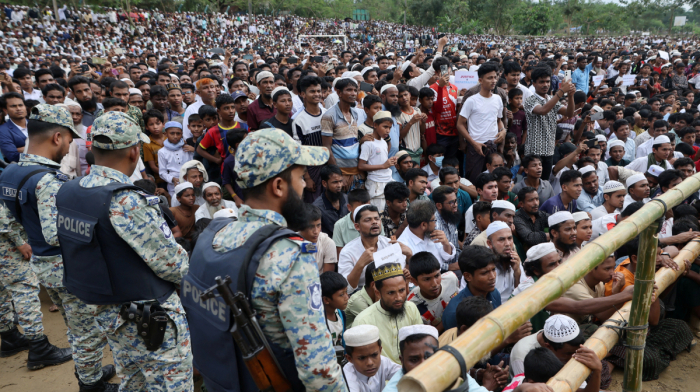
Myanmar's military launched a crackdown in Rakhine State in August 2017 after attacks by Rohingya insurgents on security posts. More than 730,000 Rohingya fled to Bangladesh. Survivors reported mass killings, sexual violence and the destruction of villages.
The Gambia brought a case against Myanmar in 2019, accusing it of violating the Genocide Convention.
On 19 November 2026, the ICJ ruled by nine votes to six that Myanmar's security forces had committed genocide.
The court found that the military carried out killings, caused serious bodily and mental harm, and imposed measures intended to prevent births within the Rohingya community. It ordered Myanmar to investigate suspected perpetrators, prevent further violations, enable safe and voluntary returns, and provide reparations.
Myanmar rejected the findings, maintaining that its operations targeted insurgents rather than the Rohingya population as a group.
How could the Myanmar ruling affect the Gaza case?
In December 2023, South Africa filed a case at the ICJ accusing Israel of violating the Genocide Convention through its military campaign in Gaza. Israel denies the allegations, maintaining that its operations target Hamas following the group's attacks on 7 October 2023.
The Myanmar ruling could influence how judges assess evidence in the Gaza proceedings, particularly when determining genocidal intent.
Both cases involve allegations of widespread civilian harm and military operations that the accused governments describe as campaigns against armed groups.
However, the legal circumstances, evidence and conduct under examination differ.
The Myanmar judgment demonstrates that a government's stated military objective does not necessarily exclude a finding of genocidal intent.
Nevertheless, the Myanmar decision does not establish that genocide has occurred in Gaza. The ICJ must assess the evidence in the case against Israel independently.
A final judgment in the Gaza proceedings is not expected before 2029.
What is the difference between the ICJ and ICC?
Two international courts play different roles in addressing allegations of genocide.
The International Court of Justice (ICJ) settles legal disputes between states. It determines whether countries have violated international law, including the Genocide Convention. Its judgments are binding and cannot be appealed, but it has limited powers to enforce them.
The International Criminal Court (ICC), meanwhile, prosecutes individuals accused of genocide, war crimes, crimes against humanity and the crime of aggression. Unlike the ICJ, the ICC can issue arrest warrants and impose prison sentences following convictions.
A finding of state responsibility at the ICJ does not automatically establish individual criminal responsibility at the ICC.
What happens after a genocide ruling?
An ICJ judgment creates binding legal obligations for the state concerned.
In Myanmar's case, those obligations include investigating and prosecuting suspected perpetrators, preventing further violations and compensating victims. However, the ICJ cannot directly compel a government to comply.
Cases of non-compliance may be brought before the UN Security Council, where political disagreements can limit enforcement.
The Myanmar judgment therefore establishes state responsibility for genocide, but implementing reparations and securing accountability will require further legal and political action.
Read more:













What is your opinion on this topic?
Leave the first comment