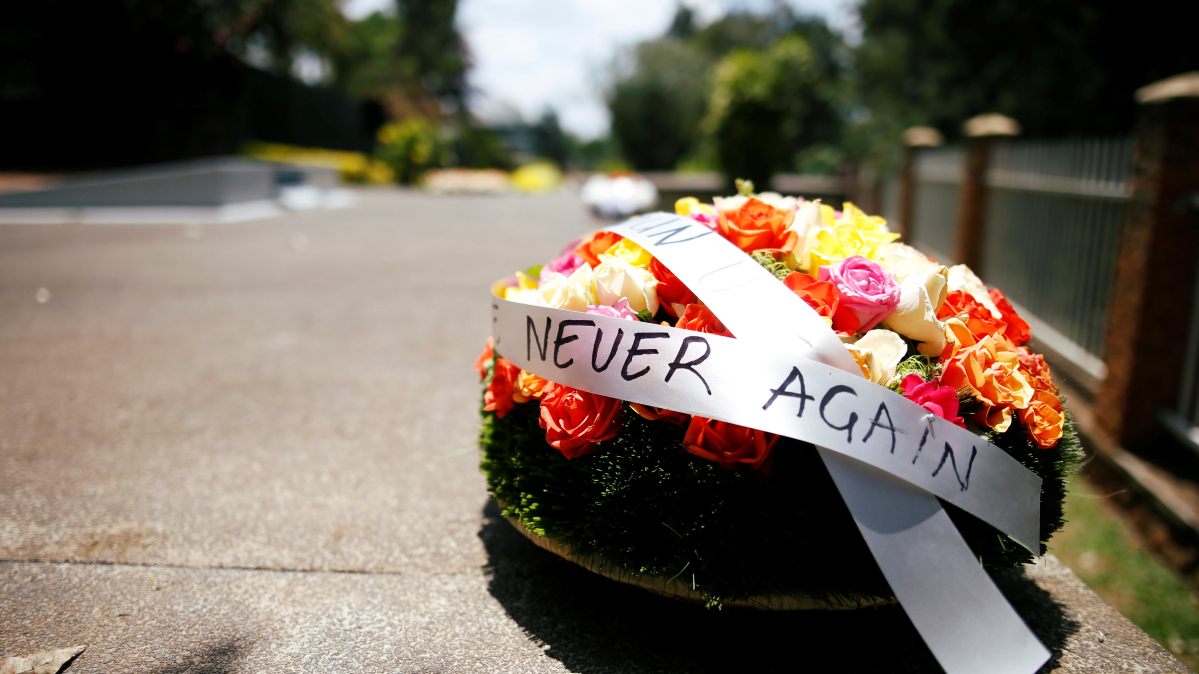
A former Rwandan official has appeared in a London court, becoming the first person in the UK to face charges linked to the 1994 genocide against the Tutsi in Rwanda.
Vincent Brown, formerly known as Vincent Bajinya, is accused of directing and encouraging acts of genocide and murder in Kigali during the first week of the 100-day genocide, which claimed the lives of more than 800,000 Tutsis and moderate Hutus.
Brown, 65, appeared at Westminster Magistrates’ Court on Tuesday, 22 September. He faces one charge of conduct ancillary to genocide and six charges of conduct ancillary to murder as a crime against humanity.
The charges relate to alleged offences committed in Kigali between 6 and 13 April 1994.
Alleged role in killings
Prosecutor Jane Stansfield told the court that Brown was head of the Department of Family Health at Rwanda’s National Office of Population when the genocide began.
Prosecutors allege he acted as a “leader and supervisor” of physical acts of violence carried out by others, citing evidence from witnesses, including neighbours.
The six murder charges relate to allegations that Brown ordered killings over four days. Those allegedly killed included a mother and her young son, as well as four other people.
Brown denies any involvement in the genocide. He has said he left Kigali in mid-April 1994, while his family left Rwanda in July of that year.
His barrister, Sam Blom-Cooper, said Brown welcomed the charges as an opportunity to clear his name.
“These are appalling crimes, terrible murders that were committed back in 1994,” Blom-Cooper told the court.
“But this, finally, does represent the beginning of the end for Dr Brown.”
Seven-year investigation
The charges follow a seven-year investigation by the Metropolitan Police War Crimes Team, launched in September 2019 following a request from the Rwandan government.
The Crown Prosecution Service (CPS) said it decided to prosecute after reviewing evidence submitted by the War Crimes Team and determining that the legal test for bringing charges had been met.
The CPS stressed that criminal proceedings remain active and that Brown has the right to a fair trial.
The case marks the first time charges connected with the genocide against the Tutsi in Rwanda have been brought in the UK. British law allows international crimes committed overseas to be prosecuted under the International Criminal Court Act 2001.
Further investigations
Brown has lived in Britain for more than two decades. He previously worked for a London-based charity supporting refugees and also served on a task force advising the UK government on refugee nurses.
British police said six other people remain under investigation over alleged offences linked to the genocide, including two men arrested on suspicion of genocide and crimes against humanity.
Judge Paul Goldspring granted Brown bail, on condition that he provide sufficient funds as security. He is due to appear at the Old Bailey on 9 October.
Read more:

















What is your opinion on this topic?
Leave the first comment