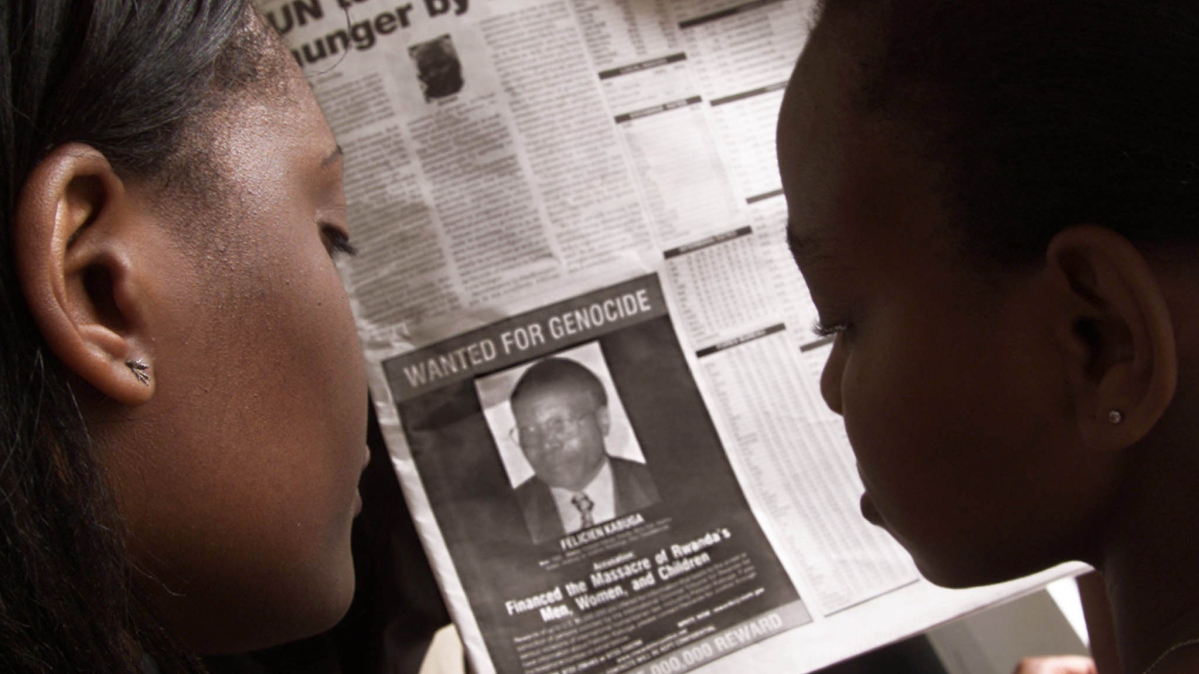
Félicien Kabuga, one of the last remaining suspects linked to the 1994 Rwandan genocide, has died in custody at the age of 93, a United Nations court said on Saturday.
Kabuga had been held at a UN detention centre in The Hague after being arrested near Paris in 2020. He had spent more than two decades on the run before French authorities tracked him down living under a false identity.
The Mechanism for International Criminal Tribunals (MICT), which handles the remaining cases from the UN tribunals for Rwanda and the former Yugoslavia, confirmed his death and said an inquiry had been ordered into the circumstances surrounding it.
One of the last genocide fugitives
Once a wealthy businessman and influential figure in Rwanda, Kabuga was accused of playing a central role in the genocide that killed more than 800,000 people, mostly ethnic Tutsis, as well as moderate Hutus, over a period of 100 days.
The killings began in April 1994 after the plane carrying then-Rwandan President Juvénal Habyarimana was shot down. Extremist Hutu leaders blamed the Tutsi-led Rwandan Patriotic Front and launched a campaign of mass violence across the country.
Families were attacked in homes, churches and schools, while many victims were killed at roadblocks set up by militias.
Accusations over hate radio and militias
Prosecutors accused Kabuga of financing and arming Hutu militias responsible for many of the killings. He was also alleged to have supported the notorious Radio Télévision Libre des Mille Collines (RTLM), a broadcaster accused of spreading anti-Tutsi propaganda and encouraging violence during the genocide.
Kabuga denied the charges against him.
After his arrest, he was transferred to The Hague to face trial. However, judges later ruled that he was suffering from dementia and was no longer fit to stand trial. Medical experts also found him too ill to be returned to Rwanda.
With no country willing to accept him, Kabuga remained in UN custody in the Netherlands until his death.
A case that remained unresolved
For many survivors of the genocide, Kabuga’s arrest in 2020 had been seen as a rare moment of accountability after years of searching for those accused of orchestrating the killings.
His death now brings an end to one of the final unresolved cases connected to the genocide.












What is your opinion on this topic?
Leave the first comment