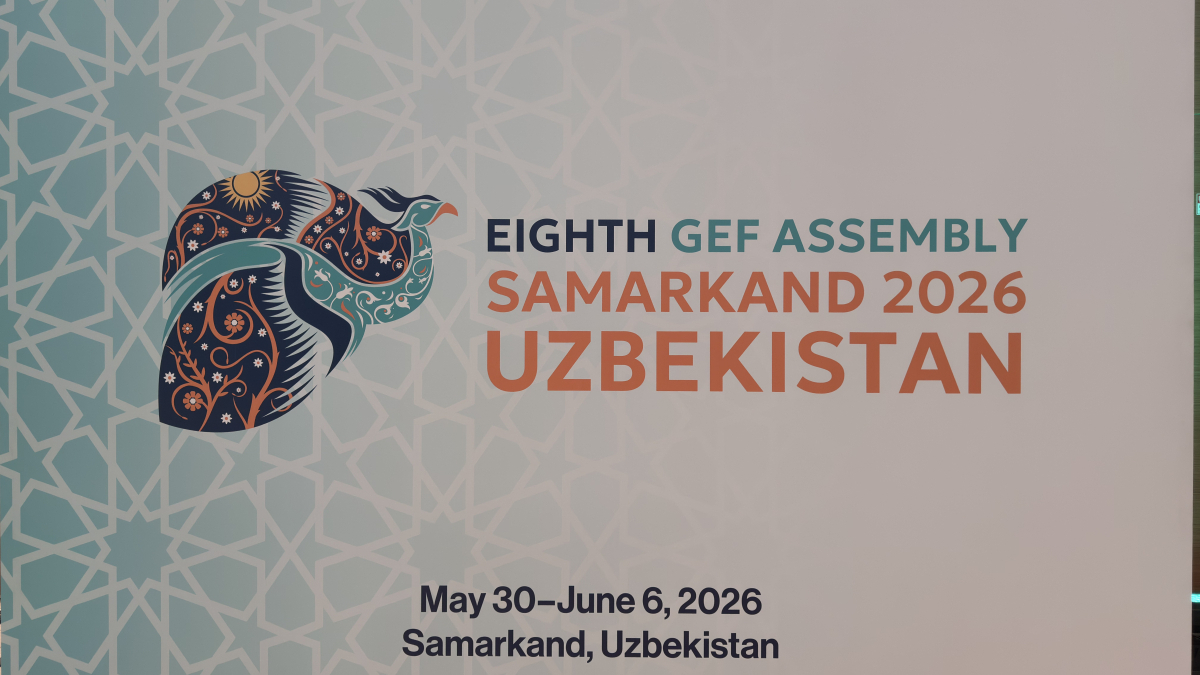
The Eighth Global Environment Facility (GEF) Assembly has concluded in Samarkand, bringing together representatives from 186 countries to set environmental priorities and approve new funding for climate, biodiversity and sustainable development initiatives.
New environmental projects approved
Held every four years, the GEF Assembly is the organisation’s highest governing body, responsible for reviewing progress, setting strategic priorities and approving new environmental investments.
This year’s gathering marked the conclusion of the GEF-8 funding cycle, which covered the period from 2022 to 2026.
One of the Assembly’s key outcomes was the approval of $232.5 million in financing for 24 new projects and programmes across 22 countries. The funding, approved through the GEF and its associated funds, will support climate adaptation, biodiversity conservation and sustainable development initiatives.
Delegates also reviewed the results achieved under GEF-8, with several major environmental targets exceeding expectations.
According to figures presented during the Assembly, projects supported through the funding cycle contributed to the protection of 1.9 billion hectares of marine areas, the restoration of 10.1 million hectares of degraded land, and greenhouse gas emissions reductions equivalent to 2.3 billion tonnes.
In addition, the Global Biodiversity Framework Fund directed 39% of its latest programming towards Indigenous Peoples and local communities, recognising their role in biodiversity conservation and ecosystem management.
Uzbekistan’s expanding role
The Assembly also highlighted Uzbekistan’s growing role in international environmental cooperation.
During the event, Uzbekistan was elected to the GEF Council, becoming part of the organisation’s governing body responsible for overseeing investments and approving environmental programmes. The new role will allow the country not only to benefit from international environmental financing but also to help shape future funding priorities and environmental initiatives worldwide.
Speaking to AnewZ, Director of the Research Institute of Environment and Environmental Protection Technologies under Green University, Shukhrat Muradov, described the development as particularly important for the country.
“What I consider most important is that the initiative was put forward for us to become donors to this fund. This is very significant,” he said.
Muradov noted that Uzbekistan has accumulated considerable scientific expertise in addressing water scarcity and arid land management, issues that affect more than half of the world’s land area.
According to him, the country could contribute its experience to environmental projects not only in Central Asia but also in other drought-prone regions, including Africa, Australia and parts of the Americas.
Looking ahead to GEF-9
While participants reviewed the achievements of the past four years, much of the discussion focused on the next funding cycle, known as GEF-9.
The upcoming programme will support what GEF leaders describe as a critical “sprint to 2030” to help countries meet international climate and biodiversity commitments.
Key priorities include transforming food, energy, urban, health and nature systems; scaling up blended finance to attract private-sector investment; and increasing the participation of women, young people, civil society organisations and local communities in environmental decision-making.
Speaking to AnewZ, Secretary General of the Ramsar Convention on Wetlands, Musonda Mumba, said one of the defining features of GEF-9 will be a stronger focus on integrated environmental solutions.
“Nature does not exist in silos. Nature is not just water, trees or air separately,” she said. “What is exciting about these integrated programmes is that they bring together issues such as pollution, biodiversity, plastics, cities and people.”
According to Mumba, the new approach reflects a growing understanding that environmental challenges are interconnected and require coordinated action across multiple sectors.
As the Assembly concluded in Samarkand, delegates stressed that accelerating action over the next four years will be crucial to tackling climate change, biodiversity loss, land degradation and water scarcity, while ensuring sustainable development for future generations.













What is your opinion on this topic?
Leave the first comment