Environmental ministers and senior officials from member states of the Economic Cooperation Organization (ECO) gathered in Samarkand for the 6th ECO Ministerial Meeting on Environment, the first such meeting in 12 years.
Participants approved the ECO Environmental Cooperation Framework Programme for 2026–2030, alongside thematic work programmes on climate change and biodiversity. They also adopted the Samarkand Declaration on Regional Environmental Cooperation, which sets out priorities for deeper collaboration in addressing shared environmental challenges.
Discussions focused on climate resilience, combating desertification, sustainable forest management, biodiversity conservation, scientific cooperation, and measures to address sand and dust storms.
Mukhtar Babayev, Representative of the President of Azerbaijan on Climate Issues, highlighted the practical importance of the agreements reached in Samarkand.
“The declaration includes a broad programme of cooperation covering environmental sustainability, safety, biodiversity conservation and other key areas. We agreed that the actions following the Samarkand meeting should become more active and practical,” he said.
Babayev also pointed to growing interest in developing a regional early warning system for environmental hazards, including sand and dust storms, which affect countries across and beyond Central Asia.
Focus on green investment
Held within the framework of Eco Expo CA 2026, the “Green Investments and Innovation” plenary session brought together ministers, investors and international partners.
The discussion focused on sustainable finance, renewable energy, green technologies, circular economy solutions and climate-resilient development. Participants also explored mechanisms for attracting international investment into environmental projects and scaling up innovative solutions across Central Asia.
Officials stressed that green investment and technological innovation will play a critical role in helping countries adapt to climate change while supporting long-term economic growth.
Water security at the centre of regional concerns
Environmental challenges across Central Asia are becoming increasingly interconnected, affecting food security, public health, livelihoods and economic development throughout the region.
AnewZ's James Ezimoha asked Aygul Guluzade, Support Specialist at the Food and Agriculture Organization (FAO), what she considers to be the biggest environmental issue facing Central Asia today.
Guluzade said it is difficult to identify a single issue because environmental challenges are closely linked and often have wide-ranging consequences.
“It's very difficult to mention one big issue, but I should say that they are very interrelated and each one interlinks with others and has many effects, negative effects on food security, livelihoods or public health or economic opportunities of each country.”
However, she identified water security and water scarcity as among the most significant challenges facing the region.
“The bigger issue in terms of Central Asia can be water security, water scarcity, like in many other regions, including Central Asia, because water is in the nexus of many aspects of the environment.”
She noted that water is essential for agriculture, biodiversity and broader environmental systems.
“It's the resource for the agriculture, the biodiversity, forests, and many others.”
Regional review launched
The main outcome of the session was the signing of the Samarkand Statement on the Regional Environmental Performance Review of Central Asia.
The document formally launched the operational phase of the Regional Environmental Performance Review for 2026–2028, an initiative supported by the United Nations Economic Commission for Europe (UNECE). The review will assess regional progress in areas including climate action, air quality, water resources, biodiversity, waste management and green financing.
Participants noted that Central Asian countries face many shared environmental challenges, including water scarcity, land degradation, biodiversity loss and the growing impacts of climate change. Final recommendations from the review are expected to be presented at the Tenth Environment for Europe Ministerial Conference in 2028.
Australian counterterrorism authorities are examining the links of the co-pilot accused of attacking the captain and attempting to take control of a flydubai flight bound for Israel. Authorities in New Zealand have also said they are investigating reports the suspect had spent time in that country.
Russia's health watchdog said on Tuesday that no cases of plague had been detected among anyone who had come into contact with a Siberian plague institutelaboratory worker who died last week, and locals said their lives had barely been disrupted.
Right-wing Brazilian Senator Flavio Bolsonaro will face leftist President Luiz Inacio Lula da Silva in a runoff of the presidential election later this month, after he exceeded expectations in Sunday's first-round vote with a slight lead over the incumbent.
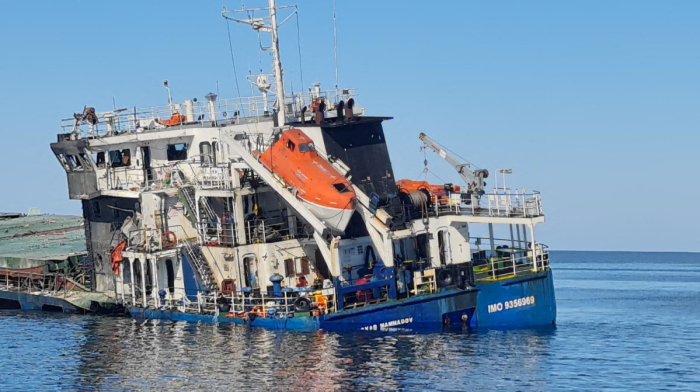
An Azerbaijani citizen died and another is missing after a cargo ship was attacked by a drone in the Black Sea, near the coast of Romania on Monday, 5 October, Baku's Foreign Ministry has said.
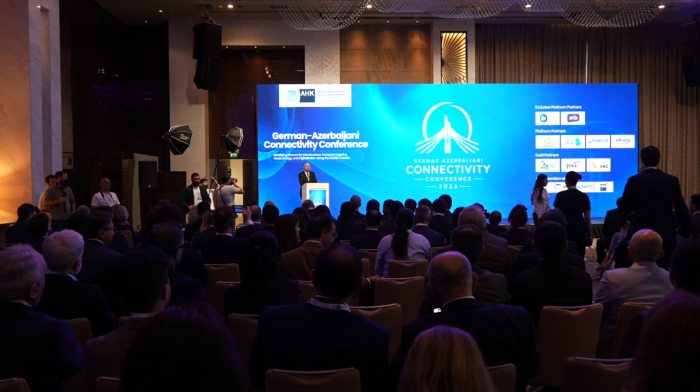
The German-Azerbaijani Connectivity Conference 2026 commenced on 6 October in Baku under the title “Mobilising Finance for Infrastructure, Transport, Logistics, Green Energy, and Digitalisation along the Middle Corridor.”
Russia's health watchdog said on Tuesday that no cases of plague had been detected among anyone who had come into contact with a Siberian plague institutelaboratory worker who died last week, and locals said their lives had barely been disrupted.
Space-agency chiefs and industry leaders met to discuss lunar exploration, satellite networks and orbital security on Tuesday as a major global space congress entered its second day.
Police fired tear gas at protesters blockading French high schools on Tuesday as students, teachers and parents took to the streets on the biggest day of action in a wave of demonstrations against understaffed and dilapidated classrooms.
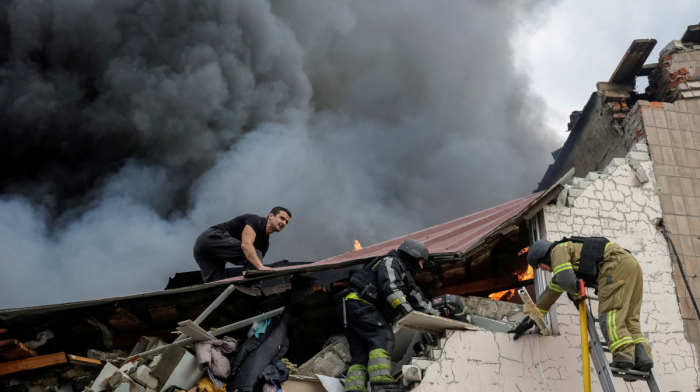
A large Ukrainian drone attack on Moscow and the surrounding region has killed two people, damaged homes and sparked a major fire at a key fuel facility, according to Russian officials and military bloggers.
Kenya has confirmed its first case of Ebola after a Kenyan citizen who had travelled from the Democratic Republic of Congo (DRC) died in Nairobi, prompting health authorities to launch an urgent contact-tracing operation.
Download the AnewZ app
You can download the AnewZ application from Play Store and the App Store.















What is your opinion on this topic?
Leave the first comment