Afghanistan is seeking Azerbaijan’s support to help secure its official participation in the upcoming United Nations COP31 global climate change conference, scheduled to be held in Türkiye, as Kabul looks to strengthen its engagement on climate diplomacy and technical cooperation.
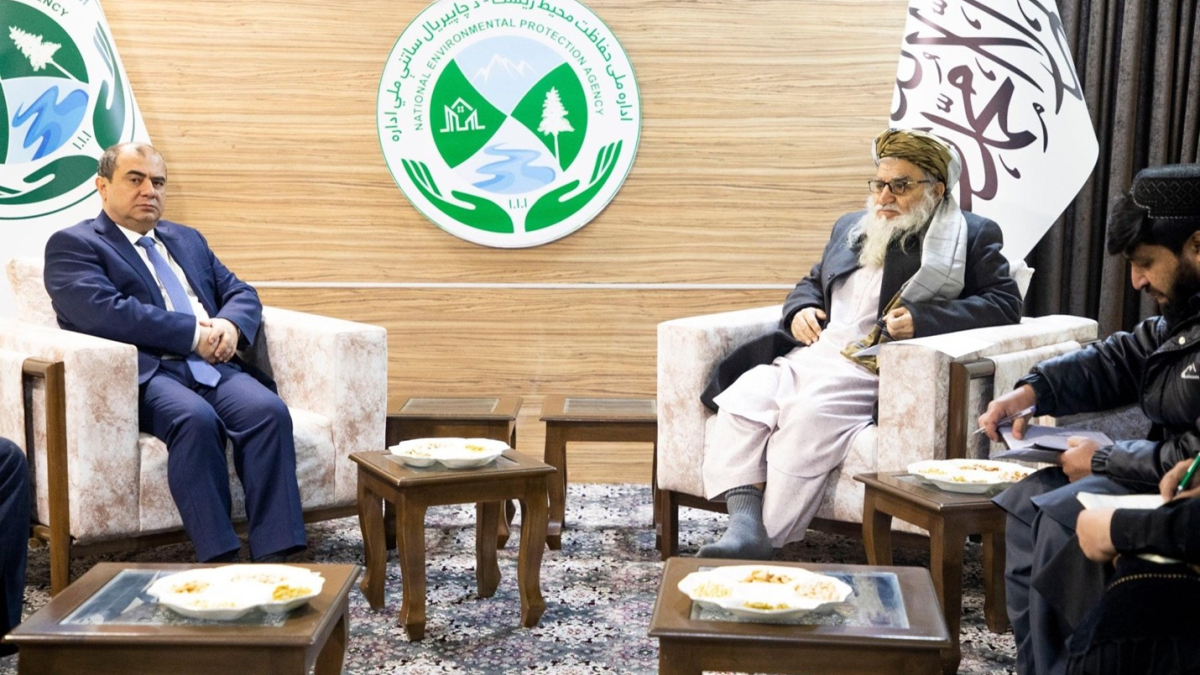
The Director General of Afghanistan’s National Environmental Protection Agency, Matiulhaq Khalis, met with Ilham Mammadov, Azerbaijan’s ambassador to Afghanistan this week, where the two sides discussed climate change, participation in international conferences and the expansion of bilateral environmental cooperation, according to a statement issued by the agency.
Khalis urged Azerbaijan to coordinate with the Turkish government, the United Nations Framework Convention on Climate Change (UNFCCC) secretariat and other relevant international bodies to pave the way for Afghanistan’s official participation in COP31. He stressed that Afghanistan’s presence at the conference is “a practical necessity” for addressing regional climate challenges, the statement said.
During the meeting, Khalis also thanked the Azerbaijani government for its diplomatic efforts during COP29, hosted by Azerbaijan in Baku in November 2024, noting that while Afghanistan was not formally invited, Baku’s support and cooperation were “commendable” and appreciated by the Afghan government.
The head of the National Environmental Protection Agency also called for deeper cooperation in technical areas such as environmental monitoring, air quality control, geographic information systems (GIS), remote sensing and digital technologies. He further highlighted the need for collaboration on climate change adaptation projects, environmental awareness, and sustainable urban and rural planning.
The meeting also touched on the World Urban Forum, WUF13, which is scheduled to be hosted by Azerbaijan 17-22 May, 2026. Khalis said the agency has received an official invitation and expressed hope that Azerbaijan would facilitate the Afghan delegation’s participation, including support with visas, travel and logistical arrangements.
Ambassador Mammadov referred to the historical ties and friendly relations between the two countries, saying Azerbaijan understands Afghanistan’s environmental and climate challenges and aims to raise these issues in regional and international forums. He said Azerbaijan would work with relevant Turkish authorities, the UNFCCC secretariat and other institutions to explore possible avenues for Afghanistan’s participation in COP31 9-20 November, 2026 in Antalya.
Both sides agreed on the need to establish joint environmental working groups and a permanent coordination mechanism to ensure cooperation remains organised, practical and sustainable.














What is your opinion on this topic?
Leave the first comment