On 28 May, the EU's foreign policy chief called for Russian troops to leave Georgia and Moldova. By the end of the same day, both Tbilisi and Moscow had dismissed her. The symmetry tells a story of its own.
It started as a fairly routine diplomatic statement. Kaia Kallas, the EU's High Representative for Foreign Affairs and Security Policy, was speaking to reporters ahead of an informal meeting of EU foreign ministers on 28 May when she raised something that is anything but routine for Georgia.
Kallas argued that if a future Russia-Ukraine peace deal includes restrictions on Ukrainian armed forces, then equivalent obligations must apply to Russia, too — and that means withdrawing its troops from Georgia and Moldova. For a country that has lost roughly 20 per cent of its internationally recognised territory to Russian-backed separatist regions since the 2008 war, this was not an abstract point. It was a direct reference to one of the most unresolved wounds in Georgian political life.
Two rejections, one message
What followed was striking. Georgian Prime Minister Irakli Kobakhidze rejected the statement. Speaking to journalists in Tbilisi on the same day, he said that European bureaucracy had spent years working against Georgian national interests, not in defence of them. Statements, he said, must be backed by actions. Until now, in his words, the EU had been on the wrong side.
''The European bureaucracy has been on the opposite side all these years and opposed the national interests of our Georgian people.''
Prime Minister Irakli Kobakhidze, 28 May 2025
From Moscow, Russian Foreign Minister Sergei Lavrov was even more dismissive. Asked to comment on Kallas's statement, he told Russian media he does not engage with what he called "idiotic" remarks. One sentence. No further elaboration needed, apparently.
Two governments, with entirely different formal relationships with Brussels, rejected the same statement from the same official on the same day. The Georgian government and the Russian government do not often find themselves on the same side of a foreign policy argument — at least not openly. On 28 May, they did.
Background
Russia has maintained military presence in Georgia's breakaway regions of Abkhazia and South Ossetia since the 2008 war, which ended with a EU-brokered ceasefire.
Both regions are internationally recognised as Georgian territory. The EU has consistently supported Georgia's territorial integrity and called on Russia to reverse the consequences of the 2008 conflict.
A relationship that has been unravelling
To understand why Kobakhidze's reaction landed the way it did, it helps to look at where Georgia and the EU actually stand right now.
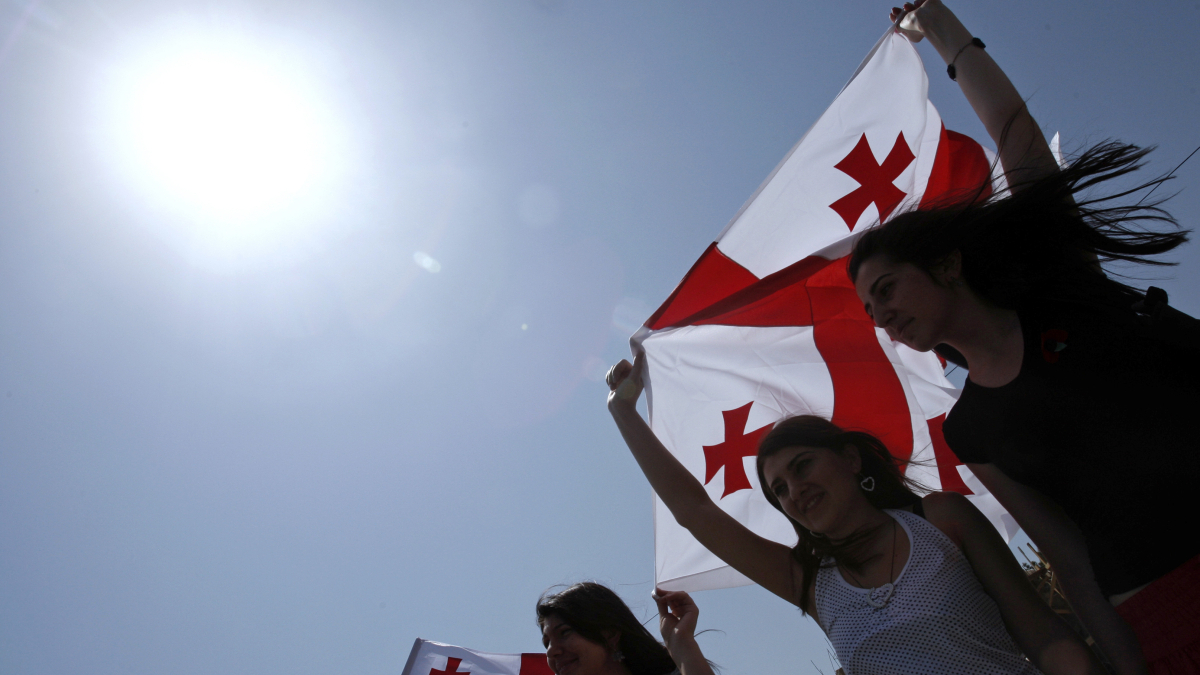
Georgia was granted EU candidate status in December 2023, a moment that was met with celebrations in Tbilisi. The path to membership seemed, if not easy, then at least open. That changed quickly. Following the disputed parliamentary elections of October 2024, the EU formally suspended Georgia's accession process. The European Parliament questioned the legitimacy of the results. Months of street protests followed, with demonstrators waving EU flags and demanding the government reverse course.
The government did not reverse course. Instead, it pushed through a series of laws that Western partners and local civil society groups have compared to legislation used in Russia to restrict independent media and non-governmental organisations. EU officials framed their concerns not as political interference but as benchmarks that Georgia itself had committed to meeting on its membership path. Kobakhidze's government rejected that framing entirely, repeatedly accusing Brussels of meddling in Georgian sovereignty.
The relationship between Tbilisi and Brussels has been deteriorating steadily ever since, and Kobakhidze's remarks on 28 May reflect that trajectory plainly.
What the coincidence actually means
It would be too simple to suggest that the Georgian government and the Kremlin are coordinating their public messaging. There is no evidence of that. Kobakhidze has his own domestic political reasons for pushing back against the EU, and his government's stated goal remains EU membership, however strained that aspiration has become in practice.
But the optics of the situation are not something that serious foreign policy observers will overlook. When a government that officially aspires to EU membership responds to a pro-Georgian statement from Brussels with the same dismissive energy as Moscow, it raises legitimate questions about the direction of travel.
Georgia's EU path is stalled. Its relationship with Russia remains formally hostile - Tbilisi does not recognise the separatist regions, and the 2008 war has never been properly resolved. And yet on 28 May, the most visible signal coming from the Georgian government was not gratitude toward an EU official who had just raised the question of Russian troop withdrawal, but criticism of European bureaucracy standing on the wrong side of history.
That is the detail worth sitting with. Not as proof of anything, but as a question about where Georgia is heading - and who, in the end, is watching.











What is your opinion on this topic?
Leave the first comment