For the first time in decades, Armenia has rail access to the EU. The Akhalkalaki–Kars corridor, running through Georgia into Türkiye, is now officially open for Armenian cargo - a quiet but consequential shift in the region’s economic geography.
It is the kind of announcement that arrives without fanfare but carries real weight. On Saturday, Armenian Prime Minister Nikol Pashinyan confirmed that the Akhalkalaki–Kars railway is now open for Armenian exports and imports, giving the landlocked country its first sustained rail connection to the European Union via Georgia and Türkiye.
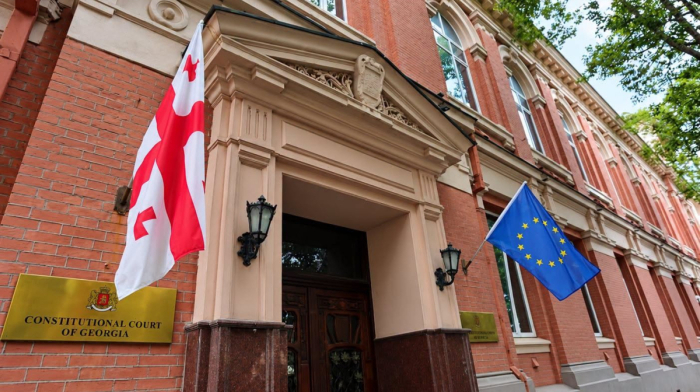
Pashinyan was quick to acknowledge the role of Georgia and Turkey. For Tbilisi, that recognition is more than diplomatic courtesy - it reflects a practical reality. Georgia is the physical bridge that makes the corridor possible. Without Georgian territory, the route does not exist.
“Our roads are opening, and I want to draw attention to the fact that the blockade is being overcome step by step," said Armenian Prime Minister Nikol Pashinyan.
A new trade corridor
The route connects to the wider Baku–Tbilisi–Kars rail network, which has been operational since 2017 but historically bypassed Armenia entirely. Armenian cargo can now move west through Akhalkalaki, cross into Türkiye at Kars and reach European markets from there.
Analysts expect the corridor to reduce logistics costs and delivery times significantly, while diversifying Armenia’s trade routes beyond its existing links through Russia, Iran and China.
The backdrop to the development is a decades-old political freeze. Turkey closed its border with Armenia in 1993 in solidarity with Azerbaijan during the Karabakh conflict, and the two countries have never established formal diplomatic relations. The Georgian corridor effectively sidesteps that closure, allowing trade to flow without the border formally reopening.
Regional cooperation taking shape
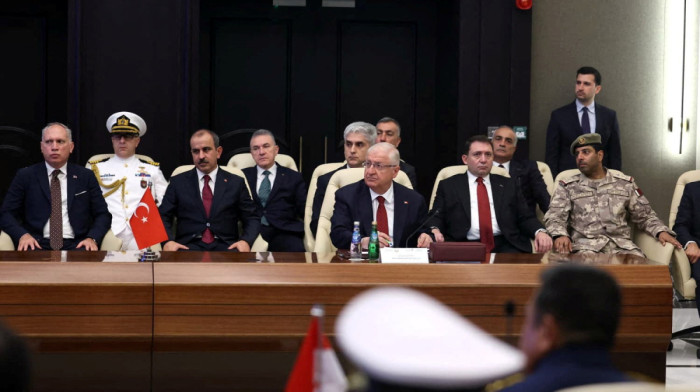
Türkiye's special envoy for the Armenia normalisation process, Serdar Kılıç, welcomed the development, describing it as a step towards direct trade and expressing hope it would deepen cooperation between Türkiye, Armenia, Azerbaijan and Georgia.
That four-way framing is significant. It positions Georgia not merely as a transit country, but as a partner in a broader regional architecture.
Pashinyan signalled that this could be only the beginning. Direct railway links between Armenia and Türkiye, Armenia and Azerbaijan, and eventually Armenia and Iran through Nakhchivan are all under discussion as part of the U.S.-backed TRIPP initiative - the Trump Route for International Peace and Prosperity.
The framework, announced in January 2026 by U.S. Secretary of State Marco Rubio and Armenian Foreign Minister Ararat Mirzoyan, aims to establish multimodal transit links across the region, connecting Central Asia and the Caspian with Europe.
A 2026 European Commission study found the new Armenia route could cut travel times by up to 25 per cent compared with the existing Baku–Tbilisi–Kars line.
Georgia at the centre
For Georgia, the implications are quietly significant. As the essential transit hub in this emerging network, Tbilisi stands to benefit from increased freight volumes, stronger regional relevance and growing influence as a crossroads between Europe and Asia.
A region that spent decades building routes around its conflicts is now, slowly, beginning to build routes through them - and Georgia sits at the centre of that shift.












What is your opinion on this topic?
Leave the first comment