Experts say COP30 failed to deliver concrete commitments on fossil fuels and deforestation despite high expectations.
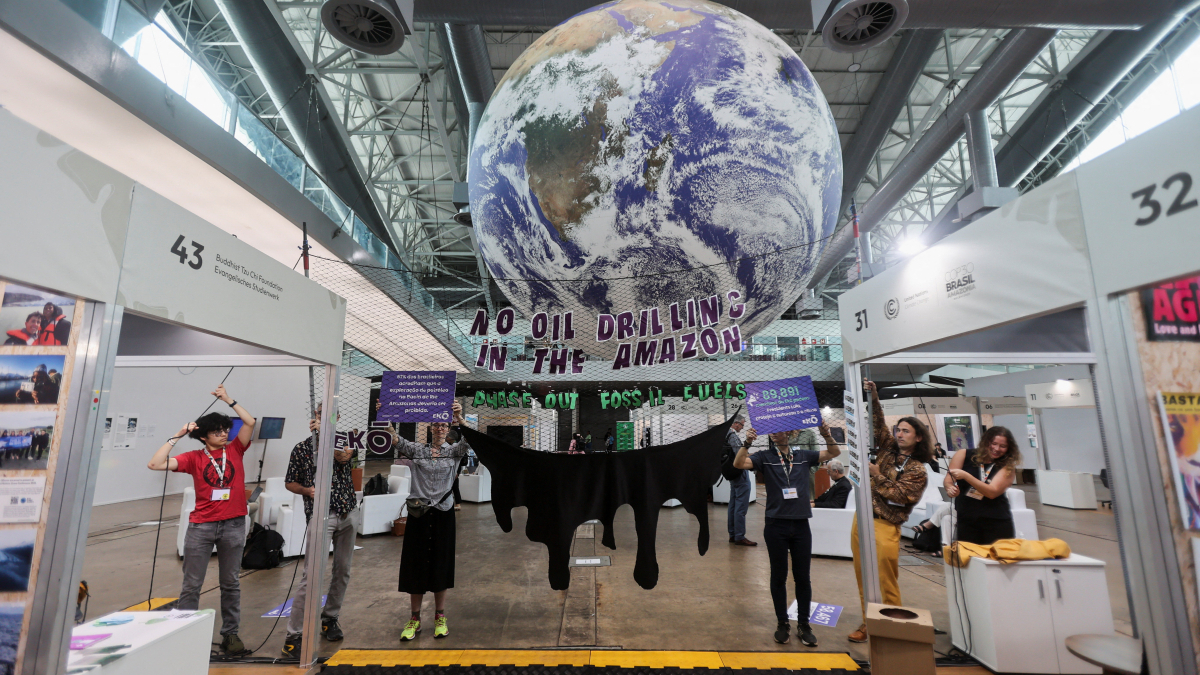
The COP30 summit, held in November 2025 in the Amazon city of Belém, failed to deliver a clear, time-bound roadmap to phase out fossil fuels - a key demand from climate scientists and vulnerable countries.
Despite its symbolic location in the heart of the rainforest, the final outcome avoided firm commitments on ending fossil fuel use and produced no concrete plan to halt deforestation.
Ümit Şahin, Coordinator of Climate Change Studies at Sabancı University’s Istanbul Policy Center, said COP30 was significantly weakened by the absence of the United States, following President Donald Trump’s decision to withdraw from the Paris Agreement and reverse policies supporting renewable energy.
While the summit agreed to establish a just transition mechanism for workers and to increase adaptation finance - aiming for at least $300 billion annually in public funding by 2035 - Şahin said the measures fell short of the scale of action required.
“Deforestation was one of COP30’s clearest failures,” Şahin said, adding that progress on adaptation finance, though welcome, does not match the rapidly growing needs of developing countries.
The 31st Conference of the Parties (COP31) will be hosted by Türkiye from 9 to 20 November, 2026, mainly in Antalya, with a leaders’ summit planned in Istanbul. Competition between Türkiye and Australia to host the summit has already raised expectations for a more ambitious agenda.
Şahin said the Mediterranean setting is likely to bring issues such as heatwaves, forest fires and coastal climate risks to the forefront, while electrification, fossil fuel phase-out and stronger emissions reduction commitments are expected to dominate discussions.
As host and president of COP31, Türkiye’s own climate policies will also face close scrutiny. Şahin said credibility will depend on stronger domestic action, including an ambitious updated climate pledge and a clear timeline to phase out coal.
He noted that Türkiye’s national energy plans already point to a decline in coal use and that a complete coal phase-out by 2036 appears technically and economically feasible.

















What is your opinion on this topic?
Leave the first comment