Tajikistan boosts Central Asian fuel imports as Russian supplies dwindle
Tajikistan tripled fuel imports from neighbouring Central Asian countries in July after deliveries from Russia declined sharply, underscoring how disr...
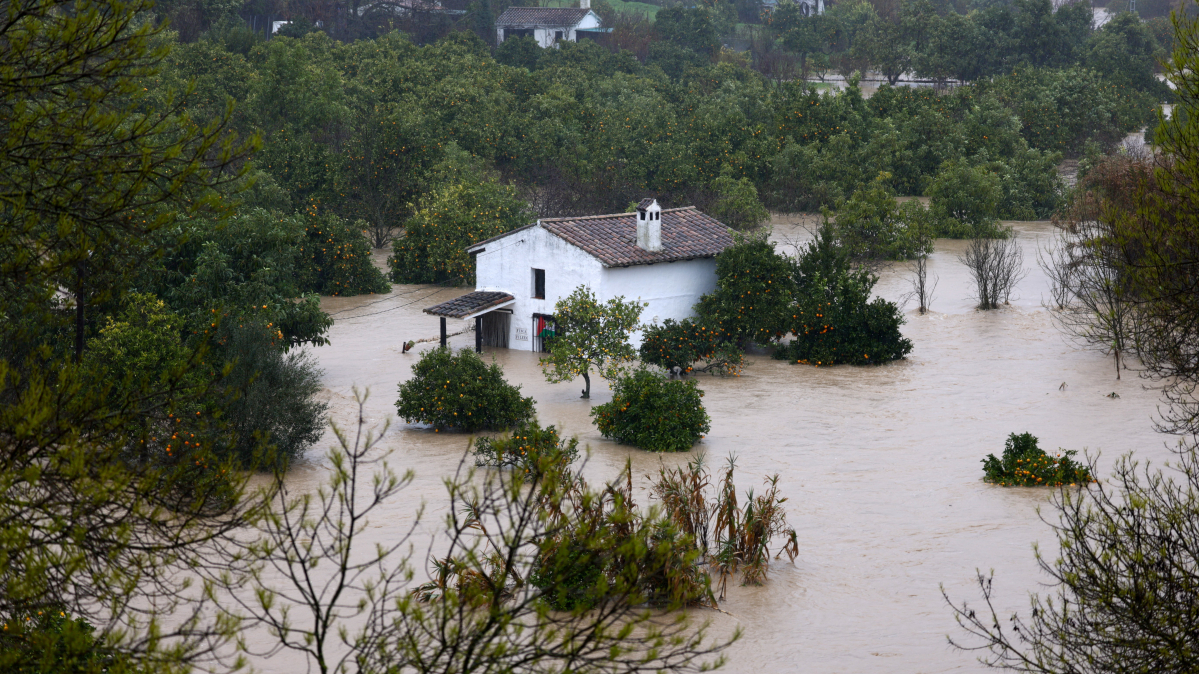
Rivers and reservoirs across Spain and Portugal were on the verge of overflowing on Wednesday as a new weather front pounded the Iberian peninsula, compounding damage from last week's Storm Kristin.
In southern Spain, authorities in Andalusia said 14 rivers and 10 dams were at "extreme" risk of overflowing. Antonio Sanz, head of the regional interior department, said saturated ground from earlier storms this month had worsened the threat.
Across the border in Portugal, the government raised its alert level to the maximum until at least Friday as several rivers approached critical levels. In Alcacer do Sal, about 90 kilometres south of Lisbon, the Sado river burst its banks, flooding parts of the town.
"I've never seen anything like this, never. It's surreal. I have no words," said longtime resident Maria Cadacha.
Mayor Clarisse Campos said "the entire lower part of the city is flooded" and added that authorities were monitoring residents "to determine whether it is necessary to evacuate them and move them to a safe place."
In Spain, Andalusian officials called the situation in Grazalema dire after the sewage system became overwhelmed, sending water gushing from homes.
Footage showed floods pouring out of electrical sockets as emergency crews drilled holes in walls to release trapped water. In Ubrique, a wall collapse injured one person.
At least 3,500 residents were evacuated in Andalusia. Classes were cancelled, travel was discouraged, and 1,200 emergency personnel plus 400 military service members were deployed.
Aircraft and helicopters were sent to monitor flood zones.
"It's been raining like this for hours. The river has already overflowed, and people are very worried inside their homes. We are experiencing many power cuts," José Luis Castillo in Jimera de Libar told Reuters.
Spain's weather agency AEMET forecast continuous and intense rainfall in parts of Andalusia, central Spain and Galicia through to Saturday (7 January), warning of possible landslides and damage to infrastructure.
Portugal's National Civil Protection service said water levels were likely to rise further in the coming days. The armed forces deployed 1,600 personnel, including marine teams equipped with 35 inflatable boats, to rescue people from flood affected areas.

U.S. President Donald Trump said there was an "all-day negotiation" on Tuesday with Iran, characterising the talks positively while also threatening to hit Iran "really hard" if a deal was not reached.
Shipping traffic through the Strait of Hormuz and the Bab el-Mandeb Strait, two key maritime chokepoints in the region, decreased significantly from the previous day, according to shipping data.
Start your day informed with AnewZ Morning Brief. Here are the top news stories for the 6th of August, covering the latest developments.
U.S. President Donald Trump said negotiations to reopen the Strait of Hormuz are progressing and suggested an agreement with Iran could be reached “soon”.
Kazakhstan’s main oil export corridor was disrupted by drone strikes near Russia’s Black Sea coast in July, forcing a temporary suspension of crude loadings and raising fresh concerns over the vulnerability of regional energy infrastructure to the war in Ukraine.
Extreme heat and historically low river levels are forcing nuclear power plants across Southeast Europe to reduce production, increasing pressure on already stretched electricity supplies and prompting governments to call for lower consumption.
Flash floods in Gansu Province in China's northwest last week killed 25 people and injured 23 more, the official Xinhua news agency reported on Sunday, raising earlier death tolls.
Three firefighters have died as wildfires continue to burn across Greece, with Crete facing a second day of intense blazes driven by strong winds. The fires come as Europe battles destructive wildfires fuelled by extreme heat and drought.
An impending "super" El Niño is likely to inflict a combined $10 billion to $20 billion hit on affected African countries and trigger mass migration from hard-hit areas, the African Development Bank's (AfDB) top climate expert said.
Brazil has banned the production and sale of foie gras, the French delicacy made from fattened duck or goose liver. President Luiz Inacio Lula da Silva signed a law late Thursday aimed at ending force-feeding in the country's foie gras industry and stopping imports.
You can download the AnewZ application from Play Store and the App Store.
What is your opinion on this topic?
Leave the first comment