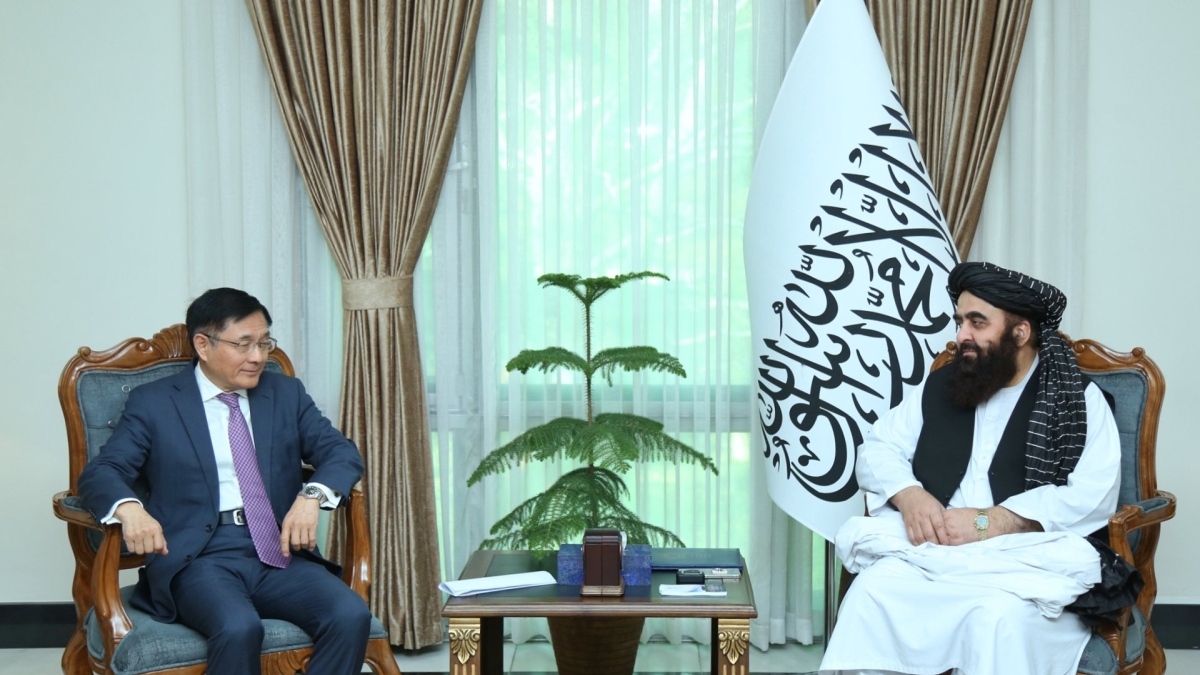
China has urged Afghanistan and Pakistan to resolve their dispute through dialogue after Chinese envoy Yue Xiaoyong met Afghan Foreign Minister Amir Khan Muttaqi, as fighting between the two neighbours entered its eleventh day.
According to Afghanistan’s foreign ministry, the meeting focused on expanding bilateral ties between Kabul and Beijing, as well as the latest escalation along the Afghan–Pakistan border.
The ministry said the talks also addressed Pakistan’s recent attacks on Afghan territory and broader regional developments.
Muttaqi described relations between Afghanistan and China as constructive and said Kabul hopes to deepen cooperation with Beijing.
Summarising Kabul’s position, the ministry said Muttaqi “emphasised that Afghanistan prioritises the peaceful resolution of problems rather than conflict and seeks to prevent the escalation of tensions, but considers the defence of its homeland and people to be its legitimate right.”
China calls for diplomacy
During the meeting, Yue Xiaoyong also expressed condolences to Afghan families affected by the recent violence. The Chinese envoy urged both sides to resolve their dispute through diplomatic channels.
Yue “stressed that China wants the ongoing issues between Afghanistan and Pakistan to be resolved through dialogue and diplomacy, and that efforts should be made to prevent the escalation of tensions in order to maintain regional stability,” the statement said.
According to the ministry, the envoy added that China is also in contact with Pakistani authorities and is working to help reduce tensions between the two countries.
Border clashes displace thousands
The meeting comes as clashes between Afghan and Pakistani forces continue along the border following Pakistani airstrikes inside Afghanistan.
Kabul has described the strikes as a violation of Afghanistan’s sovereignty and territorial integrity and has vowed retaliation.
The United Nations Office for the Coordination of Humanitarian Affairs (OCHA) said airstrikes and border clashes between 26 February and 3 March affected ten Afghan provinces, including Kabul, Kandahar, Nangarhar, Khost and Kunar.
According to OCHA, at least 56 civilians were killed and 129 injured, while humanitarian partners estimate that about 16,370 families have been displaced across eastern provinces.
Both Afghanistan and Pakistan say they have inflicted heavy casualties on each other, although those claims cannot be independently verified.
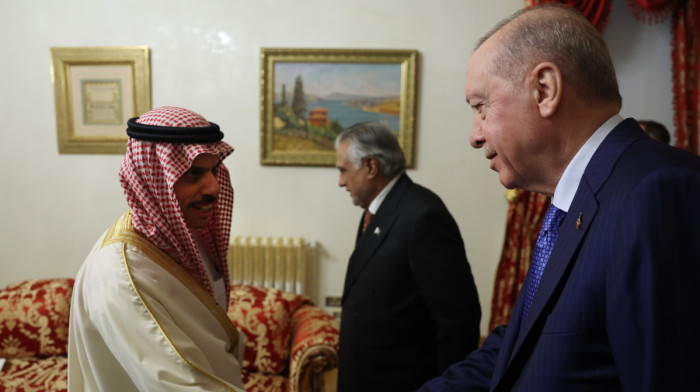
Diplomatic efforts are also emerging. Türkiye’s president, Recep Tayyip Erdoğan, told Pakistan’s prime minister during a phone call that Ankara is ready to help restore a ceasefire, while Russia has also called for de-escalation.










What is your opinion on this topic?
Leave the first comment