Clashes between Afghanistan and Pakistan continued for an eighth consecutive day, as the United Nations says more than 160,000 people have been displaced and Afghan officials claim an airstrike on a Pakistani military command centre in Balochistan.
The United Nations Office for the Coordination of Humanitarian Affairs (OCHA) said airstrikes and border fighting between 26 February and 3 March affected ten Afghan provinces, including Kabul, Kandahar, Nangarhar, Khost and Kunar.
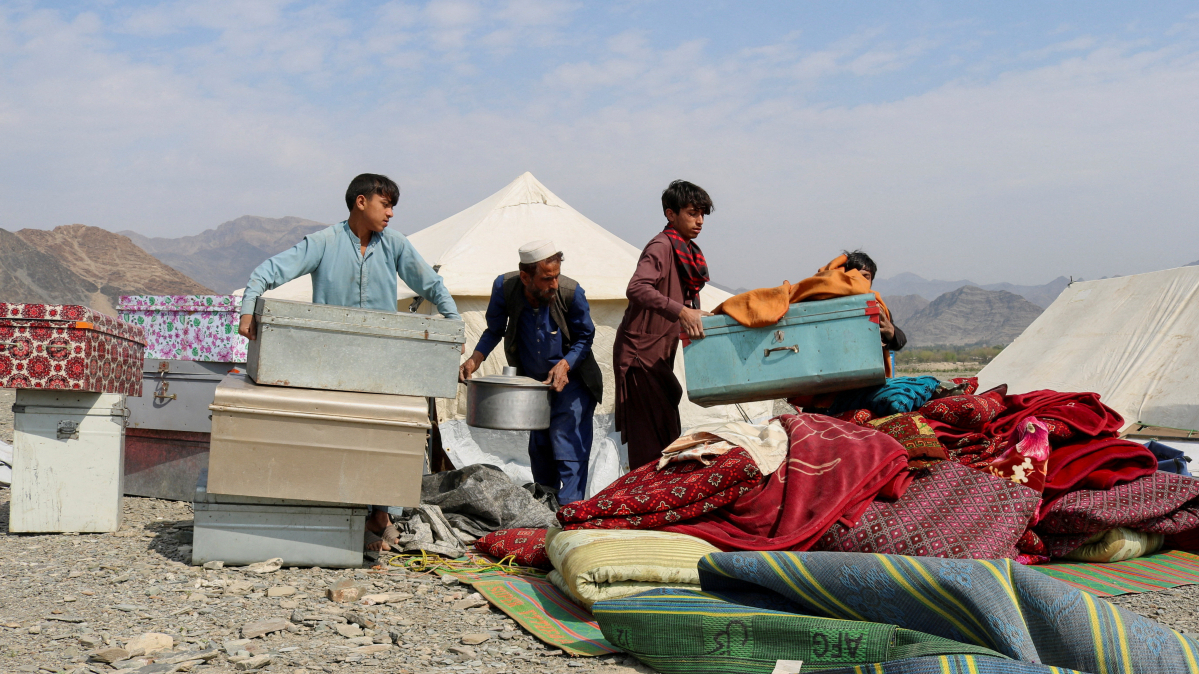
According to OCHA, at least 56 civilians have been killed and 129 injured. Humanitarian partners estimate that 16,370 families have been newly displaced across several eastern provinces. Combined with families already displaced by the 31 August 2025 earthquake, the total number of displaced families has reached about 23,370, or roughly 163,590 people.
Afghanistan claims strike on Pakistani military target
Afghanistan’s Ministry of Defence said its air force carried out a strike on a Pakistani military command centre in Balochistan on Thursday night.
Sediqullah Nusrat, deputy spokesperson for the ministry, said: “The air force of the Islamic Emirate’s Ministry of Defence conducted an airstrike this morning at around eight o’clock in the Kuchlak area of Balochistan, targeting the general command centre of Pakistani military forces known as ‘Ghazaband’.”
The ministry added that several retaliatory attacks against Pakistani forces had been carried out during the past 24 hours, destroying 12 checkpoints and military positions while killing 41 soldiers and wounding 53 others.
Pakistani security sources gave a different account, saying Pakistani forces conducted ground and air operations against Afghan military targets, including in Kandahar, and destroyed several Afghan border posts.
Escalation and protests
The latest escalation began after Pakistan carried out airstrikes inside Afghanistan, allegedly targeting militant sanctuaries but hitting civilians. Kabul described the strikes as a violation of the country’s sovereignty and territorial integrity and vowed retaliation.
Since then, both sides say they have inflicted heavy casualties, although those claims cannot be independently verified.
Dozens of people also gathered in Kabul on Friday to protest against Pakistan’s attacks on Afghan territory, chanting anti-Pakistan slogans, according to a witness.
Diplomatic efforts emerge
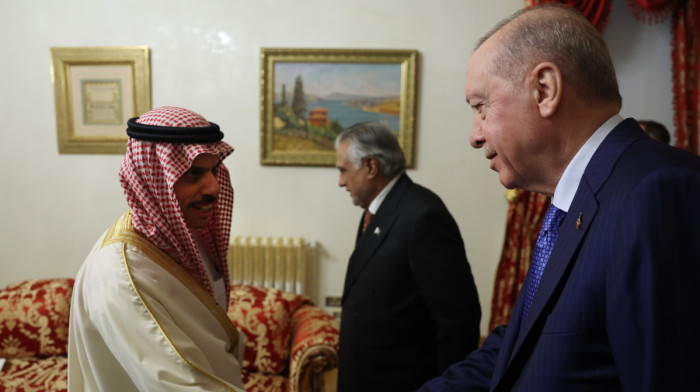
Diplomatic efforts are also emerging. Türkiye’s President Recep Tayyip Erdoğan told Pakistan’s prime minister during a phone call that Ankara is ready to help restore a ceasefire between Afghanistan and Pakistan, while Russia and China have also called for de-escalation.
It remains unclear whether Kabul and Islamabad will start talks.










What is your opinion on this topic?
Leave the first comment